


A Decade Tale Of AI In Aquaculture Triumphs From Nigerian Universities.
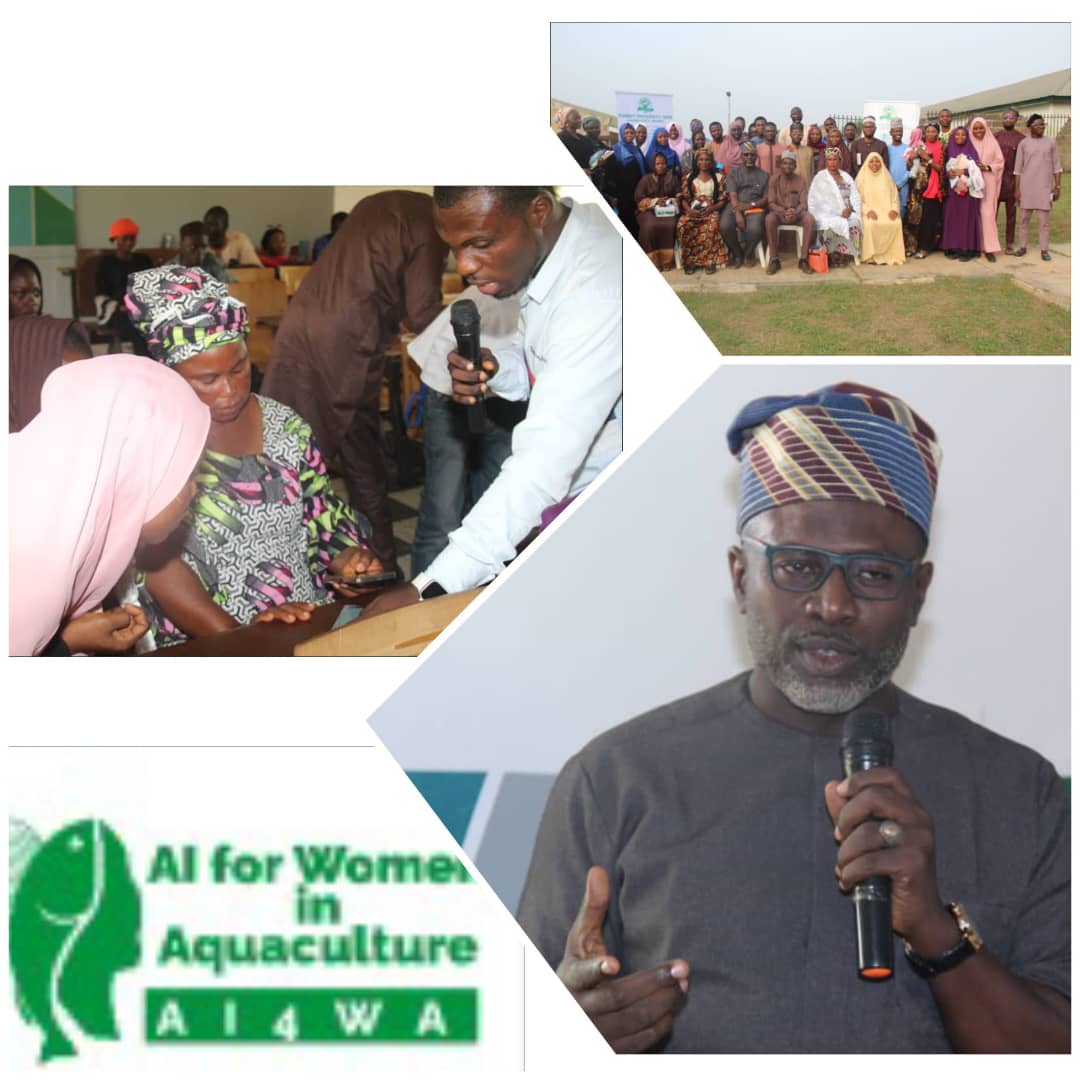
In the foreseeable future, as the global community grapples with the challenges of sustainable food production, a transformative narrative unfolds in the realm of aquaculture. At the vanguard of this narrative is a dedicated team of visionaries from Nigerian universities, led by Prof. Abiodun Musa Aibinu and Prof. S.O. E. Sadiku from Summit University, Offa, and the Federal University of Technology, Minna, respectively. Their mission: to harmonize technology and nature, ushering in a new era of fish farming practices globally.
The journey commences with the development of an “Internet of Things-Based Surveillance and Feeding System for Aquaculture Applications.” This innovative system, showcased in the Journal of Contents Computing, employs interconnected devices to efficiently monitor and manage aquaculture environments, capturing the attention of the scientific community and industry stakeholders alike.
Building on this success, the team ventures further into intelligence integration, unveiling an “Intelligent Fish Feeding System” detailed in their publication on IEEE Xplore. The system, dispensing feed based on fish feeding intensity, proves to be a game-changer, enhancing resource utilization efficiency and fostering improved growth rates for fish farmers.
Exploring new frontiers, the researchers introduce an “Intelligent Fish Feeding Regime System Using Vibrational Analysis.” Guided by the belief that every ripple in the water tells a story, they employ vibration processing to understand fish behavior intricacies, revolutionizing feeding regimes. This research underscores the team's commitment to pushing the boundaries of aquaculture.
Simultaneously, the team tackles the complex challenge of water quality management, presenting groundbreaking models like the “Water Quality Index Estimation Model” and “Effects of Data Normalization on Water Quality Model” using artificial neural networks. These models, now nearing commercialization and patent filing, become indispensable tools for aquaculture practitioners striving to maintain optimal water conditions.
Amid technological triumphs, the team pioneers a “Fish Counting Algorithm” utilizing digital image processing techniques, contributing not only to population monitoring but also to resource allocation and ecosystem management.
In the pursuit of perfection, the researchers explore catfish recognition systems, unveiling the “Development of Catfish Recognition System” and opening new possibilities for species-specific monitoring and care in aquaculture.
As the story unfolds, the team faces challenges and celebrates victories, proposing an “Iterative Parameter Selection Based Artificial Neural Network” for water quality prediction, pushing the boundaries of predictive modeling in tank-cultured aquaculture systems.
At the heart of the narrative are unpublished theses, pivotal in shaping the team's trajectory. From the “Development of AI-Based Algorithms for Water Quality Monitoring and Control” to “Water Quality Prediction in Aquaculture System Using Machine Learning,” each thesis adds depth to the evolving tale.
The climax approaches as the team integrates their innovations into a comprehensive system, achieving a seamless synergy between artificial intelligence and aquaculture. The story concludes with a vision of sustainable fish farming practices, where technology and nature coexist, ensuring a bountiful harvest for generations to come.
In recent strides, the team partners and transfers technologies to fish farmers across North Central Nigeria, funded by organizations such as Tertiary Education Trust Fund (TETFUND), Royal Academy of Engineering (RAENG), Nigerian Communications Commission (NCC), Gender for Responsible Artificial Intelligent Networks (GRAIN), and Horizon Europe funded Rural Environmental Monitoring via ultra wide-ARea networKs And distriButed federated Learning (REMARKABLE) project grants. These initiatives, including Artificial Intelligence for Females in STEM (AI4FS) and AI for Women in Aquaculture (AI4WA), mark the team's commitment to sustainable practices.
The work, spanning hardware development, software solutions, startups, and capacity building, has resulted in the graduation of numerous PhD, Master, and Bachelor degree holders. The team, consisting of distinguished researchers such as Prof. A. M. Orire, Prof. J. G. Kolo, Dr. T.
Folorunso, Dr. M. A. Adegboye, Engr. J. Bala, Mrs. Mutiat Muhammed, Mrs Ganiyat Afolabi-Yusuf, Mr. Olatunde Yusuf and other numerous researchers and students stands as a testament to the transformative power of collaboration, innovation, and dedication in advancing the intersection of artificial intelligence and aquaculture.
Prof. Abiodun Musa AIBINU, is the Vice-Chancellor/Chief Executive and Academic Officer, Summit University, Offa, Kwara State, Nigeria, north central Nigeria.
Cloud Tag: What's trending
Click on a word/phrase to read more about it.
AIT Ilorin Saka Aleshinloye Raji Ayodele Kamaldeen KWASSIP Lotus Bank Amuda Musbau Adesoye College Shehu Adaramaja Ogidi-Oloje Kwara State Television Lai Mohammed Baba Adini Of Kwara State Gbenga Olawepo Col. Adedipe Haruna Tambiri Mohammed Aliyu Muyideen Abdulmumini Jawondo Hassan A. Saliu Bashir Badawi Facebook David Oyerinola Adedunmoye Cornelius Fawenu Abdulsalam A. Yusuf Chief Imam Of Omu-Aran Yusuf Ali Offa Grammer School Babaita Sherif Sagaya Muhammed Aliyu Tafida Lateef Alagbonsi Ajia-Bako Vishvas KOZ Tractors Afetu Of Alabe Justina Oha Olabode George Towoju Gbugbu John Olobayo Towoju Kwara State Fire Service Vasolar Consortium COVID Olatunji Ibrahim Sadiq Buhari Lawan Siraj Oyewale Atunwa Academic Staff Union Of Universities Bashir Adigun Falokun-Oja ARMTI Zaratu Umar Usman Alkali Baba Gbenga Adebayo Abiodun Abdulkareem Isiaka Alikinla Yakubu Danladi Garba Ayodele Wahab Sherif Shagaya Abikan Yaman Abdullahi Imam Abdullahi Kwara Restoration Project Moshood Bakare Oniyangi Kunle Sulaiman KSIRS Alimi Gurei SWAN NIPOGA All Peoples Party Abdulfatah Ahmed Sulaiman Gado Millennium Development Goals Bolaji Aladie Temitope Ogunbanke Taofik Abdulkareem