Governor Ahmed: Creating a Financially Sustainable Kwara
Date: 2017-10-27
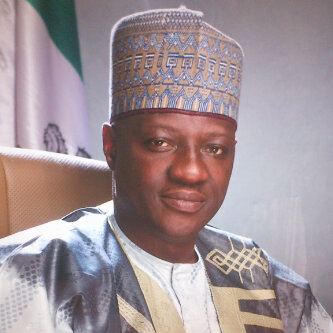
Few days ago, Nigeria's budget-monitoring tech organization and civic advocacy platform, Budgit published a new yearly fiscal sustainability report on states in the country, titled 'State of states.'
The fiscal sustainability report, which seeks to showcase the financial viability and sustainability of each of the states, was prepared based on a review of their monthly federal allocations, debt burden, budget-funding capabilities, and internally generated revenue (IGR) based on 2016 estimates.
As usual, the report had some quite interesting and shocking revelations regarding the financial status of each of the states. From the presentations of the Budgit's fiscal sustainability index, only a few states had encouraging fiscal ratings, while majority of the states are entangled in a financial crisis, a situation that may render them unstainable in years to come, especially if federal allocations were to stop.
Budgit observed that due to a drop in oil price from its peak price of about $140 per barrel to about $56 per barrel, many state governments are faced by rapidly rising budget deficits as they struggle to pay salaries and meet contractual obligations and overheads.
In the case of Kwara, it is interesting to note that on the state sustainability index, Kwara ranked 10th among the 36 states of the federation, which is a significant improvement on its 2015 position when it ranked 20. Isn't it pleasing to note that Kwara that was in 2015 listed among the 18 states that could go bankrupt is now among the 10 most financially sustainable states in the country?
Kwara's rapid improvement in its internally generated revenue, lower debt profile and capacity to meet contractual obligations contributed to the state's performance on the index, which is an indication that the state is progressing economically.
This development is no doubt, a manifestation of the IGR reforms carried out by Governor Abdulfatah Ahmed through a change in people, process and technology in revenue collection, following the establishment of the Kwara State Internal Revenue Service (KWIRS). As a proactive and innovative administrator, Governor Ahmed was able to devise creative ways of handling the dwindling federal allocation by shoring up the State's IGR.
In less than two years of operation, KWIRS has successfully restructured the State's revenue collection and management by blocking revenue leakages and ensuring increased revenue generation for the socio-economic development of the State. In 2016, the Revenue Service generated a total of N17.4b IGR for the State, which is more than double of what the State realized in 2015 - N7.2b.
While many states are struggling to meet obligations to workers, pensioners and contractors in the face of dwindling economic situation, the Kwara State government has continued to ensure regular payment of salaries and pensions, and is equally implementing infrastructural development projects across the State – thanks to the improved IGR of the State.
With an improved IGR profile, Governor Ahmed, in his bid to sustain infrastructural development in the State, launched the Kwara Infrastructure Development Fund (IF-K) in September 2016. IF-K is a sustainable platform designed to finance infrastructure without reliance on federal allocation.
In addition to a N5billion seed fund, the sum of N500million is drawn every month from the State's Internally Generated Revenue (IGR) into the IFK to fund developmental projects.Through IFK, the State government has been able to complete several projects and initiate new ones across the State.
The ongoing construction of Geri-Alimi split diamond underpass is among the projects being funded under the IF-K. Others are the ongoing construction of KWASU campuses in Ekiti and Ilesha-Baruba, KWASU Post-Graduate School in Ilorin, ongoing dualisation of UITH - Sango road, the Light Up Kwara Project (LUK), new State Secretariat for civil servants, among other projects.
Without doubt, the ingenuity of Governor Ahmed in reforming Kwara's revenue collection and management has boosted the capacity of the State government to meet recurrent expenditure commitments and also carryout developmental projects despite the current economic situation.
However, more still need to be done by the Kwara State government in order to ensure sustainable socio-economic development of the State. Substantial investment in infrastructure and human capital development is required to improve to the overall economic performance of the state, which will ultimately enhance the well-being of the people and create more opportunities for collective prosperity.