


Ambali Backs Indigenous Languages in Varsities
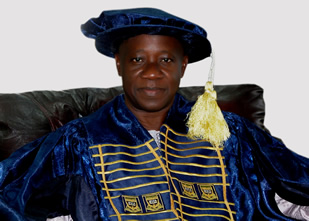
The Vice-Chancellor of the University of Ilorin, Kwara State, Prof. Abdulganiu Ambali, has said the adoption of indigenous languages as a language of instruction in tertiary institutions will preserve Nigerian identity and culture.
He added that it would enhance national cohesion and ensure preservation of Nigerian indigenous languages.
Speaking with journalists in Ilorin on Saturday, Ambali added that it would also increase cultural tourism as foreigners would be keener to learn more about the lifestyle of Nigerians.
He said with commitment by the Federal Government on the policy and with sacrifices of both the lecturers and the students, the policy would work.
He said that the call for the adoption of indigenous languages had been on for a while.
He added that with time, the initial challenges would be overcome, adding that there was the need to give the policy a chance.
He said, "It is not impossible. It is a matter of commitment. Once it is made a policy, it will work. Even our convocation lecturer advocated that we would be better off if we teach our students initially with indigenous language. I think it will work; we only need to give it a chance. Of course, there are challenges because when you are talking about Nigeria, you have to evolve the Nigerian way of achieving that.
"Because if you are in the south west, you may want to use Yoruba to teach but you also have to understand that there may be some people who are from other states that may be posted there, from East or from core North who may want to bring along their families and if they have children of various age groups, then where do they start from in learning Yoruba so that they can translate that into English.
"Once the Federal Government decides that this is what we are going to do, given time and once we are ready to make sacrifices, then I am sure, it will work. I was born here and I schooled in the North. So I picked up Hausa along the way and I can communicate fairly well."
The VC also urged tertiary institutions in Nigeria to adopt proactive strategies to forestall impending national food scarcity arising from the recent flooding of some states in Nigeria.
He stated that faculties of agriculture of universities and other tertiary institutions should research into production of high yielding seedlings that would mature in a short time when planted.
He said efforts must be made by relevant stakeholders to address the impending food scarcity.
He also said the environmental faculties of institutions in Nigeria should ensure that they come up with accurate weather forecasts that could guide the nation into making informed decision and adopting proactive measures to forestall natural disasters.
Cloud Tag: What's trending
Click on a word/phrase to read more about it.
Coalition Of Kwara North Groups Balogun Fulani Solomon Edoja Sobi Specialist Hospital AIT Ilorin Garba Dogo Ajikobi Fatai Olodo Federal Polytechnic Offa ER-KANG Mining Nupe Centre For Digital Economy Kaosarah Adeyi Lucky Omoluwa Charcoal Kunbi Titiloye Ibrahim Taiwo Joshua Adeyemi Adimula Lawal Jimoh Grillo Tunji Folami Salihu S. Yaru Jide Ashonibare Adebara Olatunji Moronfoye Emir Of Ilorin Abdulmumin Yinka Ajia Amuda Musbau Bature Bello VADA Ridwan Agboola Boko Haram Ita-Ore Wahab Abayawo Michael Ologundea Peter Amogbonjaye Durbar NSCIA Adeniyi Ojo MalHub Kehinde Baale David Oyepinola Adedumoye Abdulwahab Oba Abdulkadir Bolakale Sakariyah Senior Ibrahim Suleiman Abubakar Abdullahi Bata Folorunsho Erubu Dar-Al-Handasah Consultants Adamu Ibrahim Sabi Saadu Yusuf Lanwa Oasis Muslim Care Foundation Adamu Attah Afusat Nike Ibrahim Admiralty Villa Kwara Coalition Of Business And Professional Associations Wahab Olasupo Egbewole Yakubu Gobir Abdulrasaq Alaro Awwal Jawondo Sheikh Hamzat Yusuf Ariyibi Radio Kwara Tunde Yusuf TESCOM 2025 Kayode Ogunlowo Okin High School Yunus Oniboki Sabi Kamoru Kadiri Abdulrahman Onikijipa Aminat Ahmed Magaji Erubu Kwara University Of Education Centre For Community Empowerment And Poverty Eradication Henry Makinwa Funmilayo Mohammed Adegoke Bamidele