OPINION: Saraki @55: His battles, victories
Date: 2017-12-18
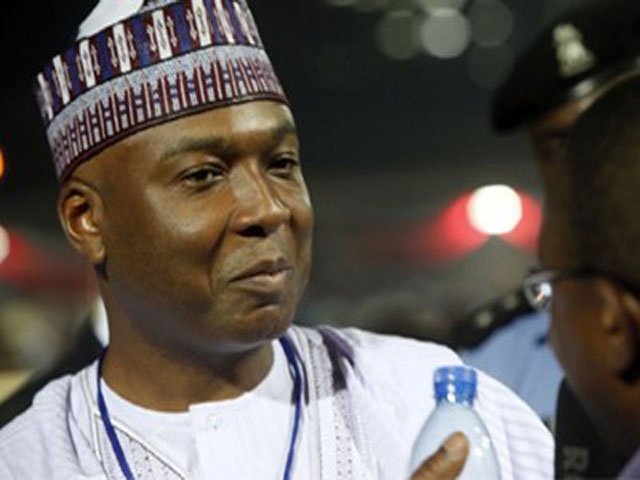
PRESIDENT of the 8th Senate and Chairman of the National Assembly, Senator Abubakar Bukola Saraki, will on the 19th of December, mark his 55th birthday. Since he burst into political visibility, first under the tutelage of his father, Chief Olusola Saraki, Second Republic Senate Leader, and later weaned himself, Bukola Saraki has meant different things to different people.
He was two-time governor of Kwara State; headed to the Senate in 2011 and made his way back to the Red chamber in 2015.
In some circles, he is a political maverick, who inherited a huge political machine. Others see him as a go-getter who spares nothing at achieving his set objectives.
In 2014, a former colleague of his in the Senate attested to how he lobbied him to join the train of defectors to the All Progressives Congress (APC), as he insisted that power would surely change hands in 2015. That former colleague of his took Saraki's admonitions for granted but was later to confess the political wizardry of the Kwara-born politician when the results of the last presidential election trickled in.
His go-getter and never-say-die characters were on display in the build up to the inauguration of the Senate in June 2015. The presidency and the leadership of the party had kicked against his ambition as they brandish an anointed list of Principal Officers. Any chicken-hearted Senator-elect would have easily thrown in the towel by a mere peep into the challenges of that contest. But Saraki plunged into the race, gave his all and today he is the President of the Nigerian Senate. His is one of the two Nigerian families that have successfully got two generations elected into the Red Chamber. The other is the Adeleke family in Osun State, whose patriarch was Senator in the Second Republic before it produced the late Senator Isiaka Adeleke and now Senator Ademola Adeleke.
Whichever way you look at Saraki and his leadership of the National Assembly so far, you will easily deduce focus and patriotism, as well as the love for ethics and traditional values of law making targeted at economic development and national growth.
Composition of Senate Committees
Before now, the standing committees of the Senate had stood at 55, as the Senate then considered it should restrict the number in view of outcry from the public against the huge number of standing committees. Saraki, however, appraised the situation and discovered that development of the segments of the country could not be guaranteed unless specific committees were assigned the role of oversight of key sectors. His argument was that without breaking down the developmental focus to easily manageable segments, the oversight functions of the committees would not be effective. He, therefore, broke down several sectors and in the first instance created 64 Standing Committees. Sectors like Education, Health, Petroleum, Environment and Transport, among others, were further broken into segments with separate committees saddled with responsibility of oversights. The essence is thorough and effective oversights to ensure national development and two years down the line, Nigerians are bearing witnesses to the series of mouth-watering revelations from the Committees.
Key Bills and Motions
In his two years in the saddle in the Senate, Saraki's leadership has taken upon itself the Made-in-Nigeria Campaign, having passed amendments to the Public Procurement Act to ensure home-made goods are given pride of place in the procurement process, the senate had also moved the motion on the Treasury Single Account (TSA) to highlight possible areas Nigeria would have been short changed, the Senate and the House of Representatives early in 2017 held the very first public hearing on budget, while also entering into partnerships with the civil society for more open and transparent budget process, it has also held a roundtable on employment creation, with a motion that recently unraveled that Libyan slave trade cartel.
Saraki's Senate has also held a roundtable on a national coalition against AIDS in a bid to curb HIV/AIDS by 2030; taken motion on stranded Nigerian students abroad and passed the amendment to the 2010 Electoral Act, which is currently awaiting action by the House of Representatives.
The Open NASS Initiative is also a plus for the Saraki-led National Assembly. Through this initiative, the National Assembly has, for the first time, thrown open details of its budget subheads and allowed more public insights into the budgetary process. Though the public may still be clamouring for more, it is obvious the NASS has commenced a trip on the right lane.
One other key intervention of the Saraki-led Senate is the roundtable on curbing drug abuse in Nigeria. This is a Senate initiative to tackle the rising menace of drug abuse in Nigeria through a roundtable in Kano on December 18. The Senate has also passed the health insurance bill in its determination to alleviate health challenges in the society. It has also entertained the Ease of Doing Business procedure through motions and resolutions.
The investigation on the Presidential Initiative on the North-East (PINE) is one major assignment that landed the Senate in serious controversy. The Senate had set up an adhoc Committee on Mounting Humanitarian Challenges in the North East headed by human Rights activist, Senator Shehu Sani. His committee burrowed into its investigations and at the end of the day, make monumental discoveries of stealing and mismanagement of public funds. It recommended the suspension and trial of former Secretary to the Government of the Federation, Babachir David Lawal, who was regarded as a strong insider in government then. The report indicting PINE and Lawal was rebuffed with the system scoffing at it for some time. But Senate's insistence on the veracity of its findings in respect of the management of PINE paid off when Lawal was suspended and eventually relieved of his office.
Another good core on the side of the Saraki's senate is the passage of the elusive Petroleum Industry Governance Bill (PIGB). The bill has been in the National Assembly since the Sixth Assembly. It has always ran into bad weather. But Saraki devised a way out by breaking the bill into three parts. On record the senate has passed the first segment into law while the remaining aspects are at committee stages.
Saraki has also championed the passage of the popular North-East Development Commission (NEDC) Bill, which recently got signed into law. Only recently, he inaugurated an adhoc committee on security infrastructure, to be headed by the Senate Leader, Ahmad Lawan.
The South-East Development Commission bill is also in the offing and may soon get the nod of the Senate, as it has already scaled the second reading. Saraki's Senate has also intervened in the face-off between the Federal Government and the leadership of the Academic Staff Union of Universities (ASUU).
Earlier in the year, the 8th Senate held a first-of-its-kind public hearing on the 2017 Appropriation Bill. Chairman, Senate Committee on Appropriations, Senator Danjuma Goje, explained then that the 2017 Budget hearing was aimed at making the National Budgeting process an all-inclusive activity for Nigerians.
"Budget Hearing will shape discourse on fiscal, financial and economic assumptions used as basis in arriving at total estimated expenditure. The forum on Budget Hearing will be used for the collation of views and positions with a view to making general Legislative contribution," Danjuma had said.
While speaking on the hearing, Saraki said that the historic public hearing on the budget was aimed at ensuring more citizen-participation in the legislative processes.
"We will continue to create platforms such as these that will allow the general public to play a role in what we do here. Moving forward, the public can expect that we will continue this practice of having an open budget hearing where every-day Nigerians are primary contributors," he had said.
The Power Probe
Three weeks ago, the Senate President declared open an investigative hearing into the fate of the troubled 215MW Kaduna Power Plant themed: "Urgent need to save the 215 MW Kaduna Power Plant." Unlike the previous Power probes, which landed the various NASS Committees in trouble, the quiet probe instituted by the Joint Senate Committee on Gas Resources and Power, Steel Development and Metallurgy, has revealed much about the troubles of the Nigerian as regards the power sector.
Saraki, who was represented at the hearing by the Deputy Senate Chief Whip, Senator Francis Alimekhena, said that the Senate was aware that the Federal Government, through the Nigerian National Petroleum Corporation (NNPC), is on the verge of awarding the contract for the construction of the 40x614km Ajaokuta-Abuja-Kaduna-Kano gas pipe line to aid the delivery of the Power Plant, adding that the Senate was convinced that the use of gas to power turbines is sustainable and environment-friendly.
He was setting the tone for the controversy already dogging the Power Plant where the Ministry of Power had approved the change in its design from gas powered to diesel powered.
The Senate President had said: "It is surprising that the Federal Ministry of Power, Works and Housing appears to have jettisoned the use of gas to power the Kaduna power plant and instead, opted for the construction of Automobile General Oil (diesel) tanks for the use of AGO, which is 60 per cent higher in cost when compared with gas."
And the revelations at the hearing justified Saraki's earlier position. Stakeholders at the investigative hearing told the Joint Committee that it would cost Nigeria $200 million more to use diesel instead of Gas at the Power plant. Indeed, it was revealed that to power one unit of the eight unit Plant, Nigeria would spend N46 million daily, cough out 180,000 litres of diesel per day and also generate power at the rate of N79 a kilowatt; whereas the use of gas would guarantee the country the production of one kilowatt of electricity at between N35 and N37.
Though the Senate in plenary is still awaiting the report of that Joint Committee, the Committee had already ordered the stop of the planned commissioning of one unit of the Power Plant in January 2018 in view of the huge financial haemorrhage the operation would cost the economy.
By and large, Saraki at 55 has been a business and political success. He has also been a good family man. As the Chairman of the National Assembly, stakeholders agree that he has maintain the focus of leading a legislature that is focused, full of initiatives, people-oriented and sold to development.
Akintoba, a former Local Government chairman in Kwara State, wrote from FCT, Abuja
Source