


Reformers and Educational Modernisation: Reflections on the Legacy of Sheikh Kamaludeen Al-Adabiy By Hassan A. Saliu
Reformers emerge only occasionally in history. They operate within specific sectors of the political economy, and what distinguishes them is the novelty they introduce. Sometimes, their offerings may not be entirely new; they may refine the prevailing order. As history has shown, reformers typically face formidable challenges as they canvass for the new models or paradigms they herald.
This resistance stems from their advocacy for alternative ways of doing things. Naturally, adherents of the old order often rise in opposition, seeking to make them abandon their newly formulated approaches or shifts.
Those who seek to transform established practices for instance, through the integration of Western forms of education into traditional systems of religious instruction face considerable obstacles, both overt and covert. Opponents of such innovations may coalesce to frustrate the diffusion of the new order. To be a reformer, therefore, who seeks to supplant entrenched practices with new models, is no tea party; it is an arduous and often lonely enterprise, with stories of betrayal and compromise inevitable.
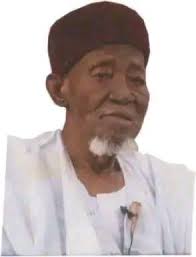
Sheikh Muhammad Kamalud-deen Al-Adabiy was, by all standards, a quintessential reformer who introduced a novel approach to knowledge transmission. His singular contribution lay in modernising Islamic education in Ilorin and, consequently, propagating Islam to near and far places. It is hard to contest that he played a major role in spreading Islam in Igbominaland, Lagos, and other places by establishing modern schools imbued with Islamic teachings.
He was among the few of his contemporaries who foresaw that the future would belong to those proficient in both Islamic and Western education. He therefore wanted Ilorin indigenes to be adequately prepared for future undertakings.
At the time, Ilorin was deeply entrenched in a purely traditional mode of imparting knowledge, devoid of modern pedagogical elements. The erroneous belief at that time was that Western schools were established to lure Ilorin people into Christianity, a reality which was not necessarily the case as time went by. Sheikh Kamaludeen pioneered primary and post-primary schools in Ilorin and other locales, integrating modern methods of Islamic instruction. These innovations, which were meant to spread Islam by making it more appealing to the people, included the consolidation and institutionalisation of school uniforms, the use of tables and chairs, a structured curriculum for Islamic education an idea that was in its embryonic stage under his teacher, Sheikh Taju Adab, but made more manifest under him and the facilitation of scholarships for young Ilorin indigenes to study abroad. At the time, these initiatives were considered strange in an environment where Western education was largely viewed as alien and an instrument of conversion to Christianity.
Consequently, his reformist agenda met with resistance from segments of the traditional religious establishment. Some mallams, including my own grandfather (no record of personal animosity existed between them), vehemently opposed the infusion of Western education into the Quranic educational system.
Their apprehension was that such an integration would predispose young Ilorin people to embrace Christianity a prospect they found undesirable. This perspective was not, however, shared by a few modern Islamic scholars in Ilorin.
Sheikh Kamaludeen was undoubtedly ahead of his peers in his vision of an integrative approach to education, and this progressive stance exposed him to sustained virulent attacks. He, however, remained resolute, enduring difficult moments that would have compelled the faint-hearted to beat a retreat.
Paradoxically, his refusal to succumb to opposition enabled some of us to acquire Western education even if indirectly. I was enrolled in his famous primary school at Okekere, Ilorin, in 1967 under rather dramatic circumstances. Five of us were taken to the Ansarul Islam Primary School, which he had established. My enrolment was initially contested, as the youngest of them all, because I was not qualified. This was resolved through the then-common physical test of crossing the hand over the head to touch the opposite ear, which I successfully passed. Another objection was subsequently raised: that my father preferred that I attend a Quranic school at Ita-Egba under one of my grandfather's students rather than a Western school. Miraculously, my school fees were paid by my maternal uncle, who was unconvinced by the reasons adduced for not paying my own school fees along with others. Thus, all five of us began our elementary education at Ansarul Islam Primary School, Okekere, Ilorin, in 1967, first in its nursery wing opposite the Masingba Mosque, learning purely the Holy Quran, as was the practice then. Pupils were only taken to the primary school proper after spending about two or three years at what looked like a nursery in those days. After a year, we were transferred to Pakata Oke-Ebo Alaso Primary School, Ilorin, where I almost completed my primary education.
Several years later, after I had become a Professor of Political Science, an incident occurred that underscored the irony of my educational trajectory vis-à-vis my grandfather's opposition to Western education. He had detested it to the extent of driving pupils in uniforms out of our compound in those days. On one occasion, a man remarked in a chance meeting with him and others that: "Hassan, you are now a Professor when your grandfather did not like Western education and kicked against it. God is great." Apparently referring to a situation that prevailed shortly before and after my birth.
From the foregoing, it is evident that without the yeoman service of Alhaji Kamaludeen in promoting Western education in Ilorin and other places, many of my age mates and I would not have had the rare privilege of being educated in the Western way at all. No doubt, some families in Ilorin were inspired by his advocacy amid residual resistance, even though some were later encouraged by the tenacity of the first Mufti of Ilorin to embrace Western education and offered their support to make it happen.
Regrettably, I did not have much direct contact with Baba Kamaludeen during his lifetime, despite his pivotal role in making my Western education possible; however, I attended his fidau prayer held at the premises of Mohammed Kamaludeen University, Ilorin. I had only one or two encounters with him at his house over matters I cannot vividly remember now. My limited encounter with him was, however, compensated for by the warm relations I maintained with two of his late children: Alhaji Shefiullahi Kamaludeen, who always shared his experiences with me and at times gave me money whenever I visited him, and Alhaji Ahmed Olayiwola Kamaludeen, a fighter for a just cause, who attended the fidau prayer held for my mother in December 2015 and offered prayers for her. I shared the platform of the Council of Ulama with Alhaji Ahmed Kamaludeen as members, a platform through which he made valuable contributions to the Council's deliberations. Meanwhile, I continue to maintain a deep and subsisting relationship with one of his grandchildren, Professor Kamil Kamaludeen, a man of vast experience.
As activities marking the 100th anniversary of the establishment of one of his famous schools are underway, it is apposite to offer prayers for Baba Kamal a pacesetter, a farsighted reformer, a staunch believer in human liberation and empowerment, and a crusader for the blending of Western education with Quranic education for Allah's continuous forgiveness and abundant blessings. It is plausible that without his pioneering efforts, I would not have attained the level of Western education I have today, as his role encouraged my mother to surmount every obstacle in my pursuit of Western education. May Allah continue to bless him and my mother for the enduring good they accomplished during their lifetimes. Amin thuma Amin.
Hassan A. Saliu,
the Interim President, NSIA writes from Ilorin.
Cloud Tag: What's trending
Click on a word/phrase to read more about it.
Yaru International Vocational Centre Ali Ahmad Old Oyo Binta Sulyman TESCOM 2025 Yusuf Babatunde Abdulwahab Roseline Oni Aremu Afonja Kunbi Titiloye Vasolar Consultoria Post-utme Kulende-UITH Abdulfatah Ahmed Shuaib Jawondo Coronavirus Offa Descendants Union Ndakene March 28 Hamid Bobboyi Abdulazeez Arowona IHS Towers Kwara State Television (KWTV) Dagbalodo Sarah Alade Saka Asiat Ayinke Metro Park Medinat Folorunsho Salman Chief Imam Of Offa Idowu Aremu AbdulHamid Adi Sherif Shagaya Yusuf Lawal Shagari Ajibike Katibi Owode Market Bello Oyedepo Muyideen Ajani Bello Ilorin Amusement Park Ahmed Alhasssan Elerin Of Erin-Ile Saliu Shola Taofeek Saudat Abdulbaqi Moses Rahman Popoola Kwara State Coalition Of Business And Professional Associations Road Transport Employers Association Of Nigeria Ganmo Power Sub-Station Makama Of Ilorin Alabi Lawal TETFUND Ilorin Emirate Unicontinental Construction Company Radio Kwara Fatimah Abdulkadir Doyin Awoyale Park Habeeb Saidu Idofin IFK Yusuf Abdulraheem Mutawali Sulu Babaita Isiaka Abdulwahab Olarewaju Issa Laolu Saraki IF-K Sarah Jubril Zaratu Umar Joseph Daudu AbdulGafar Tosho Kwara Teaching Service Commission Wole Oke Abdullahi Dasilva Yussuf Amusa Bello Ajase-Ipo Bello Bature KWTV Ophthalmological Society Of Nigeria