


Street Begging Persists in Ilorin Despite Kwara Government Crackdown
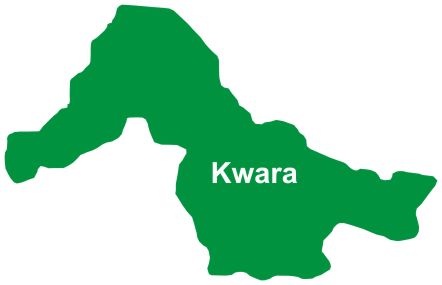
Despite renewed enforcement measures by the Kwara State Government, street begging remains widespread across the Ilorin metropolis, raising concerns about the effectiveness of the crackdown and the deeper socio-economic forces driving the practice.
Arewa PUNCH reports that in recent weeks, the government has intensified its clampdown on street begging, citing security risks, environmental nuisance, and the exploitation of vulnerable groups, particularly children.
The move followed the arrest of a suspected criminal who allegedly disguised as a beggar to evade detection, a development that authorities say exposed the potential misuse of street begging as a cover for unlawful activities.
Officials of the Kwara State Ministry of Social Development disclosed to Arewa PUNCH that more than 90 beggars had been evacuated and profiled from parts of the metropolis, including GRA, Tanke, and Offa Garage.
The government also warned parents and guardians against deploying children for street begging and urged residents to channel almsgiving through approved humanitarian organisations.
The Commissioner for Social Development, Hajia Mariam Nnafatima Imam, described the earlier incident involving a suspected bandit in Igbaja, Ifelodun Local Government Area, as a wake-up call.
"This incident is a serious security concern and a clear indication that street begging could be exploited by criminal elements to perpetrate unlawful acts and threaten public safety," she said.
Nnafatima Imam maintained, "While the state remains committed to protecting vulnerable persons through rehabilitation and empowerment programmes, we will not tolerate the use of street begging as a cover for criminal activities."
She further warned that sending children to beg exposes them to abuse and exploitation.
"Sending children or dependants to beg on the streets exposes them to exploitation, abuse, and serious security risks," the commissioner cautioned.
Imam added that enforcement operations would be sustained across all local government areas, noting that individuals or groups facilitating street begging risk prosecution under existing laws.
Begging hotspots remain active
However, a visit to major parts of Ilorin by our correspondent revealed that street begging continues unabated in several high-traffic locations, including Post Office, Tanke, Offa Garage, Challenge, Oja Tuntun, Gambari, and busy intersections across the city.
At these hotspots, beggars - many of them women and children were seen clustering around ATM points, filling stations, markets, and POS stands, often approaching commuters persistently.
At the post office area, a man identified simply as Kayode recounted his experience to Arewa PUNCH after he was besieged and held hostage by teenage beggars while attempting to withdraw some cash.
"Can you believe what that small girl told me when she kept asking me for money and tapping me continuously?" he said.
"She said I would buy a Lamborghini. Tell me how she even knows what that is. This is not the first time this has happened, but I was particularly shocked by that statement.
"The government really needs to do something. It is getting out of hand. It feels more like harassment than normal begging. If I had something easy that could be snatched, with the way I was mobbed, it could have been taken."
A POS operator in the same area, Rahmat Sulaiman, said the persistent presence of beggars was affecting her business.
"This is what happens every day. It's like they intentionally position themselves in strategic locations," she said.
"It has even cost me customers. Some people get scared and leave without withdrawing money because of them. I can't relocate because this is an open and viable location."
Organised patterns and displacement concerns
Observations by Arewa PUNCH across the metropolis suggest a pattern in the way beggars operate, with many appearing to target specific high-traffic areas at peak hours. This has raised questions about whether some are part of coordinated networks rather than acting individually.
Residents and traders who spoke to our correspondent noted that certain groups of beggars, particularly children, appear to move in clusters and return to the same locations daily, suggesting a level of organisation.
Abdulmalik Jimoh, a senior journalist residing in Ilorin, narrated his experience with beggars, especially the younger ones.
"There was a time I was bombarded by the small small children around Tanke Tipper Garage axis when i tried to give alms. If I had anything that could be easily snatched from me, those children would do it.
"I felt so pressured that I had to excuse myself with immediate effect.
"For me, street begging is usually caused by economic hardship. The only way to solve is by the government taking deliberate actions by creating an environment for vocational skills to thrive.
"Also, overpopulation is one of the key factors. The government should implement birth control measures that could reduce the rate at which people are giving birth in the country.
A trader at the Yoruba Road market, Kemi Taiwo, told Arewa PUNCH that the menace of begging needs to be addressed urgently by the state government before it gets out of hand.
"In the past, those we used to see around the market and by the roadside were physically challenged beggars, but these days, there are many able bodied men and women begging people for money. The situation is pathetic," she said.
A student of the University of Ilorin, Blessing Abraham, also lamented the situation, calling on the government at all levels to find lasting solutions to the economic situation in the country.
"In Ilorin, almost everyone is now a beggar. At ATM points, motor parks, food canteens, mosques, churches, almost everywhere, they are there (beggars," she pointed out.
While the government has not officially confirmed the existence of organised begging rings, the persistence and pattern of the activity have fueled public suspicion.
Analysts say that enforcement alone may not be sufficient if underlying drivers such as poverty, rural-urban migration, and lack of social support systems are not addressed.
There are also indications that the crackdown may be displacing beggars from one location to another rather than eliminating the practice entirely, as areas previously cleared of beggars are gradually witnessing their return.
Child exploitation and risks
An environment expert observed that one of the most troubling aspects of street begging in Ilorin is the visible involvement of children, many of whom spend long hours on the streets instead of attending school.
"Some of these children are usually seen carrying infants or working in groups, approaching motorists and pedestrians with rehearsed appeals.
"Their presence has raised concerns about child labour, trafficking, and exposure to abuse," she further noted.
Similarly, social development experts equally warn that children engaged in street begging are at risk of physical harm, exploitation by adults, and long-term deprivation of education and opportunities.
Abraham added, "You can not even withdraw money from an ATM point without being surrounded by people asking for assistance. It makes you feel unsafe at times."
Thus, she insisted, "The government really needs to look into the rising cost of living and unemployment because these are major reasons people resort to begging."
She concluded, "If nothing is done urgently, the situation may get worse and could lead to increased insecurity in our society."
A civil servant, Mrs Yinka Adebayo, remarked that the economic downturn is a major contributor to the menace of street begging in the metropolis.
"Things are hard, and people are suffering. The government needs to do something.
"Many of these beggars you see around are civil servants whose salaries can't take them home anymore because of inflation. They are suffering and dying."
A trader at the popular Challenge phone market, Nkem Ezeh, decried what he called the 'highhandedness' of the beggars.
He revealed that many of the beggars even resort to harassment and intimidation when begging for money.
"These beggers have become desperate; when you tell them you don't have money these days, they will harass you in public.
"The situation of things in this country is really bad and something must be done by our government because the people are very hungry," he said.
A child-focused organisation, UNICEF, has repeatedly raised concern about the growing number of children on the streets, warning that the issue reflects deeper gaps in child protection systems.
"Children in street situations are among the most vulnerable, exposed to violence, exploitation and abuse, and often deprived of access to education and essential services," the organisation stated, stressing that "no child should be forced to live or work on the streets."
Similarly, a Nigerian civil society group, Resource Centre for Human Rights and Civic Education, described the situation as a national crisis driven by systemic failure.
"Children are not the problem; they are victims of failed policies, weak enforcement, and societal neglect," the group said.
"Instead of being in school and under proper care, many are pushed into street begging where they face abuse, exploitation, trafficking, and long-term deprivation of their rights and dignity."
The organisation stressed, "Addressing street begging requires more than periodic crackdowns; it demands sustained investment in education, social protection, and family support systems to prevent children from ending up on the streets in the first place."
Our correspondent reports that while the state government has repeatedly cautioned parents and guardians against sending children to beg, enforcement appears difficult, particularly where economic hardship compels families to rely on such practices for survival.
Effectiveness of government interventions
Not a few stakeholders are of the opinion that while the evacuation of over 90 beggars marks a significant step, questions remain about the long-term impact of such interventions.
Authorities say those evacuated are profiled and may be rehabilitated or repatriated to their states of origin.
However, the reappearance of beggars in key locations suggests that these measures may not be fully effective or sustainable.
Civil society groups argue that without comprehensive rehabilitation programmes, including vocational training, shelter, and reintegration support, many evacuees may return to the streets.
They also stress the need for stronger collaboration between government agencies, community leaders, and non-governmental organisations to address the root causes of street begging.
Public reactions and way forward
Residents have expressed mixed reactions to the government's crackdown, with many acknowledging the security concerns while questioning the implementation strategy.
Some believe stricter enforcement is needed, while others advocate a more humane approach that prioritises social welfare and poverty alleviation.
The commissioner urged residents to remain vigilant and report suspicious activities while also advising against indiscriminate almsgiving.
"Members of the public should support vulnerable persons through government-approved social intervention programmes and credible humanitarian organisations, rather than through indiscriminate street almsgiving," she said.
As Ilorin continues to grapple with the persistence of street begging, the situation highlights broader issues of urban poverty, child protection, and public safety.
Arewa PUNCH sums up the feeling For many residents who lament the daily encounters at traffic points and commercial hubs, saying it serves as a reminder that beyond enforcement, addressing street begging in Kwara will require a balanced approach; one that combines security measures with sustainable social and economic interventions.
Until then, the presence of beggars on the streets of Ilorin remains a visible contradiction to the state's ongoing crackdown.
Cloud Tag: What's trending
Click on a word/phrase to read more about it.
Musa Abdullahi Bilikisu Oniyangi Madawaki Abdullateef Abdussalam Ramadhan Kazeem Adekanye Sa\'adatu Modibbo-Kawu New Naira Notes IEDPU Erubu Oba Zubair Sobi FM Olam Food Ingredients Abikan Kunle Suleiman Saliu Mustapha Tunde Akanbi Sardauna Tunde Oyawoye Bio Ibrahim Gbajabiamila Manzuma Ilesha-Baruba Idris Amosa Saidu ASKOMP Abdulkadri Ahmad Alaiye Valsolar-Kwara Company Limited Kwara State Football Association Bursary Suleiman Yahya Alapansapa Afolayan Undergraduate Bursary Musa Ayinla Yeketi John Dara Oba Abdulkadir La\'aro Sabi Pacify Labs Michael Nzekwe Awili Pedro Okoolowo Babatunde Ishola Babaita ASUU Isin Mohammed Halidu Moremi High School Idowu Aremu Balogun Gambari Hussein Olokooba Sulu Gambari Kola Shittu Special Agro-Industrial Hub Student Learning Support Helpline Ajuloopin Mohammed Abdulahi John Olobayo AbdulRahman Saad Olabanji Orilonishe Baruten Tricycle Owners Association Of Nigeria Gbenga Awoyale Iyaloja-General Saka Saadu Arandun Sulyman Atolagbe Alege Mohammed Yisa Abiodun Abdulkareem Musa Alhassan Buge Ethical College Talaka Parapo Ahmad Olanrewaju Belgore Kayode Alabi KFA VADA Yusuf Ibitokun Sherifat Abdulmajeed Abdullahi Makama Of Ilorin Saba Jibril Oluranti Idowu