


Over ?11.5bn Worth of Rice Farms Lost in Kwara's Dry-Season Deluge
TUNDE OYEKOLA Investigates Unprecedented Dry-Season Flooding in Kwara State
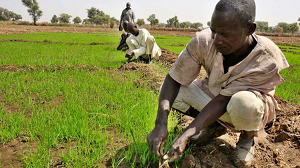
As Nigeria continues to tackle the challenge of food security, the recent flooding at Shonga Rice Farm in Edu Local Government Area (LGA) of Kwara State could exacerbate concerns over potential food shortages. The incident reportedly submerged over 5,000 hectares of rice farmland, valued at ?11.5 billion, dealing a significant blow to agricultural productivity.
In an unusual turn of events, Shonga experienced unexpected flooding during the dry season on January 25, 2025—a phenomenon likened to a stream flowing through the desert. This anomaly affected not only Edu LGA but also two other local government areas in Kwara State, resulting in the loss of more than 3,000 hectares of fertile rice fields.
According to data from the Central Bank of Nigeria, the country produced 8.9 million metric tonnes of paddy rice in 2023—the highest output since 2010. Kwara State contributed significantly to this figure, producing over 102,000 metric tonnes during both the wet and dry seasons. However, the recent flooding threatens to undermine these achievements, raising concerns about the state's ability to maintain its agricultural output and meet national demands.
A 2022 CBN official document, which celebrated the return of the rice pyramid in Nigeria, listed Kwara State as one of the six states in the North Central which joined the rice-producing states in 2022.
“The North Central state, which contributed over 40,000 metric tonnes of rice paddy to the recently unveiled rice pyramid in Abuja, was not considered a rice-producing state before the administration of President Muhamadu Buhari and Governor Abdulrahman Abdulrazaq, but today, the state has emerged among the top producers in the country, courtesy of the efforts of the Rice Farmers Association of Nigeria in the state,” the CBN report stated.
Speaking on the development, the state chairman of the Rice Farmers Association of Nigeria, Dr Ahmed Saba, said “We thought we didn't do enough in our production until we got to Abuja where the Central Bank of Nigeria, which is in charge of the Anchor Borrowers Programme, unveiled the data showing that Kwara State actually did better than we thought, being among the top rice producing states in the country.”
Saba, during a visit to the flooding areas, disclosed that about 5,000 hectares of rice plantation, estimated at N11.5bn, were ravaged in the flooding that submerged farmlands in some communities in the three local government areas of the state.
The lawmaker, who identified the rice produced in Moro, Edu and Patigi as one of the best in the country, lamented that the farmers were taken aback that their farmlands could be flooded when it wasn't the rainy season that usually comes with heavy waterfalls.
“In this area, we are always affected by the flood during the rainy season. That is why you see a lot of people coming to farm during the dry season. This type of flood has not been witnessed in the past, especially during the dry season.
“A lot of farmlands have been submerged by water as a result of the opening of Jebba Dam. That affected us seriously, as billions of naira have been wasted. Some farmers had established themselves here for the past three months. This flood came as a surprise to everyone and this is a threat to food security in the country.
“The type of rice that comes out from Moro, Edu and Patigi is one of the good quality rice produced in Nigeria. The opening of the water is suspicious and that is why we have to carry out an investigation. Why did they open water at this time of the dry season? We will find out,” Saba said.
He expressed his readiness to raise the matter on the floor of the House of Representatives as he also called on the Federal Government agencies to probe the flood disaster.
The legislator distributed 150 bags of NPK fertiliser, 50 knapsack sprayers, 50 bags of rice seeds, 170 litres of pesticide and chemicals and 10 pieces of solar water pumping machines to the victims to mitigate the effects of the loss incurred.
“We are going to come up with a motion for the House to look into the matter, while the necessary agencies should also investigate why there is a flood this time. We cannot say there is flooding during the rainy season and then flooding again during the dry season. It means something is wrong somewhere.
“All of us must be on the same page because we are talking about food security in the country. We have to let the Federal Ministries of Agriculture and Water Resources be aware of what has happened and see the measures they can employ to assist the farmers so that they can go back to the farm,” he said.
With the recent flooding which affected communities in Edu, Patigi and Jebba in Moro Local Government Area, the figure of rice production in the state might have gone down.
Some affected communities included Fonga and Jebba in Moro LG; Lade, Patigi and Kpada districts in Patigi LG and Shonga, Bacita and Lafiagi in Edu LG of the state.
“Over 5,000 rice farmers were reportedly affected in the incident arising from the alleged opening of dams in Jebba and Kanji, Niger State,” the former chairman of RIFAN and lawmaker representing Edu/Patigi/Moro Federal Constituency of the state in the National Assembly, said.
Saba, who described the flood as a threat to food security in the country, said the degree to which the farmlands were destroyed was regretted.
According to reports, the flood claimed at least one life while 3,000 hectares of rice farm were submerged and about 5,000 farmers were affected.
The affected farmers according to Muhammad Abdulkadir, a community leader in Tada, are those who came from different states in the North. He said, “We have farmers from Kebbi, Zamfara, Kano, and Niger states, and they have lost millions of naira worth of rice farms to this flooding.
“We need the government's assistance. When there was no flooding, we realised over three million metric tonnes of rice here annually.
“We thank the government for coming to our aid immediately. This should not end here. We want the government to find a permanent solution to perennial flooding in this axis. The permanent solution is to dredge the River Niger.”
One of the affected farmers, Mallam Suleiman Mohammed, told The PUNCH that the flood devastated his entire investment and livelihood. He said having started witnessing a breakthrough in dry season rice production, the disaster left him in pain and sorrow.
Another farmer, Mrs Hassana Peter, described the situation as a terrible loss, adding that everything she laboured for in the last three months was washed away within a few days. “I sold all my properties to farm this dry season and lived inside my farm for three months. I am a struggling woman. Who will come to my rescue now? This is too much for me,” she lamented.
Another victim, simply identified as Abdullahi, who claimed to be among farmers who diverted to rice farming, described the situation as a big disaster.
“Farmers who cultivate cassava, maize and other crops have diverted. From the community up to the bank of the River Niger, everywhere is filled with rice fields and it's difficult to believe this is happening during dry season farming,” he said.
He said the least a farmer could spend to manage a hectare of rice plantation is over N1m, adding that those affected, both indigenes and non-indigenes, were close to 2,000.
Mr Aliyu Jibril, who also claimed to have lost several hectares of rice farmlands to the flood, said since they started the dry season farming of rice in Shonga, this year's loss was unprecedented. He lamented that farmers doubled in number this year compared to last year, with over 300 farmers affected in some of the communities.
A Lagos-based entrepreneur whose investment was also affected, Alhassan Mohammed, said “We lost billions of naira to the incident and I urge the Federal Government and others to visit the place to see for themselves the terrible devastation. Some victims who took loans to invest fainted following the incident.”
The Emir of Shonga, Dr Haliru Yahya, speaking to the state government delegation during a visit to the area to ascertain the degree of the disaster, expressed surprise at the flooding in the community at this time of the year when there was no rain. He appealed to the government to conduct a thorough investigation into the causes of the unusual flooding.
The Emir said, “From here up to Ouagadougou in Burkina Faso, Niger Republic, and Mali, there was no rain. The Sahel is dry. How can there be a flood here? The source of this flood must be local.
“We have asked from Kainji Dam, and they said it wasn't from them. But Jebba Dam could not deny it. In fact, they said they would soon close it. We spent several years attracting people to this place. We hope this will not happen again next year to avert food insecurity.
“One life was lost, 3,000 hectares of rice farm submerged and about 5,000 farmers were affected in the unusual flooding in Shonga community in Edu Local Government Area of Kwara State,” the Emir said.
He stated further, “His Excellency (Governor AbdulRazaq) has spoken to me, and he took it very seriously. I didn't expect this delegation again, given his interventions already. We are very grateful to him for his concern and for sending this powerful delegation. We must get to the roots of the matter. If it is true that Jebba Dam released water, what was the reason, and who authorised it?”
Following the incident, the Kwara State government has set up at least two different delegations to probe the flood. A delegation led by the Deputy Chief of Staff to the Governor, Bukola Babalola and the Kwara State Agro-Climatic Resilience in Semi-Arid Landscapes to conduct an on-the-spot assessment of rice farmlands and communities affected by the flood.
The delegation visited Shonga to establish the causes of the unusual flooding and also delivered relief materials worth millions of naira to the affected farmers in the Tada community.
Speaking during the visit, Babalola assured the victims that the government would offer assistance to cushion the effect of the flooding on their farms.
“We are here to see the damage done to the farms, especially the rice farms in the Tada community. We have seen what happened and we are taking the message back to Governor AbdulRahman AbdulRazaq to see what can be done to remedy the situation — immediate and future remedies — and avert loss of lives and farmlands,” she told reporters on the sideline of the visit.
The Kwara Agro-Climatic Resilience in Semi-Arid Landscapes, an agency of the government, led by the state Project Coordinator, Alhaji Shamsideen Aregbe, also visited the affected community and used a drone to survey the affected area for an on-the-spot assessment of the farmlands and communities.
Representing the Emir of Shonga during the Kwara ACReSAL team visit, the Nakodi of Shonga, Alhaji Sulaiman Yahya, commended Governor AbdulRazaq for his response to the flood incident and thanked the Kwara agency for the visit.
Aregbe expressed sadness over the flooding, adding that “The Kwara ACReSAL team is in Shonga on the directive of Governor AbdulRazaq to complement the state government's efforts of building a climate-resilient society and providing contingency emergency response to victims of disasters, especially environment-related ones.
“The ACReSAL is a Kwara State project supported by the World Bank with the mission of restoring degraded landscapes, and protecting the environment, among other activities in different components and sub-components in the 19 states of Northern Nigeria, including the Federal Capital Territory (FCT) Abuja.
“I am here with our technical team; we will deploy advanced technology, including a drone, to assess the flooded areas and the extent of damage, to proffer solutions to the problem. The governor has brought in the ACReSAL Project through the World Bank and the Federal Government to develop our state and provide succour to the people in environmental disasters. We are fully committed to achieving this,” he added.
Aregbe then assured that the full report of the findings would be made available to the governor as well as the World Bank to get assistance and viable environmental and ecological solutions to the problem.
Cloud Tag: What's trending
Click on a word/phrase to read more about it.
Ilorin Innovation Hub Post Utme 08001000100 Olabimpe Olani Iyaloja-General Folorunsho Erubu Damilola Yusuf Smart School Tricycle Owners Association Of Nigeria Saheed Akinwumi Isin Arca Santa Nnazua Clement Yomi Adeboye Abubakar Bature Sulu-Gambari Timothy Olatunde Fadipe Elerinjare-Ibobo Mohammed Ghali Alaaya Tunde Yusuf Ahmad Olayiwola Kamaldeen Edu Yahaya Oloriegbe Yakub Lai Gobir Abdulkadir Bolakale Sakariyah Elesie Of Esie IHS Oba-Solagberu Agboola Abdulraheem Erubu Oba Zubair Odolaye Aremu Onilorin Bashir Badawi Aisha Abodunrin Ibrahim Elections Ibrahim Gambari Monkey Pox Ilorin Descendants Progressive Union Damilola Yusuf Adelodun Ibrahim Abdulqadir Abikan Elese Of Igbaja Olanrewju Okanlawon Musa Saheed Popoola Musa Aibinu Mary Arinde Ilorin Amusement Park Yusuf Mubarak Abdulrauf Aliyu All Peoples Party Oluronke Adeyemi Ope Saraki Olofa Of Offa Ibrahim Agboola Gambari Toyin Olayinka Tejidini Sango-UITH Road Abdulfatai Salman Baakini Abdulrosheed Okiki Ayotunde Emmanuel Alao Aisha Ahman-Pategi Erubu Tunji Oyawoye Rotimi Samuel Olujide Sabitiyu Grillo Sheikh Alimi SARS Joseph Alex Offorjama Hajj Abdullahi Atanda Musa Abdullahi Rafiu Olasile Oba Abdulraheem Ilesha-Gwanara Femi Ogunsola Millennium Development Goals Oluwarotimi Boluwatife Adenike Gbenga Olawepo COVID-19 Palliatives Abubakar Abdulraheem