Revving up yam production, farmers' profit with technologies
Date: 2020-08-06
Yam has been described as the most important source of dietary calories in Côte d'Ivoire, Benin, Ghana, and Nigeria, ranking as the third most important source of protein supply.
Hence, yam is important for food security and income generation, just as 31.8% of the population in Nigeria and 26.2% in Ghana depend on yams for food and income security, according to Yam Improvement for Income and Food Security in West Africa (YIIFSWA) of the International Institute of Tropical Agriculture (IITA), Ibadan.
In Nigeria, yam is a food and cash crop, and plays an important role in food security and in the livelihoods of 60 million people in the West African region. The crop is cultivated mostly in the derived, humid, and southern Guinea savanna agro-ecologies.
About 48 million tonnes of yam (95% of global supply) are produced on 4 million hectares annually in the region, mainly in five countries of Benin, Côte d'Ivoire, Ghana, Nigeria, and Togo; Nigeria alone accounts for 70% of global yam supply.
However, despite its importance in the economy and lives of many Africans and Nigerians in particular, yam faces several constraints that significantly reduce its potentialities to support rural development and meet consumers' needs as an affordable nutritional product.
The constraints to yam production include poor value addition technologies, scarcity and high cost of quality yam seeds, and on and off farm post-harvest losses. YIIFSWA also lists "low soil fertility, unexploited potential of yam markets by smallholder farmers, unavailability of adapted varieties to stress environments of the savannah agro-ecologies, diseases and pests, and limited opportunities for smallholder farmers, mainly rural women, in yam production and marketing" as additional challenges.
"Globally, Africa's contribution to supplies of grains is modest: maize, about 5%; rice, 3%; and wheat, 3% in the late 2000s (FAOSTAT 2013). But Africa is the lead player in the supplies of cassava with 50% of world production and yam with 95%.
Africa's two predominantly world food crops, yam and cassava, are produced at a high cost because of low technologies," YIIFSWA said in a document.
Dr Robert Asiedu, IITA's former Director for West Africa, said: "The unavailability and high cost of high quality seed yam is the primary constraint in West Africa with the food security of millions of people heavily dependent on the availability and affordability of seed tubers."
Therefore, high ratio propagation technologies developed to make yam seeds available at competitive prices and to address the constraints of quality, rapidity, and multiplication in seed yam production should be explored by the current administration in Nigeria.
Traditionally, farmers use tubers as seeds, which is inefficient and costly. High production costs are attributed to the use of seed yam tubers, which account for about 30% of the total yield and as much as 63% of the total variable cost incurred per season of cultivation. Moreover, most of the tubers are of low quality, containing pests (nematodes) and pathogens (virus) which decrease the yield of yam tubers.
Yam continues to be sidelined in national food policy programmes in West Africa and ignored by African regional development agencies such as the African Development Bank. For example, Nigeria's past Minister of Agriculture, Dr Akin Adesina introduced an Agricultural Transformation Agenda for the purpose of promoting nine commodities, including all major staples in Nigeria except yam.
Yam seed multiplication through aeroponics, others
In 2015, researchers at the International Institute of Tropical Agriculture (IITA) successfully grew various seed yams in the air by using Aeroponics System technology, raising hopes and more options for the propagation of virus and disease-free planting materials.
In the preliminary trials, Dr Norbert Maroya, Project Manager for YIIFSWA project at IITA, together with a team of scientists, successfully propagated yam by directly planting vine cuttings in Aeroponics System (AS) boxes to produce mini-tubers in the air.
Aeroponics System is the process of growing plants in air or mist environment without the use of soil or an aggregate medium. The technology is widely used by commercial potato seed producers in eastern Africa (Kenya, Uganda, Tanzania etc.), and southern Africa (Mozambique, Malawi, etc.), but successfully growing yam on aeroponics is a novelty for rapidly multiplying the much needed clean seed yam tubers in large quantities.
"With this approach, we are optimistic that farmers will begin to have clean seed yams for better harvest," Dr Maroya said.
Preliminary results showed that vine rooting in Aeroponics System had at least 95 per cent success rate compared to vine rooting in carbonized rice husk with a maximum rate of 70 per cent. Rooting time was much shorter in aeroponics.
Maroya and Dr Robert Asiedu, IITA Director for Western Africa, said Aeroponics System was coming at an appropriate time for African farmers, because seed yam production was expensive and inefficient.
Farmers do keep about 25 to 30 per cent of their harvest for planting the same area in the following season, and the implication of this practice is that they have less money in their pockets or less food for their households.
Moreover, these saved seeds are often infested with pathogens that significantly reduce farmers' yield year after year.
However, with an established Aeroponics System for seed yam propagation at the premises of an interested private investor, seed company or humanitarian non-governmental organisation, yam producers can have access to clean seed yams.
The soilless yam propagation system will increase the productivity of seed and ware yam and effectively reduce diseases and pest incidence and severity (no soil-borne or vector-transmitted pests and diseases during the vegetative phase).
"Yam is an important crop in Africa and addressing the seeds' constraint will go a long way in improving the livelihoods of farmers who depend on the crop for their livelihood,"he added.
In conducting the aeroponics trial, a special structure was built in an existing screen house with Dixon shelf frames using perforated styrofoam boxes, as support for plant vines, while the developing roots of the plants in the air were enclosed in conditions of total darkness to simulate the situation of soil to the roots. For the plant and tuber to develop, an automated power house system was established for atomising periodically nutrient enriched water solution in the form of mist to feed the plants. The water solution includes soluble fertiliser, among other nutrients and the yam is fed at 15-minute intervals.
According to the scientists involved, the aimed is to mass-produce the technology through interested private seed companies which have existing structures for propagation and multiplication of crop seeds and seedlings so as to reach as many farmers as possible.
The largest tuber in the first harvest from the Aeroponics System (AS) experiment boxes was 9.6 grams, while in the second harvest, 32.8-gram and 110-gram tubers were harvested, and according to the scientists, the tubers could be planted in the soil directly, with high yield potential.
Apart from Aeroponics System, tissue culture and mini-sets are also rapid seedling multiplication technologies for disease-free yam seeds.
Tissue culture is the artificial growth of plant cells from purified samples. In yam, cells are obtained either from leaves, vines or tubers and rapidly multiplied in a fully equipped laboratory. This is capable of producing millions of seedlings in weeks, and farmers can trans-plant such into fields after conditioning of such planting materials for some weeks, depending on the crop.
IITA, National Centre for Genetic Resources and Biotechnology (NACGRAB), Moor Plantation Ibadan, and National Agricultural Seeds Council (NASC) have tissue culture laboratories. These could be explored for cleaner yam seeds for higher production.
Yam seed propagation using the mini-sett technique involves selecting a disease-free yam variety after dormancy period (about three to four months after harvest) and slicing such into smaller pieces, with each having skin. Each set should weigh about 50 to 100 grammes, and dipped into fungicides, air-dry for two hour hours and set in carefully prepared beds under a shade.
These should be watered regularly and transplanted into fields one month after sprouting. So, timing of transplanting should coincide with established rainfalls or irrigation facilities should be available.
About 500 mini-setts could be produced from a medium-sized tuber, and this reduces disease infestation, food loss and increases productivity of farmers because they do not need to keep a large portion of their produce as planting materials amid hunger and poverty.
Land preparation with mound-making implement
Land preparation for yam cultivation is one of the constraints to its production, and this restricts farm expansion and productivity of farmers, as well as their incomes.
Mounds are usually made with hoes, with an average of 300-400 mounds per farm labourer per day. However, tractor-mounted implements have been devised to fast-track the mound-making rate and cut off the laborious land preparation.
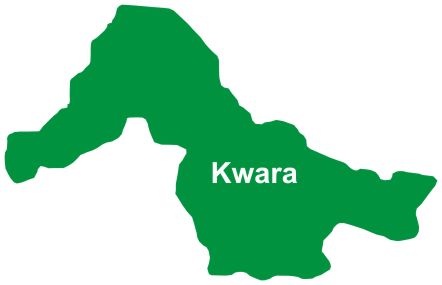
The National Centre for Agricultural Mechanisation (NCAM), Ilorin, Kwara State, has developed a mound-maker to resolve the challenge.
Mr Tope Faleye, an engineer with NCAM, said: "The Yam Mound Maker is a tractor-mounted implement designed and fabricated to make yam mounds for yam cultivation. The overall objective of this invention is to reduce the drudgery associated with yam cultivation by reducing the effort and time taken to create heaps on a well ploughed land and to make harvesting easier as the heaps are created and spaced uniformly by the implement."
The yam mound making implement is fabricated with locally sourced materials and has a field efficiency of 70%, according to NCAM.
"The machine achieves mound making rate of about 2,156 heaps per day for an eight-hour operation, as against 400 heaps per day for manual heap making method," NCAM said.
Source