


OPINION: Of Deizani, Saraki and The War Against Corruption. By Bamitale Adedeji
There is a quotation I love to think about because it accurately captures the whole truth about how men choose the things to put in the front burner of their conscience about others. The quotation is a profound statement credited to renowned poet and playwright, Williams Shakespeare. He says in one of his famous plays, Henry VII that "men's evil manners live in brass; their virtues we write in water".
This probably describes how citizens in most climes consider those among them who have the fortune, or is it misfortune, of leadership at moments of social and economic uncertainties.
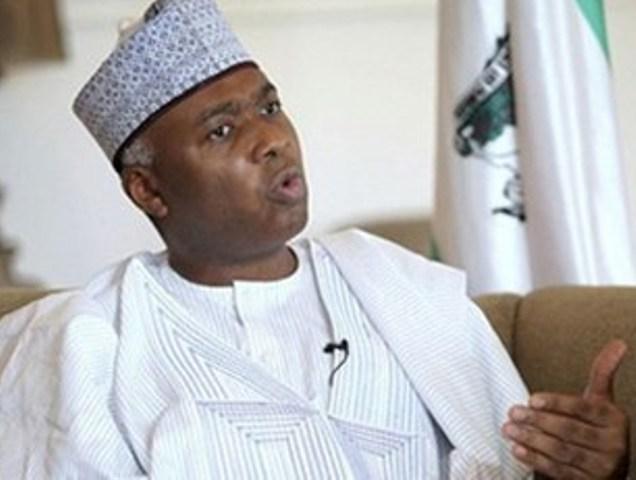
In truth, the evil manners that live in brass, to borrow Shakespeare's words, stare us all in the face. They occur almost second and minute that it becomes almost impossible to see any good. Yet, those 'evils' we acknowledge are only discernable because we all have a notion of what constitutes 'virtues' which we ironically underplay. Such is the reality today with the Nigerian legislature headed by Dr Bukola Saraki, and I wish to illustrate this with the most recent happenings with Nigeria's former Petroleum Minister, Diezani Allison Madueke.
The story of Madam Diezani is not entirely new to many watchers of Nigeria's political and economic history. She is a woman whose name rings a bell for so many reasons connected with the huge roles she played especially in the Jonathan Presidency. One of her most well-known stories revolve round an allegation made in a letter written by former Central Bank Governor, now his eminence, Emir of Kano, Sanusi Lamido Sanusi to former President Goodluck Jonathan to the effect that a humongous sum of 40 billion dollars was unaccounted for by the NNPC which was under Diezani's supervision.
The dateline was 2014 and the whole of the Federation as well as the international community waited in suspended breath for some measures of assurances that the Nigerian economy was not heading to the rocks as alleged by the CBN governor. Part of the responsibilities for unraveling the truth fell on the Senate committee on Finance headed by Senator Ahmed Makarfi, a former Governor and member of the then ruling party.
The committee, in furtherance of its investigative powers, held a few public hearings attended by principal officers of the Petroleum Ministry, the Ministry of Finance and of course the NNPC. The committee, after about two weeks was at a point of turning in a 'not guilty' verdict on Diezani, in spite of the unavailability of critical records required, when a member stood up to be counted out of an apparent conspiracy to cover up fraud.
Of the 11 member Senate committee which probed the case of the missing money, it was only Bukola Saraki who refused to sign the report which exonerated Diezani and claimed that what happened in the Petroleum Industry was only lack of proper reconciliation of accounting records. Today, the avalanche of revelations coming from the EFCC and international anti-graft agencies about the scale of looting of public funds through the Petroleum Ministry headed by Diezani seem to lay credence to Mallam Sanusi Lamido's letter to former President Goodluck Jonathan.
In a society where integrity of convictions is often in display, this may not be a big deal. However, situated against the backdrop of our notorious knack for ruling class complicity, that act of Dr Saraki is noteworthy at the time in question and more significantly now that the war against corruption is themed as a major plank of the Buhari administration.
The question again will be how far the Senate under Saraki has worked to give the corruption war its much needed fillip in his present work as the head of the Nigerian legislature. For those of us who have stood firmly resolute in demanding openness in the finances of the National Assembly, the recent publishing of detailed budgetary allocation to the Senate and the House of Representatives is no mean attainment. This same Senate has passed three major anti-corruption bills in a record time.
When you add this to the accelerated work on the passage of the Establishment Act for the Nigerian Financial Intelligence Unit and the passage of the Petroleum Industry Governance Act, it will be clear to discerning minds that this Senate and its President have firmly demonstrated clear commitments to the war against corruption in Nigeria.
These and other proactive measures by the Saraki-led senate to kill corruption entrench good governance and promote fiscal accountability, must be on record as a necessary measure to deepen public discourse on our losses and gains as Africa's largest democracy.
Bamitale Adedeji is a Lagos-based attorney.
Cloud Tag: What's trending
Click on a word/phrase to read more about it.
Ahmad Belgore Jimoh Bashir Apaokagi New Nigeria People’s Party Babatunde Ishola Babaita Solomon Edoja Guber Aspirant College Of Education Owu Fall Akume Riskat Opakunle Cassava Growers\' Association Alabi Olayemi Abdulrazak Micheal Imodu-Ganmo Road Olabode George Towoju Sayomi GGDSS Pakata Rebecca Bake Magaji Erubu Mahfouz Adedimeji Olusola Saraki Ahmad Olayiwola Kamaldeen Rachael Obisesan Samuel Elizabeth Keatswa Harrison Osauwagboe Abdullahi Saadudeen Alikinla Oladimeji Thompson Kubra Kazum Garuba Alikinla Shittu Saba Jibril Ademola Kiyesola Sabo-Oke Ajidagba Sabi Local Government Bola Shagaya TESCOM Peculiar Allowance National Association Of Nigerian Students Yakubu Shaaba Christopher Ayeni Sidikat Alaya Gwanara Manzuma SWAN Offa Kaosarah Adeyi Taofeek Sanusi Gbenga Awoyale Kwara Metro Park Abdulrauf Aliyu Adamu Ibrahim Sabi Suleiman Rotimi Iliasu Yusuf Abdulkadir Alore Hassan A. Saliu Pius Abioje Yahaya A Paniyaro Samari Isaac Aderemi Kolawole Kola Olota Malete Muhammad Mustapha Suleiman Salihu Ajia Ahmed Dankaya Adewuyi Funmilayo Islamiya Abdulraheem Mutawalle Bayo Ajia Shaykh Luqman Jimoh Olam Food Ingredients Senate President Abdulganiyu Salahudeen Osuwa Curfew Muhammed Danjuma Lanre Badmas