


Ali Ahmad: Great Strides in the Search for Lively Laws
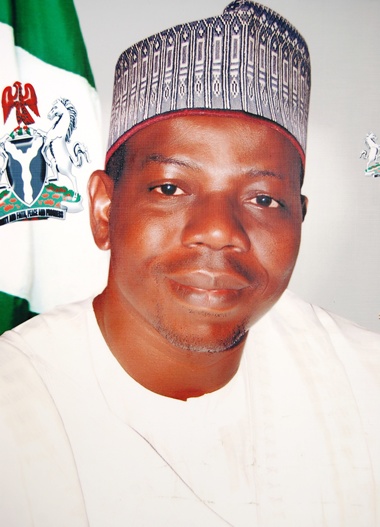
Hon. Ali Ahmad is giving quality representation to Ilorin East/Ilorin South federal constituency of Kwara State, writes Hammed Shittu
When the people of Ilorin East/ Ilorin South federal constituency of Kwara State elected Hon. Ali Ahmad to the House of Representatives during the 2011 general elections, many of them had absolutely no doubt that they had made the right choice. Events since Ahmad’s entry into the lower chamber have continued to prove them right.
Fondly called “Ali Dodo” by his supporters, Ahmad has since his assumption of office at the National Assembly tried to highlight the needs of the people of his constituency, in particular, and country, in general, through the formulation of bills intended to bring about the socio-economic and political development of society.
Experience
Ahmad, legal practitioner, brought to the office a great wealth of intellectual and political experience. He was a senior lecturer at the Faculty of Law, University of Ilorin. Ahmad, who is also chairman, House Committee on Justice, is a former Commissioner for Justice and Attorney General in the state and ex-Chief of Staff to the immediate past governor of the state, now senator representing Kwara Central senatorial district, Senator Bukola Saraki.
Ahmad’s background and position as chairman of the house justice committee have helped him to fulfill a personal desire to rise to the challenge of human rights protection in the country.
Prison Reform
On assumption of office at the National Assembly in 2011, Ahmad undertook a tour of all the existing prison services across the country to ascertain the condition of the prisoners. He then mapped out a plan to decongest the prisons, give the structures a facelift, and change the conditions of the prisoners with the aim of making them better persons at the end of their jails terms.
The tour assisted the lawmaker to set a new agenda for the prison service in the country and since then, Ahmad has been working hard at the lower chamber to design a new bill that would change the status of prisons across the country for good.
The bill, called Administration of Criminal Justice Bill, is meant to change the condition of the prisons and tackle the awaiting trial syndrome in the country. It has up to 500 clauses and several schedules and has been described as a revolution in the justice sector for its innovative provisions.
The Administration of Criminal Justice Bill was passed by the House in December last year. It was supported by the Chief Justice of Nigeria, Attorney General of the Federation, and the legislature.
When assented to by the president, the bill will go a long way in addressing the issue of delay in criminal justice administration.
The Administration of Criminal Justice Bill aims, among others, to address the issue of prison congestion through a robust system for reporting detentions and a mandatory monthly visit of detention facilities by magistrates. Other measures include limiting the number of adjournments and moderating rules on plea bargaining and compensation or restitution to victims of crimes.
When the Administration of Criminal Justice Bill becomes law, it is expected that criminal trials that hitherto lasted for about 12 years would no longer take more than a few months to a year or two to conclude.
The bill is a consolidation of 12 other related bills.
Other Bills
Other bills sponsored by Ahmad include the Legislative Powers and Privileges Bill, Petroleum Production and Distribution (Anti-sabotage) Amendment Bill – passed by the House in October last year – Regulation of Community Service Bill, which was passed in May last year, to provide for establishment of community service in certain cases, and the Legal Education Amendment Bill.
The Legal Education Amendment Bill aims, among others, to clarify the uncertainty as to whether the eight years rule or five years single tenure applies to the Director General of the Nigerian Law School. The bill provides for the tenure of the director general of the Nigerian Law School and removes the uncertainties in the administration of the flagship institution for lawyers.
On the Oaths Act Amendment Bill, since the coming on board of new courts, such as the Customary Courts, Sharia Courts of Appeal, the National Industrial Court, etc., the law has not recognised their ability to administer oath. This bill covers the lacuna.
Another significant bill sponsored by Ahmad is the National Centre for Agricultural Mechanisation Amendment Bill. This was one of the first bills he sponsored since October 2011. NCAM is in his Ilorin constituency and the amendment seeks to empower the agency to partner with the private sector in promoting and funding in commercial quantity the prototype output and agricultural implements produced by the centre.
Currently, the centre has easy-to-handle and inexpensive tools that will benefit small scale farmers, but because only government can legally fund the commercial production of the tools, they are left abandoned due to budget constraints.
The centre has produced cheap alternatives to all sorts of farming implements, including tractors. If the bill is passed into law, the centre is expected to become a mecca for farmers across the country.
Legal Practitioners Bill is another initiative that seeks to repeal the old law and to replace it with a modern enactment. This is an NBA initiative aimed at providing new regulations relating to, among others, qualification for Senior Advocates of Nigeria, etc.
The TETFUND Amendment Bill seeks to amend the law to permit the Nigerian Law School draw from the fund.
The Public Order Repeal Bill bill seeks to repeal the Public Order Act, which the police has been using as justification to demand and issue permit to Nigerians who want to carry out peaceful procession. The courts have declared the Act as contrary to the provisions of the constitution, but because the Act has not been abrogated, there is uncertainty and the police still rely on it to deny citizens the right to peaceful assembly.
Great Strides
Ahmad recently sponsored 10 bills within two days, which have been passed by the lower chamber. This development has set a national record at the National Assembly. The 10 bills were passed between June 8 and June 9.
The bills include Maintenance Orders Bill (meant for registration of regional courts); the Loan Act; the bill to reflect the change in the name of the National Hospital, Abuja, as it is known today, from its old name of National Hospital for Women and Children; and bills to abrogate or change moribund, military-era laws such as Family Economic Advancement Programme Act, Family Support Trust Fund Act, and the Peoples Bank of Nigeria Act.
The bills will be sent to the Senate for concurrence.
Ahmad said: “This is the first time in the history of the House of Representatives that 10 bills sponsored by an individual would be passed into law within one week.
“The foundation for this groundbreaking exercise was laid in May 2013 when I brought to the notice of the House the continued existence of anachronistic laws in our statute books.
“Then, I particularly drew attention of my colleagues to the fact that the Supreme Court of Nigeria (Afrotec V. MIA) still held that the Sale of Goods Act of England 1893 was still applicable in Nigeria as late as year 2000.
“This is so, despite the fact that the 1893 Act has been repealed and re-enacted several times by the British Parliament. Having sought for the repeal and remodeling of the colonial-era Sale of Goods Act, I was urged by the Rt. Honourable Speaker, Hon. Aminu Tambuwal, to work tirelessly and see that all such embarrassing statutes are expunged from our law books.”
He added: “The 10 bills are a product of this exercise. Apart from the National Hospital Bill, the others that were worked on by the House may be classified into three. The first are laws that apply to Nigeria since the colonial era and which have overstayed their usefulness. These are the Maintenance Orders Act (meant for registration of regional courts), the Loan Act. Others are military-era laws that have become moribund like the Family Economic Advancement Programme Act, the Family Support Trust Fund Act, and the People’s Bank of Nigeria Act.
“Other anachronistic laws expunged from our law books are the Nigerian Industrial Development Bank Act, the Nigerian Bank for Commerce and Industry Act (replaced by the Bank of Industry Act), National Commission for Rehabilitation Act (meant for internally displaced people), and Federal Savings Bank Act.”
Ahmad believes: “If legislators continue to work hard, our body of laws will become lively and reflective of the reality of our time.”
Cloud Tag: What's trending
Click on a word/phrase to read more about it.
Egbewole Ambassador Kayode Laro Justina Oha Kwara State Fire Service Busari Toyin Isiaka ASUU JSSCE Mutawalle Shero Moronfoye Salman Suleiman Amule Elementary School John Dara Tafida Adeola Abraham Hikmah AbdulKareem Just Law Forum Wahab Kunle Shittu Saka Balikis Kehinde Razaq Ayobami Akanbi Radio Kwara Bamikole Omishore Abdulsalam Firdaous Amosa Senate Niyi Osundare Yoonus Kola Olatinwo Yakub Lai Gobir Umar Yakubu Jaja Niguel Gallando Marcias Rapheal Ashaolu Olukotun Of Ikotun M.Y. Abdulrahaman Abdulrazaq Adebayo Olatunji Bamgbola Yahaya Jibril Usman Muritala Olarewaju Ilesha-Baruba-Gwanara Saeedat Aliyu Saad Omo\'ya Ariyo Vishvas KOZ Tractors CKNG Tunji Folami CACOVID Www.Kwarareports.com Lanre Aremu Dogara Sam Onile Shehu Alimi Foundation For Peace And Development Undergraduate Bursary March 28 International Aviation College Mutawali Saheed Akinwumi March 18 Tunde Oyawoye Toyosi Thomas Christopher Ayeni Ahmed Dankaya Adamu Jemilat-Baki Abubakar Aliagan Tunde Kazeem Isiaka Alikinla Kwara State Football Association Makama Of Kaiama Hamidat Sulyman-Yusuf Titus Ashaolu Okin Malt Lanre Jimoh Kulende QuickWin IPSAS Kwara Polytechnic Baba Isale Bashirat Bola Bello Federal Road Maintenance Agency Logun