


Senate President: The contentions and candidates
IT was in May 2003 and members of the House of Representatives who won re-election in the National Assembly elections that took place the month before, were seeking ways and manners to project themselves as older legislators at the commencement of the new legislative term.
One suggestion that was quickly adopted was the amendment of the House Standing Rules to establish the principle of ranking in the election of principal officers of the House. The principle, which the lawmakers said was a legislative practise adopted in all parts of the world was, even extended to committees where it was decreed that ranking would be observed even in the allocation of committee chairmen.
It was a principle that was also quickly adopted by the Senate where newly elected senators had quickly distinguished themselves as digital senators as different from analogue senators that was showcased in the form of the older or returning senators. Senators Ike Ekweremadu and Timothy Adudu were among the leading lights of the digital senators who by sheer number were sometimes able to push their way to exert their privileges and entitlements from the Senator Adolphus Wabara leadership of the Senate at that time.
However, where it came to disbursement of allowances and other financial privileges, it was conventional wisdom that the digital senators must not be slighted, a fact that Senator Wabara was to learn in a bitter way almost midway into the life of the Fifth Senate when digital and analogue senators but aside divisions to force him out of office on the allegation of disproportionate sharing of allowances.
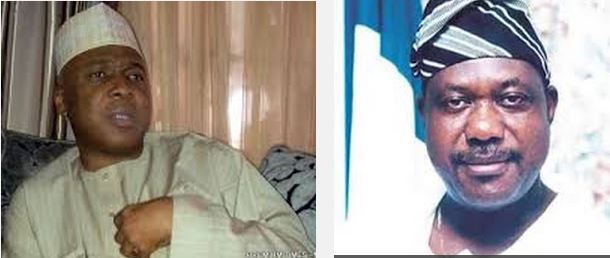
12 years after the incorporation of ranking in the rules of the two chambers of the National Assembly, the issue has again come to the fore as the two chambers of the National Assembly contend over the election of presiding officers. The issue is especially in contention in the Senate where the principal candidates for the office of Senate President have emerged in the persons of two rooted politicians, Senators Bukola Saraki of Kwara State and George Akume of Benue State.
As at press time the National Executive Committee, NEC of the All Progressives Congress, APC was yet to fix a meeting to ratify the decision on the zoning of the office but advocates of the two men were pushing the aspirations of the two men on several fronts.
Senator Akume has nevertheless, wormed his way into the hearts of many on the basis of his position as the Senate minority leader when the Peoples Democratic Party, PDP was removed from power. Many are looking up to him with nostalgia that he should continue from where he stopped as minority leader on the prism that a winning team should not be changed.
Akume’s ambition was strongly canvassed this week when Senator Barnabas Gemade gave him a ringing endorsement for the office.
However, he is seriously tackled by a perception problem which many senators and stakeholders feel could challenge his aspiration.
Perception problem
It is also felt that his stewardship of Benue State was not as exemplary as it could have been. Even more challenging for him is the fact that he has been taken for trial for by the Economic and Financial Crimes Commission, EFCC. It is bound to be a riveting obstacle for him in the face of the determination of the leader of the party, Muhammadu Buhari for a change to the status quo.
Another issue that has arisen to challenge Akume is the fact that all the Senate Presidents from North Central, including the outgoing one, Senator David Mark, have come from Benue State. The others before Mark were Iyorcha Ayu and Ameh Ebute.
It is a point that advocates of the candidacy of Senator Bukola Saraki are bound to throw up. For Saraki, his emergence as Senate President could also be nostalgic, given his father’s easy mention as arguably the most colourful Senate Leader in the history of the country. Pointers are also made of his role in rejuvenating the Nigerian Governors Forum, NGF, an argument that Akume’s supporters are putting aside on the fact that Saraki has just spent only one term in the Senate.
It is that argument on ranking that is now inspiring talk of Senator Ahmad Lawan, the longest serving legislator in the ranks of the APC. Senator Lawan, chairman of the Senate Committee on Public Accounts holds a doctorate degree and had been in the legislature since 1999 when he first came to the House of Representatives on the ticket of the now defunct All Nigeria Peoples Party, ANPP.
His canvassers are saying that arguments on ranking should focus on him and his legislative achievements if they are to find any weight.
His supporters are also canvassing the claim that he would unlike the two major contenders be more accessible on the claim that he does not have executive hangover, having never been a governor with executive powers.
While a number of senators are said to be disposed to him, they are, however, challenged by the fact that Senator Lawan is from outside the North-Central, the zone that many in the leadership of the APC were said to have zoned the office to. The prospects of Senator Lawan is also causing some from the Northeast to push forward their own argument for commensurate reward. They are putting their hopes on Lawan.
PRIVILEGES THAT COME WITH SENIORITY IN THE UNITED STATES SENATE
•Preference in choosing committees of the Senate.
•By tradition the most senior person in the committee from the majority party takes position of chairman and the most senior senator of the minority party is the ranking member.
•Senior senators take seats closer to the dais.
•Senior senators are also given the privilege of occupying better offices in the Senate building.
Cloud Tag: What's trending
Click on a word/phrase to read more about it.
Standard Organization Of Nigeria Durosinlohun Atiku Kayode Bankole Saad Belgore Radio Kwara Ita-Nmo Market Ilorin Innovation Hub Durbar Sunday Popo-Ola Elekoyangan Oya State John Olobayo Jawondo Abdullahi AbdulMajeed Asa Bello Taoheed Abubakar Oluranti Idowu Hajj IEDPU Ilorin Emirate Stakeholders Forum Adebara Muhammed Danjuma Rihanat Ajia Sambo Murtala Valsolar Consultoria Government High School Adeta Oluronke Adeyemi Sadiq Umar NIPR Oye Tinuoye JUSUN Funmilayo Zubair Alikinla Oke-Ode 20 Billion Bond Bashirat Bola Bello CT Ayeni Mahmud Durosinlohun Atiku Yusuf Amuda Gobir Emir Of Shonga LEAH Charity Foundation Ahmad Olayiwola Kamaldeen Adedayo Yusuf Abdulkareem Dankaka AbdulRahman Saad Communication Network Support Services Ahmed Bayero David Oyerinola Adedunmoye Adesina Simon Sodiya Alapansapa Olupako NSCIA Ilorin Metro Park Ebola AbdulRazaq Abubakar Jiddah Lasiele Alabi Yahaya Gurei Popo-Igbonna Gbugbu International Market Aliyu Sabi Atiku Abubakar Olabode George Towoju Basit Olatunji Saadu Alanamu Bola Tinubu Aliyu Salihu Ilorin Taofik Abdulkareem QuickWin Aliyu U. Tilde Ganiyu Taofiq Salake Mujtabah Bature Iyaloja-General Aisha Buhari Rasheed Jimoh Ganmo