


The Oloye (1933 - 2012)
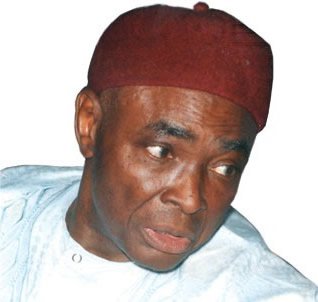
Beginning August 1, 1977, the New Nigerian ran a series of interviews I conducted for it with a number of candidates for elections into the Constituent Assembly (CA) that eventually authored the 1979 Constitution. The interviewees were 14 in all, among them Dr. Abubakar Olusola Saraki who went on to win his Ilorin seat. His interview started the series.
At the time of the interview he was one of the most successful medical doctors in the country, holding retainerships of many blue chip companies and high net-worth individuals. He practiced his medicine out of a modest clinic on the popular Broad Street, Lagos. However, even though he was doing well in his practice, there were already signs that the man was about to hang his stethoscope for politics.
In the course of the interview which I conducted in his clinic, he expressed strong views on several contentious issues, notably on the heated debate over the military authority's obvious preference for the American type presidential system against the parliamentary democracy of the failed First Republic.
"I am," he said unequivocally, "against this provision." He gave three reasons. First, he said, the country's level of literacy and the political awareness of its citizens were too low for what he said was the highly sophisticated presidential system to succeed. Second, he said, it would be too expensive and, third, the risk of its being abused was too high because he thought it gave too much power to one man.
Long before he died on November 14 aged 79, it seemed the man's concern about the viability of the system in the country had been born out on the second and third count, if not the first; few would dispute the fact that the system, at least in its current form, has proved unsustainably costly. Few would also disagree with the argument that we've since been saddled with a dangerous presidential monarchy.
However, his strong objection to the system notwithstanding, the man soon became one of its biggest operators as probably the country's most powerful Senate leader to date.
His journey to Senate leadership during the Second Republic started in earnest with his successful election into the CA. However, the journey would have suffered a setback had his biggest rival in Kwara State politics at the time, Alhaji Abdulganiyu Folorunsho Abdulrasaq, the North's first Senior Advocate of Nigeria, had his way.
Not long after Saraki's election into the CA a huge scandal surrounding the purchase of Leyland buses for the 1977 African Festival of Arts and Culture, FESTAC ‘77, broke out in which himself, Malam Adamu Ciroma, then managing director of the New Nigerian, late Chief Anthony Enahoro and late Alhaji Tatari, as commissioner and permanent secretary, Federal Ministry of Information respectively, were implicated. The government White Paper on the report of investigations into the deal found all but Malam Adamu guilty of self-enrichment.
An Ilorin Progressive Youth Organisation with links to Abdulrasaq, then a nominated member of the CA and, like Saraki, known to have had his eyes on the governorship of Kwara State, seized the incident to call on Saraki, along with Alhaji Tatari and Malam Adamu, to either quit the CA or be sacked. Otherwise, the IPYO said, the authorities would be guilty of double standards because they had used an earlier and somewhat similar scandal, the Scania Bus scandal, to stop Chief Adisa Akinloye, one of its chief culprits, from contesting the CA seat for his Ibadan constituency. Akinloye, since deceased, eventually became the first elected chairman of the ruling National Party of Nigeria (NPN).
None of the three left the CA or was kicked out. Instead Saraki went on to become one of the most influential voices in the CA and, like a considerable number of its members, notably Alhaji Shehu Shagari, Chief MKO Abiola, Malam Adamu, Dr Chuba Okadigbo and Dr. Joseph Wayas, he became one of movers and shakers of the Second Republic.
By the time the CA ended somewhat abruptly in 1978 because of a serious rift over the status of Sharia in the draft Constitution, Saraki's ambition had, it seemed, moved on from the governorship of his state to the presidency of his country; he contested the first presidential primaries of the NPN ahead of the elections in 1979, along with Alhaji Shehu Shagari, Alhaji Maitama Sule, Malam Adamu, Chief JS Tarka and Professor Iya Abubakar, coming out a respectable fourth behind Shagari, Alhaji Maitama and Malam Adamu, in that order, but ahead of Chief Tarka, easily the most formidable politician during the First Republic from the Middle region to which Saraki belonged.
In his obituary about the man, Professor Ibrahim Gambari, one of United Nation's top bureaucrats and himself an Ilorin prince, said Saraki had "single-handedly built a grassroots machine that endured for decades." In truth the man did no such thing. Rather, what he did was use his considerable wealth to build a huge patronage system that all his contemporaries in the state, singly or combined, could simply not match.
Of course, Saraki was not the only Ilorin plutocrat. But he was almost alone in his willingness to spend money to earn the personal loyalty of the political grassroots and opinion leaders alike in his state - and elsewhere. Again almost alone among his state's political elite he held no contempt for ordinary people. On the contrary, he seemed to enjoy mixing with them.
Consequently, Saraki came to dominate the politics of his state so totally that hardly anyone in the state with political ambition - from the local government level to the centre - could realise his or her ambition without his patronage. It was not for nothing that the man, who was first the Turaki of Ilorin and subsequently its Waziri, the emir's prime minister, came to be affectionately called the Oloye - the benevolent big chief - by all and sundry.
Like all great men the man made his mistakes, not least of which was his attempt in the twilight of his life to impose his first daughter, Gbemisola, a two-term senator, as governor of his state in succession to her half brother, Bukola, after his second and final term. This lead to a sad falling out between father and son who, in this case, it seemed, was more in tune than the father with the very religious conservatism of Ilorin as the centre of Kwara politics. The predictable failure of the attempt became a sad anticlimax in what was otherwise one of the most illustrious political careers in the country.
Also his generous political patronage system may have been partly responsible for the eventual collapse of his bank which was the Nigerian affiliate of the troubled French bank, the Societie Generale. The bank has since regained its operating licence from the Central Bank. However, it is instructive that over a year on, it is yet to return to business.
Most of all, the man expected absolute loyalty almost bordering on servility from recipients of his political benefaction. The inevitable consequence of this was that he invariably fell out, for example, with each and every one of the five governors he installed between 1979 and 2003, including his own son.
In spite of these political and financial misjudgements, the Oloye will no doubt go down in Nigeria's history as one of its most accomplished politicians.
May the Beneficient and Mercifrul Lord forgive all his transgressions and reward his good deeds with aljanna firdaus. Amen.
Cloud Tag: What's trending
Click on a word/phrase to read more about it.
Kayode Bankole Abubakar Usman Jos Yahaya Dumoye Christopher Ayeni Aasiyat Bello Oyedepo Muhammed Akanbi Babaloja-General Abdulraufu Mustapha Yusuf Lanre Badmas Alfa Belgore Obasanjo Abdulkadri Ahmad Alaiye Yusuf Zulu-Gambari Awodun Yoruba Shero Elerinjare-Ibobo Ilorin International Airport Oba-Solagberu Mufti Of Ilorin Kisira Aremu Odolaye Omotoso Musa Ilorin East Lai Mohammed Shuaib Olarongbe Durosinlohun Atiku Yusuf Abubakar Bamikole Omishore Ayekale 20 Billion Bond Onikijipa Prince Bola Ajibola Bayo Ojo Rachael Obisesan BECE Abiodun Oyedepo Imodoye Writer’s Enclave Markaz Arabic And Islamic Training Institute, Agege Harafat E. Mukadam Dar-Al-Handasah Consultants Ltd Eghe Igbinehin IDPU Mary Kemi Adeosun Lanre Badmus Aliyu Umar Yusuf Mubarak Seed Technologies Nigeria Customs Service Salaudeen Oyewale Mufutau Gbadamosi Esuwoye Oba David Oyerinola Adedunmoye Aliyu Muhammed Timothy Olatunde Fadipe Adeleke Ogungbe Mashood Dauda Funmilayo Mohammed Geri-Alimi Split Diamond Interchange Kawu Baraje Oloriegbe Oba Abdulrahim Vishvas KOZ Tractors Saheed Alakoso Jelili Yusuf Moses Rahman Popoola Adebara Tunde Saad Alagbado Theophilus Oyebiyi Nigerian Correctional Service Abdulsalam A. Yusuf Gbenga Adebayo Buhari Ishaq Abdulkarim Moshood Bakare Modibbo Kawu Bukola Saraki