Shonga And Nigeria's Quest For Food Security
Date: 2017-05-30
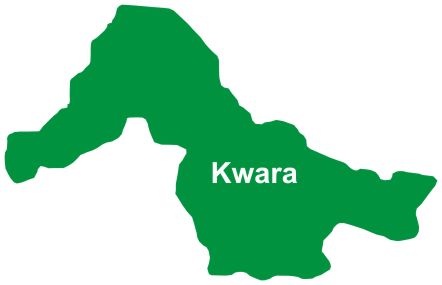
The adoption of international best practices in ensuring food sufficiency has become more imperative now than ever. In this piece, ANDREW ESSIEN, highlights the success of the Shonga project initiated by the current President of the Senate, Bukola Saraki, during his tenure as governor of Kwara State, as an example to ensuring food security.
Since the coming of the present administration, there has been redirected effort at diversifying the national economy and reducing dependence on oil as a major revenue earner. As everyone has come to realize, the inability of past governments to shift attention away from oil brought about some consequential events, the most pronounced being the current recession. The failure, over time, led to the swelling of the food import bill which exacted pressure on the nation's foreign reserve.
Despite the favourable economic outlook, previous administrations in the country only paid lip service to agriculture. Thus, the net food import into Nigeria, hit an all-time high of nearly 2.8 billion dollars in 2010, according to sources from All Nigerian Farmers Association.
This may have informed then Governor Bukola Saraki and current President of the Senate to take concerted efforts to stem the tide and put Kwara state on a sure footing, preparatory to the current prevailing circumstances the nation and her citizens have found themselves.
In another clime, Zimbabwe's Robert Mugabe, in a series of frightening legislations on land ownership for the country, kicked out thousands of white Zimbabwean farmers from the country. His argument was simple: the farmers, who owned 70 per cent of the most arable land in the country, had inherited their property from a colonial past built on racial hierarchy. By September 2005, armed youth militias were chasing some of Zimbabwe's last remaining white farmers from their land. Coffee Farmer David Wilding-Davis and his South-African farm manager, Allan Warner, were attacked by youths wielding iron bars and automatic weapons.
Politically, Mugabe's plan was was well received at home but the attendant economic consequence for the nation was too terrible to contemplate. Senator Saraki, may have learnt from the series of events that followed the government move, hence the careful implementation of the Shonga project.
In taking advantage of Zimbabwe's mistakes in the implementation of the legislation, Senator Saraki, the then Executive Governor of Kwara State, ensured that government cleared large hectares of land at Edu Local Government, opened up roads leading to the community, and built an independent power station, which also supplied about 37 villages around the fallow farmland. Then Saraki invited 13 of the rejected farmers to come to Kwara and start farming. They were each given 1,000 hectares of land under a 25-year renewable lease for commercial farming purpose.
Expectedly, there were some form of resistance from the natives of the community who thought that the government had come to take away their land and hand it out to foreigners. But, knowing the power of knowledge and how it can transform civilisations, the Kwara State Government stood its ground, patiently assuring its people that this was all for good. Over a decade after Shonga was established, its successes have put paid to the protests of those who doubted its potentials.
Today, the farm supplies cassava to the Nigerian Starch Mills Limited, which is the biggest of its kind in West Africa. It supplies fresh milk to WAMCO to produce Peak and Three Crowns milk. It equally supplies fresh milk to Nutricima. Its dairy farm has the capacity to process up to 50,000 litres of milk per day.
The farm has a cheese exporting plant in the diary section and is set to saturate the entire West African region with the product. They also export cassava chips and are probably the only company to have done five shipments of chips to countries like Israel, Australia and Hong Kong.
The farm has also led directly to the employment of thousands, and has indirectly attracted investors like WAMCO and Olam into Kwara S tate, creating multiple opportunities for its residents. The farm presently employs between 4,500 and 6,000 workers for both off and peak periods but with the on-going expansion, the poultry section alone has 2,000 workers at off and peak periods, which is expected to increase to about 10,000 workers when the expansion is completed.
This year, the Central Bank of Nigeria (CBN) paid a visit to Edu Local Government and were so impressed with the success of the Shonga project that they decided to inject a loan facility worth N2 billion into the poultry section. The facility will be provided at interest rates as low as nine per cent.
In a chat with newsmen after the tour, the CBN Governor, Godwin Emefiele, noted that the loan facility was to support the investor's expansion plans. He also described his visit as an eye opener, noting that there are several opportunities to tap from Shonga Farms and the poultry value chain as a whole in order to improve the country's economy. He added that Shonga Farms was a practical example of how governments can collaborate with the private sector to deliver real dividends of democracy such as jobs and agro-allied prosperity.
What has largely contributed to the success of Shonga Farms and launching it to public consciousness is the structure of its management, which is based on a private-public model. Although the Kwara State Government initiated the project, a limited liability company, Shonga Farms Holding Limited (SFH) was incorporated to drive its economic and financial success.
Under this arrangement, financial institutions were invited to invest in the company and Guarantee Trust Bank, Trust Bank, Intercontinental Bank, Unity Bank, Fin Bank and Bank PHB were the initial investors. The banks took 75 per cent equity, with the state government having 25 per cent. The SFH however, owns 60% equity in each of the 13 Shonga farms, leaving the farmers with 40 per cent.
Since the banks were involved, there was no room for sloppy management and the Farms were managed in such a way that they were guaranteed to make profit. "Banks always want to see how their money flows," the General Manager of the Farm, Mr. Bayo Sangobiyi, said. "That is what changed our approach to business."
The leader of the expatriate farmers, Allen Jack, has also attributed the success of the Farms to how they have been structured, which has left little room for needless bureaucracy or politics. "We have completely avoided the issue of politics," he said. "The SFH surpasses politics; we are dealt with purely on professional grounds."
However, the initial skepticism of the farmers from Zimbabwe may have been put to rest by Shonga's success. But the Kwara State Government, from the beginning, had ensured that the exercise was tilted to the advantage of the locals. When the land was allocated, the design was, for every 1,000 hectares of land to the white farmers, a gap of 200 hectares was left in-between for local farmers to understudy what their more experienced counterparts were doing, learn from them and then replicate the methods on their own farms. This was a way of transferring knowledge and should have been the route taken by the Zimbabweans.
A Shonga Phase 2, called the Alapa Project is now in the works. This will be focused on helping local farmers benefit from the trove of knowledge that has been applied to make Shonga a success. "I think Governor Abdulfatah Ahmed (the current Executive Governor of Kwara State) has started it by selecting 10 farmers from each of the 16 local government areas of the state," Sangobiyi said. "The concept is to transform them to commercial farmers and they are doing wonderfully well. Our plan is to bring Kwara State to the world map as the food basket."
This may, in part be responsible for the CBN decided to provide loan facilities to the Farm's poultry section. Although every Shonga farm is involved in cropping, its use of backward integration has accelerated the growth of its poultry section and opened up new frontiers. The farmers plant maize, soya beans, millet, etc, and they process them into feeds for the chickens.
As at 2013, one of the national dailies reported that the poultry section of the farm was devoid of any offensive odour, the drainage system was such that no bird faeces were retained, and well planned spaces between birds afforded the avian animals comfort and free ventilation. The poultry also had a total capacity to raise 160,000 birds on weekly basis and was fitted automated modern abattoir to dress 5,000 birds daily.
There is also a research and development section which focuses on the area of breeding and genetics, seeking to uncover best practices and provide innovative solutions to the problem of increasing yield, combating diseases and ensuring seamless efficiency.
Currently, the farm's chicken processing plant, at full capacity, produces 10,000 chickens per day. Soon, it is expected to multiply that number to 25,000 per day, making it the largest in the country. It is the major supplier of chicken to most restaurants in the country, including Kentucky Fried Chicken (KFC).
"We had meetings with people that were supplying the big eateries and hotels to give us their consumption schedule per month," Sangobiyi said. "We signed a memorandum of understanding (MoU). Go to Shoprite or any eatery in Ilorin. If you eat chicken in any eatery, you have eaten Shonga chicken."
Source