


INTERVIEW: Why I Titled My Book 'Letters to the Emir' - Akogun
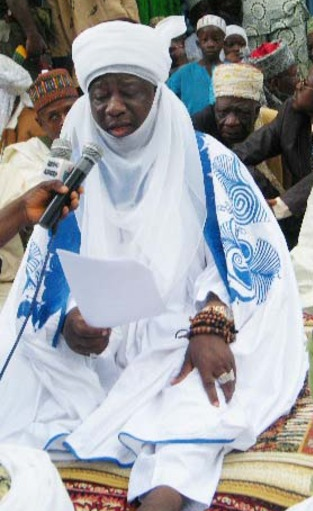
The Chairman of Peoples Democratic Party (PDP) in Kwara State, Akogun Iyiola Oyedepo is not just a politician. He is also a versatile and prolific writer especially on contemporary issues in the state. His new book is titled 'Letters to the Emir'. He explains the idea behind the book and what prompted the title. Herewith, are excerpts.
Can you give an insight into the book, Letters to the Emir?
It is so curious because I have given out so many invitation cards for the public presentation of this book and whenever I get to any important person and they read through the letter, they would say, 'why to the Emir?' Some of them even say, 'will it not be too explosive' and that they may not be able to attend because they feel there would be problem on that day. But one thing is basic, people in this country always make their judgment on fake ideas at times even when they don't have enough information, they still reach some conclusions and that is one of the biggest problems we have in this country.
In such instances I try as much as possible to explain to them why it should be 'Letters to the Emir' and I also tell them that they need to go through before they pass their judgment on the book. I have chosen the topic for some reasons. First: when you look at the composition of Kwara State, you will discover that this is a people who have lived together for almost 200 years ago. Afonja was killed in 1817 and in two years time, it would be 200 years ago that the Fulani came here and they were able to overthrow the existing hegemony to establish their own and for those 200 years, we have been together in Kwara State as an entity. Kwara may have been plummeted one way or the other, some people may have left and some of us are still around.
Therefore, the book essentially is about the people who have lived together for 200 years and the question is not about when they would be separated, in fact the author doesn't believe in separation. The author believes that we can live together, that if we have lived together for 200 years, why can't we go on living together? But there are some divisive things that have been happening for these 200 years- perennial oppression and it is advocated in this book that this should no more be the order of the day if we must live together.
It is curious to me that even right now, some of us are still nostalgic about coming from Ife, some from Ila Orangun, some from Egba, some from Kebbi, some from Niger and if you ask me, anybody from Kwara, they are still nostalgic about where they came from, I think this is bad, this is not so good for people who have been living together for 200 years. I believe that if I, as a Yoruba, man come from Ile Ife, if they throw me to any Ife compound today, I may not be able to locate where my ancestors came from. Therefore, this is where I know, this is what must be sustained, Kwara projects must be made to work, that is the essence of this book.
Why to the Emir?
Well, we have so many transient leaders in Kwara State, a governor would come and go but the Emir, the institution of the Emir especially the Emir of Ilorin came here as I earlier said 200 years ago and it has been enduring since that time, one emir after the other. If you talk of a political leader, a governor will come and go. The position of the emir remains on the throne and it is very symbolically important in Kwara State. And therefore if there is an institution in Kwara State that has the need to fight for the preservation of Kwara State as an entity, it should be the emir. If Kwara State should be dissolved today, God forbids, there would not be an empire over which the emir would preside and therefore I see the Emir as having the greatest stake in 'Project Kwara' and therefore that is one of the reasons the letter should be addressed to him.
What are the issues treated in the book?
I have treated so many issues and I have designed them in form of a letter for some obvious reasons. Number one, I have taken into consideration the low reading culture of our people and so you need to simplify things before they are able to pick a book to read it. So instead of breaking it into chapters, I have broken it into letters. People don't see letters as being very serious and hard to read a documents. So they would want to read letters and that is why I have designed it in form of letters so that when you read letter one, you can go to letter two, you can even go to letter 10. Two, the book is written in form of letters and each letter is on an issue. The first might be on the origin, when did it all start? The second might be on religion and our disposition towards religion in Kwara. There is one on the cost of governance which I have treated on how the state has been governed over a period of 12 years and then without much to see, without making the state sustainable. It has treated the educational backwardness of Kwara; agriculture and Kwara; so many issues are treated. And the last is my dream Kwara. What is my dream? What type of Kwara do I really want? It has been brought out in this letter. There is a chapter too on even 'the man died' which has something to do with the passivity of the leaders of Kwara State, the timidity. We seem to enjoy oppression and we condone it. So it is a wakeup call to all of us that we can stand up and start to question the government and make the government accountable.
What is the philosophy behind writing the book?
It is a book that attempts to provide a vision and direction for the people of Kwara State. This has not been there; I have not seen any book which tries to provide a direction and vision for Kwara State. I have not even seen any manifesto of all the political parties trying to bring a vision and direction for Kwara State. I think we need one and that is why we have produced this book.
Cloud Tag: What's trending
Click on a word/phrase to read more about it.
Demola Banu Oyawoye Simon Sayomi Abdulrahman Abdulrasak Yashikira Odogun Olushola Gabriel Ahmed Bayero Third Estate Kwara 2023 Eleja Taiwo Banu Park Abdulmalik Bashir Mopelola Risikatullahi Saba Jibril Baboko Primary School Adesoye Ibrahim Abikan Adedayo Yusuf Abdulkareem The Herald Mohammed Lawal Bagega Moji Makanjuola Ahmad Olanrewaju Belgore Aremu Odolaye Makama Abubakar Atiku Aasiyat Bello Oyedepo Abdulkadir Jimoh Oya State 11th Galadima Olatunji Bamgbola Ejidongari Abdulquawiy Olododo Baba-Isale John Dara Abdulwahab Oba Emir Of Ilorin Rihanat Ajia Budo-Egba Orisun Igbomina Alumni Association Of The Federal Polytechnic Offa Matthew Okedare Folaranmi Aro Mohammed Tunde-Jimoh Flights To Ilorin Hassan A. Saliu Usman Alkali Baba Basit Olatunji Ojo Fadumila Sarah Alade Olusola Saraki Tayo Awodiji Niyi Osundare Bisi Kristien Chikanda Ilorin International Airport Amuda Musbau Abdullahi Atanda Kwara NIPR Saka Balikis Kehinde Abubakar Bature Sulu-Gambari Ahmed Riskat Opakunle AGM Professional Services Elerin Of Adanla Irese Nagode Idris Amosa Oladipo Saidu Ahmad Olayiwola Kamaldeen Habeeb Saidu Yusuf A. Usman Saka Aleshinloye Fola Consultant Femi Gbajabiamila Aishat Mohammed Lawal Sobi FM Obasanjo Abdulrazaq Sanni Balikis Jawondo Oniwasi Agbaye