

Falling Oil Price - States On the Brink of Insolvency
It was in 2011 when a motion sponsored by Senator Olubunmi A. Adetunmbi, (Ekiti North) for debate in the Senate highlighted the serious and distressing financial crisis in Nigeria.
The motion was entitled "Looming Danger of Bankruptcy in States: The Need for Fiscal Evaluation". In that motion, Senator Adetunmbi raised great concern about the great fiscal challenge, looming insolvency and bankruptcy facing several states in the country, most of it was associated with huge wage bill.
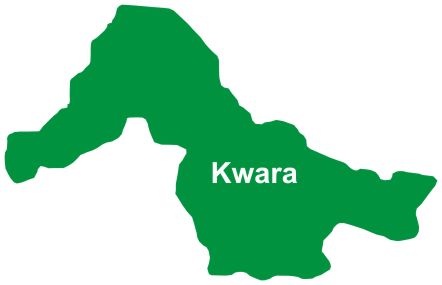
In his motion, Senator Adetunmbi had cited a report issued by Nigeria Governors Forum (NGF) which revealed that 20 states in Nigeria were faced with financial crisis. Some of the states listed as distressed and critical were Kano, Sokoto, Niger, Zamfara, Katsina, Osun, Ekiti, Plateau, Benue, Edo, Borno, Adamawa, Cross River, Enugu, Taraba, Ogun, Kogi, Yobe, Ebonyi, Ondo and Kaduna. States listed as unhealthy were Oyo, Bauchi, Bayelsa, Nasarawa, Gombe and Rivers. Only 9 States, Imo, Kwara, Lagos, Kebbi, Delta, Abia, Akwa Ibom, Anambra and Jigawa were listed as being in a tolerable or healthy financial situation.
As at today the story has not changed because the price of oil in the international market is not palatable.
More so, the global fall in oil prices has started taking its toll on Nigeria as the three tiers of government shared the sum of N593.337 billion for the month of October. The amount shared represents a short fall of N10.192 billion in the amount distributed for the month of September. The Federal Accounts Allocations Committee (FAAC) had the previous month distributed N603.528 billion to the Federal, States and Local Governments.
However, despite the indication by the Coordinating Minister for the Economy, Dr. Ngozi Okonjo-Iweala that FAAC was likely to dip into the Excess Crude Account (ECA) to augment October allocation; the ECA was left at its current $4.1 billion as there was no augmentation for the month.
Fielding questions from journalists after the briefing, Chairman of State Commissioners of Finance, Timothy Odaah reiterated the earlier call by the Federal Government to do away with subsidy as it was not doing the states any good. According to Odaah, monies paid as subsidy should be given to states to enable them pay contractors and complete existing projects.
"States are suffering, Local Governments are suffering. What contractors do now is that when they raise certificates and you are not able to pay at a particular time they charge interest and that is accumulating," he said.
The Coordinating minister for the Economy had during her ministerial briefing argued that Nigeria was not broke. She cited a robust GDP among other economic policies that indicate the Nigerian economy was on sound footing.
Despite last April's rebasing of the economy that pushed Nigeria's Gross Domestic Product (GDP) to $509 billion, ahead of South Africa's $350 billion, it is not yet uhuru. Nigeria had been working with a 1990 base. While the exercise saw GDP jump 89 per cent from N42.3 trillion (2013) to N80.3 trillion, the economy's acknowledgement of sectors like telecommunications, music and Nollywood should mark more efforts at harnessing the potentials the sectors hold.
Giving credence to the fact that it is not well with the Nigerian economy as well as those of the states, Lagos State Governor, Babatunde Fashola had recently alleged insincerity on the part of the Federal Government concerning the state of Nigeria's economy, stating that he suspected that all is not well with the Federation account on the basis of postponement of the monthly Federal Allocation Accounts Committee, (FAAC) which was scheduled to hold in Enugu State last Friday.
Fashola stated this at the commemoration of the 2014 World Food Day/Agric Value Chain Day, in Lagos. He said "as I was coming to this event, I received a message that the monthly Federal Allocation Accounts Committee meeting where states know how much the country earn in the last 30 days and what percentage would be shared between the three tiers of government-Federal, State and Local Governments-from the federation accounts has been postponed.
"The meeting which was scheduled to hold in Enugu was postponed because there were not enough funds in the federation account. That is the situation of the country's economy today."
He said with the recent developments in the country, it has become paramount for state governments to source for internally generated revenue (IGR) by putting in place effective tax system if they must continue to discharge their duties to the citizens.
As the Federal Government continues to pant over the crash in oil price in the international market, there are some reactions to the scenario.
From all indications, though no state government has come out to categorically say that it is broke, stories in the last few weeks indicate that most of them may begin to owe their workers monthly salaries. Worries have been expressed in several quarters that as the price of crude oil continue to plunder, Nigeria is going into an election year and politicians are doing everything possible to mop up cash from every angle to finance the political ambitions.
Some state governors are contesting for a second term in office, while some are picking nomination forms to contest senatorial seats in their respective zones. At the end of the whole scenario the civil servants will be at the receiving end as there may likely not be enough money to pay them salaries as well as executing worthy projects that will benefit the people.
Fears are being expressed that should the trend of oil prices falling continue, most states will soon come out shouting that they are broke because most of them have very poor internally generated revenue base which should act as catalyst in times of oil price fall.
Cloud Tag: What's trending
Click on a word/phrase to read more about it.
Iyaloja-General Olaoye B. Felix Nigeria Governors\' Forum Kayode Bankole Salihu Ajia Abdulmalik Bashir Mopelola Risikatullahi Oluwole Dupe Issa Manzuma Kwara 2023 Shehu Jimoh Presidential Election Olanrewju Okanlawon Musa Orisun Igbomina Dankaka Olokoba Taofik Abiodun Ahmed Ganmo Electricity Sub-Station Elelu Jare Olatundun Raliat Islamic Foundation Muyiwa Oladipo Kanu Centre For Peace And Strategic Studies Yahaya Oloriegbe Sadiq Umar TESCOM 2025 Adedipe Sardauna Facebook Abdulfatai Salman Baakini Ganmo Power Sub-Station Abdulkadir Orire Jebba BIR 08001000100 Bello Bature Shehu Alimi Foundation Abdulfatah Ahmed Folorunsho Erubu Kwara Coalition Of Business And Professional Associations Tope Daramola Oladimeji Thompson Mumeen Lah Abdulrazaq Adebayo Fareedah Dankaka Olukotun Of Ikotun Yusuf Ali Oyedun Juliana Funke Demola Banu Nigeria Customs Service Bola Ahmed Tinubu Galadiman Ngeri Senior Special Assistant On Student Affairs Aminu Ado Bayero Saka Aleshinloye Bashir Badawi Ashiru Ibrahim Bio Seun Bolaji Abdul-Rahoof Bello Waheed Ibrahim United Nigeria Airline Ilorin West/Asa Federal Constituency Makama Of Ilorin Ahmed Mohammed Rifun Turaki Of Ilorin Umar Ayinla Saro Bond Saadu Alanamu Okin Biscuit Geri-Alimi Split Diamond Interchange Samari Oko Erin Erubu Oba Zubair Kwara Basketball Association Saadu Yusuf Abdullahi G. Mohammad Abdul Jimoh Mohammed