


How Afonja (Yorubas) lost the Ilorin throne - Vanguard Newspaper
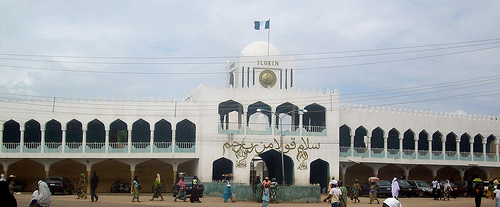
While the Fulani rest the case of their claim to the kingship of the ancient town on the fact that the monarch had from the time immemorial been produced by them, the Afonja descendants, who like majority of the people of the town are Yoruba, say since their ancestor founded Ilorin, their claim to the throne ought not to be disputed.
History appears in support of the former's position although the progenitor of the Fulani indigenes of Ilorin, Alimi, was actually a tenant to Afonja.
The death of Afonja and Alimi, however, saw the eldest son of the latter emerging as the first monarch of what was then known as Ilorin.
Historical sources, tracing the story to the 19th Century, said Ilorin of today was founded by Afonja, the then Aare Ona Kakanfo (Generalisimo) to Alaafin of old Oyo (Oyo Ile), who used the town as his military outpost. It was this outpost that he carried out his war expeditions for the Alaafin. In the usual nomadic wandering, Alimi arrived Ilorin and was hosted by Afonja. Soon after Alimi took Ilorin as his place of abode, a rift broke out between Alaafin and Afonja. When the disagreement reached the climax and the two had to take up arms, Afonja, out of regard for Alimi's spiritual and military prowess, sought his support. Alimi helped in mobilising an army in support of Afonja leading to victory over Alaafin. The defeat led the then Alaafin migrating from old Oyo to the site now called Oyo.
After the war, Alimi became a teacher to Afonja's children as the latter wanted his offsprings to learn the secret of power. When both died, Alimi's son, Abdulsalami, inherited his father's duty of teaching Afonja's children.
When the idea of appointing somebody to head the village came, the eldest child of Afonja wanted to have the position but met opposition from Abdulsalami who had military support from his fellow Fulani kinsmen. Abdulsalami ultimately became the ruler of what is now called Ilorin around 1831.
The issue now is that Afonja's descendants believe that their forefathers were cheated and want a redress. But the Alimi people are claiming that the Afonja people never ruled Ilorin and, as such, no precedent exists to back their position.
Penultimate week's incident was not the first time the Afonja and the Yoruba would attempt to assert their right to Ilorin kingship.
Historical sources said in 1895, the Yoruba rose against the then emir, burnt his palace and killed him. But the revolt did not result in enthronement of a Yoruba king. In 1913, when Lord Lugard administered the northern and southern Nigeria, Yoruba were said to have spearheaded a riot over tax to bring the rulership of the then emir to ridicule. In 1936, the Yoruba, according to sources, also moved to oust Emir Abdulkadir who was banished to Kaduna but got reinstated by the colonial administration.
In 1978, the George Innih administration of Kwara State raised a judicial panel of inquiry to look into the Yoruba agitation.
The Yoruba people reportedly made a case for the merging of Kwara State with the Southwest before the commission while also laying claim to the Ilorin throne. It was said they even claimed antecedent to the throne as they allegedly said Yoruba had produced four obas in Ilorin before the advent of the Fulani. But the Alimi people, in a counter position, claimed there was no known Yoruba king in the town before their forefather mounted the throne.
The report of the panel never saw the light of day while there was also no white paper from government.
A twist to the tussle was the recent petition by three of the six Yoruba chiefs (mogajis) in Ilorin to the State House of Assembly complaining that they had been classified as ungraded by government allegedly at the behest of the emir. Their non-grading, according to the chiefs, suited the emir, so that there would be no rivalry of any sort from the Yoruba to his authority. Ilorin Descendants Progressive Union (IDPU), formed to protect the interest Ilorin indigenes who are of Fulani extraction, once in its opposition to the upgrading of the chiefs, said dong so would bring them at par with Gambari. But the Afonja Descendants Union (ADU) which came on stream in 1978 to advance the cause of the Yoruba in the town and with Kasumu as its leader would hear none of that. The group is allegedly pressuring the legislature to grade the chiefs.
Another angle to the agitation is the demand for Oya State that will comprise the Yoruba speaking areas of Kwara and Kogi States. The move, it was said, is to pull the rug from under the feet of the emir and end the Fulani rulership of Ilorin.
The Yoruba people of Ilorin are not alone in the struggle. The pan-Yoruba meeting which took place in Ibadan last year demanded restructuring of Kwara State such that Ilorin would be grouped with the Southwest. Analysts interpreted this to mean that the parley did not believe that any emir had any business on Ilorin throne.
Cloud Tag: What's trending
Click on a word/phrase to read more about it.
Mope Dasuki Belgore Yashikira Abubakar Abdulraheem Abdulrasheed Akogun Ayobola Ipinlaiye HICA EFCC Nigerian Army Umar Sanda Yusuf Sarah Jubril Adisa Logun Pacify Labs 20 Billion Bond Justina Oha Ita-Ore Federal Neuro-Psychiatric Hospital Baba-Isale AbdulRasaq Abdulmajeed Alaro Turaki Of Ilorin Galadiman Ngeri Mutawali Kwara Liberation Group Emmanuel Olatunji Adesoye General Hospital Ibrahim Agboola Gambari Matthew Okedare Hauwa Nuru Ahmed Bolaji Nagode Hausa Ahmed Idris Mohammed Majlis For Sadakah, Zakat And Waqf Oke Sunna Madawaki Oloje Okala Baba Olokoba Yaman Ijagbo V.O. Abioye Osi Issa Manzuma A.G.F Abdulrasaq Olaiya Victor Mobolaji Risikat Lawal Pakata Principal Private Secretary Forgo Battery Company Limited Jamila Bio Ibrahim Share Mohammed Danjuma Balogun Fulani Ayo Salami Khadijat Ayoola Yusuf Popo-Igbonna Aremu Odolaye Hussein Olokooba College Of Arabic And Islamic Legal Studies Olabanji Orilonishe NAWOJ Abdulraufu Mustapha Oniye Oba Abu Siddiq Adebayo Idowu Salawu Unicontinental Construction Company JAAC Shagari Gwanara Igbomina Ilesha-Baruba Dorcas Afeniforo Saliu Mustapha Yakub Lai Gobir Babatunde Idiagbon Kwara State Government Zulkifli Ibraheem Omupo Manzuma