


Technical Education Remains Antidote For Youth Unemployment - Stakeholders
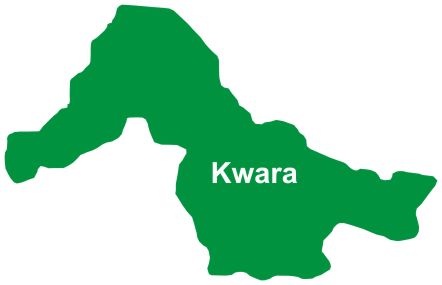
On August 20, 2013, Rectors of Polytechnics and Colleges of Technology across the country converged on Ilorin, the Kwara State capital to strategise on how to further promote technical and science education in the country.
The meeting was declared open by the Kwara State governor, Alh. AbdulFatah Ahmed who is also a product of the host institution – the Kwara State polytechnic, Ilorin.
The rectors met under the auspices of the Council of Heads of Polytechnics and Colleges of Technologies in Nigeria (COHEADS) which was established in January, 1975 as an avenue for intellectuals from the polytechnics and Colleges of Technology to meet and dwell on how to improve quality and standard of technical and vocational education in the country.
The forum also provides the rectors with the opportunity to liaise with appropriate government agencies involved in technical and vocational education as well as Industrial Training Fund (ITF).
The twin-issue of adequate funding of technical education and the importance of skill acquisition and vocational study to the development of the country was the fulcrum of discussions at the event.
Speakers emphasised the need for the country’s leaders to prioritise technical education if they were desirous of bringing an end to the problem of youth unemployment in the country.
A foremost professor of Education and chairman, governing council of the state polytechnic, Prof. Shehu Jimoh delivered a six-page thought-provoking speech titled, “Bring back the Book; Bring back the Teacher; Secure the Future”.
Jimoh who recently retired from the University of Ilorin observed that in the past, the tertiary institutions’ focus was on how to ensure quality input in students, taking them through quality process so as to be quality products on graduation but lamented that the situation has changed as the population of students have far exceeded the National Board for Technical Education’s (NBTE) approved carrying capacities.
He noted that bookish acquisition of scattered pieces of facts is still the practice in the nation’s Polytechnics and Colleges of Technology without corresponding practical experiences which makes graduates half-skilled and less-competent. He advised participants to braze up to the challenges of marrying theory with practicals during teaching and learning to make them solution providers to societal challenges.
Jimoh enjoined them to make and implement impactable policies for schools, noting that history is accelerating at such a velocity that yesterday’s solutions could not answer today’s questions. Thus, educational policies must be constantly reviewed in order to meet the challenges of the 21st century.
He tasked the Polytechnics to focus more attention on developing skills and competence of their students. To do that, he said there must be a paradigm shift from curriculum as a finished, static product to curriculum as a dynamic process, from teaching to learning and from teacher-centered to learner-centered approaches.
He urged the rectors to work out modalities and programmes that would promote the speedy restoration of scholarship to their institutions.
Jimoh further advised the Polytechnic administrators to, “respect NBTE guidelines on carrying capacity so that you would not have a backlog of graduates waiting to be mobilised for the National Youth Service Corps.
“Look inward and examine in what specific ways you can further plug areas of wastage and enhance your internally generated revenue. For example, it is wasteful to find out that the services your staff and students can provide are services which some of your staff already provide as consultants to other bodies and agencies.”
The lecturer emphasised the need for government to plan properly before coming out with programmes and policies that affect the principles and practices of education.
He added, “qualified, experienced and committed persons should be appointed to superintend over polytechnic matters, either as council, member or as management staff. There must be people who understand and are equipped to promote the goals for which these institutions were established in the first place.
“Technical education is capital intensive. The proprietors should provide adequate funds for their polytechnics to cater for payment of salary, accreditation and capital development to complement the efforts of TETFUND. This will also assist in meeting the 70:30 ratio in admission.
Declaring the COHEADS meeting open, the state governor, Alh. AbdulFatah Ahmed disclosed that as part of efforts to create more youth entrepreneurs and enhance technical education in the state, his administration has budgeted N200 million as soft loan for artisans and transport cooperatives to empower their members and boost activities in both sectors.
The governor tasked Polytechnic administrators in the country to make entrepreneurship education a major component of the curricula of the institutions to check the unemployment problem in the country.
Ahmed expressed dissatisfaction that the labour market is “saturated with unemployable graduates; youths who cannot clearly express themselves, not to talk of possessing the required skills for self employment”.
He said his administration established the ministry of Tertiary Education, Science and Technology, improved budgetary allocation to the higher education sector; established the City and Guilds of London moderated International Vocational Centre at Ajase-Ipo and trained 150 youths in conjunction with the Kwara State University, Malete, on youth entrepreneurship with access to N50 million loan facility, in order to create more opportunities for the youths and expand economic activities in the state.
The Chairman of COHEADS, Dr Kabir Matazu and the host rector; the rector of Kwara State Polytechnic, Alhaji Mas’ud Elelu thanked the state government for approving the CONTEDIS/CANPCASS salary grade level for the institution staff from CONTISS as well as shifting the retirement age of academic staff to 65 years.
Cloud Tag: What's trending
Click on a word/phrase to read more about it.
Ayo Salami Bayo Mohammed Onimode ITEM 7 Kwara State Council Of Chiefs Apado Olosi Of Osi National Union Of Road Transport Workers Abdulraheem Olesin Adebayo Salami Apaokagi Sulyman Abdulkareem Abubakar Olusola Saraki Suleiman Yahya Alapansapa Mufutau Gbadamosi Esuwoye Fawenu Oluwatoyin Lukman Katibi Ibraheem Adeola Rafiu Ajakaye Jare Olatundun Bankole Omisore Ileloke Tsaragi/Share Transition Implementation Committee Benin Republic Sobi Specialist Hospital Kemi Adeosun Olayinka Are Nigeria Association Of Women Journalists Soffiyyallah Kamaldeen Sabi Abdulmutalib Shittu RTEAN Zulkifli Ibraheem Omotoso Musa Amina El-Imam Kunle Suleiman Matthew Babaoye MATTA Girls Foundation Oyedun Juliana Funke Adam Abdullahi Al-Ilory Akeem Olatunji Gafaru Olayiwola Olorisade Kamaldeen Gambari PAACO-PCL Consortium Tinubu Adisa Logun Face Masks Ishola Balogun Fulani Kwara State Coalition Of Business And Professional Associations Young Progressives Party Olatunji Ibrahim Aro Yahaya Abubakar Abdullahi Bata Ajidagba Nigerian Medical Association Abioye Bello Saudat Abdulbaqi Abdullateef Abdussalam Magaji Are Sa\'adatu Modibbo-Kawu VADA Tunde Kazeem Salihu Ajia Bolakale Kawu Agaka Garment Factory Abdulmumini AbdulRazaq Olabimpe Olani College Of Health General Tunde Idiagbon International Airport SSUCOEN Igosun Abdulrasaq Alaro Na\'Allah Mohammed Lawal Rotimi Samuel Olujide Olohungbebe Adama Isa