


Digital Innovation: Governor AbdulRazaq Calls for Ethical AI Deployment, Human Capacity Building in Kwara
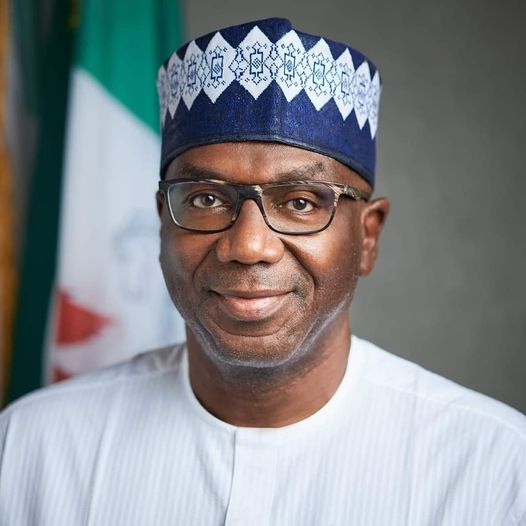
Kwara State Governor, AbdulRahman AbdulRazaq, has called on researchers, investors and innovators to partner with governments at all levels to pilot and scale artificial intelligence and digital solutions in agriculture, healthcare, education and governance.
The governor made the appeal in Ilorin at the 4th Biennial International Conference jointly organised by the Faculty of Communication and Information Sciences, University of Ilorin, and the Faculty of Philology, RUDN University, Russia, on Monday.
AbdulRazaq, who was represented by his Special Adviser and Counsellor, Saadu Salau, stated that collaboration between governments and technology stakeholders was critical to unlocking the benefits of AI and digital innovation.
"We invite researchers, investors, and innovators to work with governments in piloting and scaling AI and digital solutions in agriculture, health, education, and governance," AbdulRazaq said.
He noted that building human capacity remained essential to the effective use of artificial intelligence.
"We know AI is only as good as the people who understand and use it. That is why the Ilorin Innovation Hub and initiatives like TechUnlimited are training thousands of youth in data analysis, software development, and AI fundamentals.
"Kwara has deliberately positioned itself as a subnational partner for global technology players.
Through a Memorandum of Understanding with the U.S. Embassy, our State Innovation Hub is now connected to international expertise, mentorship, and funding pipelines.
"We have also secured partnerships with IHS Towers, MTN, and other global brands to expand digital infrastructure and create pathways for youth innovation. These are not just corporate CSR projects - they are structured collaborations to co-develop solutions in connectivity, cloud services, and digital skills," he said.
According to him, the state's goal is to make Ilorin and Kwara a credible destination for technology investment and talent development in West Africa.
The governor highlighted the impact of digital technology in the education sector.
"Through programmes like KwaraLEARN, we are using real-time data and digital tools to improve learning outcomes in public primary schools across all 16 LGAs," AbdulRazaq said.
He also advocated for laws and ethical guidelines to regulate the deployment of artificial intelligence and mitigate its potential negative effects.
"Today, whatever innovation we have should be guided by laws and ethics," he said.
In his keynote address, the Comptroller-General of the Nigeria Customs Service, Bashir Adeniyi, described the digital revolution as fundamentally a human story, stressing that society's greatest challenge lies in how technology is deployed.
According to him, universities play a strategic role in shaping knowledge, ethics and evidence-based thinking in an era of rapid digital transformation.
Citing data from the Nigerian Inter-Bank Settlement System, Adeniyi stated that electronic payment transactions in Nigeria reached N1.07 quadrillion in 2024, equivalent to about $702.6 billion at the year's closing exchange rate.
He added that NIBSS Instant Payments processed N285 trillion in the first quarter of 2025, representing a 25 per cent increase compared to the same period in 2024.
"African nations have now recognised the Nigerian Instant Payment System as the first fully mature instant payment system on the continent," he said.
Adeniyi noted that Nigeria had transformed from a largely cash-based economy to one where mobile phones now function as banks, marketplaces and service centres.
He also cited global figures from the United Nations Conference on Trade and Development, which showed that e-commerce transactions increased from $17 trillion in 2016 to $27 trillion in 2022 across 43 countries.
Addressing artificial intelligence, he stated that AI should be viewed as a tool rather than a replacement for human intelligence.
"Artificial intelligence operates on correlation, not conscience. It processes information, but it does not understand meaning the way human beings do," he added.
The Customs boss stated that AI systems could assist universities in grading examinations, generating reading materials and translating content into local languages, but could not replace the human role of teaching and mentoring.
"The machine handles the mechanics, but the teacher carries the meaning," he said.
Adeniyi also highlighted the growing use of AI in customs administration, explaining that digital tools now help identify suspicious cargo, analyse trade patterns and improve transparency through real-time monitoring and reduced cash transactions.
He urged universities to redesign their curricula to prioritise critical thinking, interdisciplinary learning, ethics, communication skills and practical problem-solving.
Earlier, the Vice-Chancellor of the University of Ilorin, Prof Wahab Egbewole, represented by the Deputy Vice-Chancellor, Muhtar Adeiza, stated that the conference, themed "Disruptive Technology, Human and Artificial Intelligence in the Digital Economy," was timely given the pace of global technological advancement.
He expressed confidence that discussions and research presentations would generate practical insights and policy recommendations capable of promoting sustainable development and responsible technological innovation.
Also speaking, the Dean of the Faculty of Communication and Information Sciences, Prof Saudat Abdulbaqi, stated that the conference provided a platform for scholars and professionals from Africa, Europe and Asia to explore how human and artificial intelligence can coexist to promote innovation, ethical advancement, sustainable development and inclusive growth.
Artificial intelligence has become a major focus of policy discussions globally as governments, universities and private organisations seek to harness its potential in education, healthcare, agriculture, finance and public administration.
In Nigeria, several state governments and institutions have launched digital innovation programmes and technology hubs aimed at improving digital skills, encouraging innovation and positioning the country to benefit from the rapidly expanding global digital economy.
Cloud Tag: What's trending
Click on a word/phrase to read more about it.
Owo Isowo Yusuf Lawal Aishat Mohammed Lawal Abdulwasiu Bolaji Adeyi 2017 Budget Oloriegbe Abubakar Abdullahi Bata Oja-Oba Yusuf Lanre Badmas Bamidele Aluko Imodoye Writer’s Enclave Olusola Saraki Ilorin Central Mosque Ayegbeni Kwara North Federal College Of Education (Special), Afon Islamiya Abdulraheem New Model Police Station Ahmed Idris Mohammed Alfa Modibo Belgore Kazeem Oladepo KWIRS Omar Bolaji Gambari Daud Adeshola Ebun-Olu Adegboruwa Issa Manzuma Jimoh Lambe Abdulkareem Abdulfatai Ahmed Adeola Abraham SARS Peter Obi Ajia-Bako Saliu Ajibola Ajia Cassava Growers\' Association Ilorin Elerinjare-Ibobo Oyelere Oyinloye Bola Iyabo Ibiyeye Adisa Iyaloja-General Funmilayo Zubair Ibrahim Taiwo Road Shagari Gbenga Olawepo Pilgrims Board Lucky Omoluwa College Of Education Shuaibu Yaman International Public Sector Accounting Standards Tafida Omotoso Musa Abdulrauf Aliyu Fawenu KWSIEC Ilorin West/Asa Federal Constituency Ministry Of Women Affairs And Social Development Aso Ofi Magaji Are Kwara Poly Offa Poly Umar Bayo Abdulwahab Shade Omoniyi Farouk Salim Idiagbon James Ayeni Radio SBS Rasheed Jimoh Facemasks Isiaka Danmeromu Oniyangi Kunle Sulaiman Idris Amosa Saidu Zulu Gambari Asa Mohammed Yahaya Barki Ilorin Curfew Iyabo Adisa Ibiyeye Ahman Pategi University Saeedat Aliyu