


The undying story of Afonja dynasty
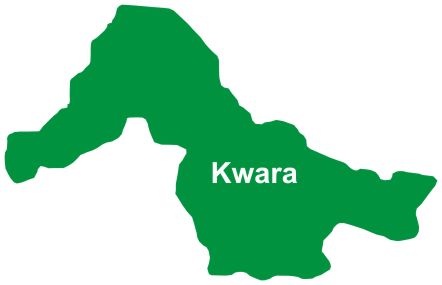
The struggle for recognition by the Afonja family, whose great grandfather founded Ilorin before the Fulani hegemony led by Alimi, betrayed his trust and usurped political power has been on for generations. The descendants of the Yoruba 6th generalissimo, as represented by the Afonja Descendants Union (ADU), remain unrelenting. Sina Fadare, who recently visited Ganmo, the village where members of Afonja family sought refuge, when their projenitor was killed, reports that the people still nurse the hope of reclaiming what belongs to them.
THERE was agony in his voice, though very articulate and combustive. If there truly is anything called re-incarnation, Comrade Olola Kasum, President, Afonja Descendants Union (ADU), will surely come back to the same Afonja warrior family.
All his adult life has been that of struggle for the recognition of the Afonja dynasty in Ilorin, as founder of the land which was treacherously schemed away by the Fulani hegemony led by Alimi (Islamic scholars from Sokoto) from their fore fathers. Ever since then things have never remained the same.
Kasum however maintained that the recommendation of the Ekundayo panel of enquiry set up to put a lasting solution to the lingering crisis is the only panacea.
In the Beginning
Afonja was the 6th Are Onakakanfo of Yoruba land. He came from the Laderin, Pasin and Alugbin lineage, who were all warriors. The formidable warlord, who is a prince from his mother’s side immediately became an enemy of the king of Oyo Empire, Oba Aole.
Aole subtly wanted Afonja out of his way but did not know how to do it because Afonja was not only the Are- Onakakanfo, but very formidable and had a lot of fortification charms which made him fearful to his friends and foes. He therefore sent a war message to him to go and wage war against the people of IwereIle.
In Oyo Empire, the word of the Alaafin must be carried out to the letter by any Are-Ona kakanfo; anyone who disobeyed such an order usually had the message of his death brought to the Alaafin. Historically, Afonja could not attack the people of IwereIle because a curse had been placed on any Are-Ona Kankafo who dared attempt to attack the town by Alaafin Ajagbo who instituted the title. Incidentally, Iwere-ile was also the birth place of his mother and that of Alaafin Abiodun.
The army led by Afonja turned against Oba Aole and he was sent a calabash, which traditionally symbolised that he should commit suicide. He however refused and saw Afonja as a traitor. But before Oba Aole was killed, according to Rev. Samuel Johnson in his book ‘The History of Yoruba,’ he invoked the spirits of his fore-fathers and shot three magical arrows into the three tripod on which the kingdom was believed to stand. “My curse be on ye for your disloyalty and disobedience, so let your children disobey you. If you send them on errand, let them never return to bring you word again
“To all the points I shot my arrows will ye be carried as slaves. My curse will carry you to the sea and beyond the sea, slaves will rule over you and you their master will become slaves” he said.
Thereafter, the kingdom never knew peace.
Afonja returned to his home in Ilorin, where his friend Solagberu introduced him to an Islamic cleric known as Soliu, who later became Alimi, who had come from Sokoto. Alimi had become popular after he killed a mysterious snake that was swallowing children with the recitation of some Quranic prayer that produced thunder and eventually killed the snake.
Afonja was of the view that with such power, he would fortify himself against his enemy and therefore made Alimi his priest. Alimi, who was living on the outskirt of Ilorin at a village called Kuo, on becoming Afonja’s spiritualist, was invited to live in Ilorin by Afonja and he commanded all his Jamas to be under the care and control of Afonja who was equally fascinated with their war strategy.
When Afonja saw the bravery of these Jamas in their subsequent wars, he made the grave mistake of disbanding his own previous army to rely on the Jamas. History had it that this costly mistake eventually led to his death.
The treachery
Alimi quickly cashed in on the trust Afonja had in the Jamas to plot evil against him. After the war, the Jamas became uncontrollable and became a thorn in the flesh of the people they professed to be protecting.
At will, they looted, maimed, killed and confiscated cattle’s and livestock found in the town. The people ran to Afonja and complained bitterly that he should check the excesses of these Jamas but he took it with levity.
Afonja, who thought he was at the peak of his power, became naughty and sought no advice from his chiefs anymore. He refused to listen to his able lieutenants and nobody could talk to him, especially on the recklessness of the Jamas.
Afonja was power-drunk and started scolding his warrior kinsmen in favour of his friend, Alfa Soliu Janta’s jihadist army. Ironically, he never knew he was inching gradually towards his end through his obsession for political power. So he continued falling to the seductive bait being spewed by his visitors, who later not only ousted him from his home but also murdered him.
According to Johnson, “Fagbohun, the chief of Jabata alone had the courage to warn Afonja on the excesses of the Jamas by virtue of his office as the commander of the left wing of the Kakanfo army and he incurred his displeasure for his boldness.
“He fell indeed like a hero. So covered was he with darts that his body was supported in an erect position upon the shafts of spear and arrows showered upon him. So much dread had his personality inspired that these treacherous Jamas whom he had so often led to victory could not believe he was really dead; they continued to shower darts upon him long after he had ceased fighting. They were afraid to approach his body, as if he would suddenly spring up and shake himself for the conflict afresh.
However, Johnson emphasised that “The late Afonja was a native of Ilorin.” The city was built by his great grandfather, Laderin, whose posterity ruled in succession to the fourth generation. Laderin the founder was succeeded by Pasin, his son, a valiant chief, who opposed the renowned Gaha, when he was at the zenith of his glory.”
According to Comrade Olola Kasum, following the death of Afonja, his people ran away to re-settle at Ganmo, at a place called ‘Maaro’ river while their ancestral home, Idi Ape in Ilorin was rebuilt and exist till today.
Dimmed hope
As faith would have it, the semblance of what Afonja lost in the past came to reality when one of the great grandsons of Afonja, Mohammed Lawal became the governor of the state in 1999. Lawal took two fundamental steps that shook the state to its foundation. Firstly, he re-graded the traditional stool and the four prominent Yoruba chiefs in the state, Mogaji Are, Balogun Ajikobi, Balogun Gambari and Baba Isale were promoted to first class traditional rulers; a step which the Emir of Ilorin vehemently opposed, though he had no choice.
Lawal also set up a committee headed by Engr. Aliyu Idris to look into the agitation of more local governments in the state and based on its recommendation, a referendum followed. On June 29, 2002 the referendum vote produced 508,171- Yes and 4062 No. Against this backdrop, Lawal announced additional 18 local governments from the previous 16 local government Council.
The proposed 18 new local government councils are Cekpan, Guruten, Ifedapo, Ilorin Central, Ilorin North, Ilorin North West, Ilorin South Central, Ilorin, South East, Ilorin South, Ilorin West and Ilorin West Central. The others are Irewolede, Kajola, Maaro, Odo-Ogun, Offa North, Owode, Oyun, Tsaragi/Tsongo and Weru. Incidentally, Maaro a place that harboured the relics of Afonja was not left out of the largesse.
As a follow up to the exercise, the state governor, Alhaji Lawal, on Tuesday July 2, 2002 sent a bill to the State House of Assembly, seeking the amendment of the state’s local government law of 1999 to pave way for the creation of additional local government areas in the state. The governor said the presentation of the bill to the House was in line with section 8; sub-section 3 of the Constitution of the Federal Republic of Nigeria.
After a series of heated debate, on the issue, the House approved 17 of the proposed LGAs and ordered fresh and immediate referendum in eleven local government areas of the state.
However the joy of the people of the state and particularly the Afonja dynasty was short-lived. After the exit of Lawal in the 2003 election and Dr. Bukola Saraki became governor of the State, he over-turned the whole set-up.
On 19th September 2003, The Kwara State Government through the Commissioner for Local Government and Chieftaincy Affairs, Chief Victor Bisi Oloruntoba, at a Press Conference, touched the heart of Ilorin history. This was by the announcement of the dethronement of the incumbent Magaji Aare, Alhaji Busari Alabi Alasa, father to the immediate past governor of the state, Mohammed Alabi Lawal.
His words: “With the repeal of Chiefs (Appointment and Deposition) Amendment Law 2003, the old law of 1930 on the appointment and Deposition of Chiefs applicable in all Northern States of Nigeria is thus still in force.”
Oloruntoba declared that, “It follows therefore that the mass grading and upgrading exercise of traditional chiefs carried out by the immediate past administration, which took effect from 2nd August 2002 and 13th March 2003 respectively, which were done without complying with the due process of law and without consultation with the Kwara State Council of Chiefs, are declared null and void. Therefore, all the chiefs affected by the last mass grading and upgrading exercise are reverted to the status quo and so also their salaries and entitlements.”
According to him, “In the light of the foregoing and in the interest of peace and tranquility in the state all the mass grading and upgrading exercise which took effect from 2nd August 2002 and 13th March 2003 are declared null and void.”
However, the Afonja Descendant Union (ADU) insisted that the dynasty has been agitating for what belongs to her in a legal and constitutional way since 1976 and will not relent on its efforts until justice is done.
According to him, ADU on the 10th of February 1976 petitioned the former Governor of the State, Late Col. Adetunji Taiwo, where it stated its own side of the story and demanded for justice. The Union demanded that “the present one-line ruling dynasty in Ilorin is not only a legalised injustice but a travesty of history.
“In the supreme interest of social justice, tribal harmony, political stability, peace and in the overall interest of one united Nigeria, we of the Afonja Descendant Union of Ilorin hereby repeat our earlier call upon your government to appoint a commission of inquiry to examine the justice and desirability of creating an alternative ruling house in Ilorin.”
It went further to state that “All we are asking for is that our house should be included in the ruling dynasty of Ilorin. This is a just and hereditary right because our forefathers were the unquestionable founders of Ilorin, having ruled to the fourth generation before the advent of the Fulani’s.”
Kasum pointed out that the fallout from their agitation gave birth to the Ekundayo Commission of Inquiry set up by the then government but unfortunately, the report of the committee did not see the light of day.
He emphasised that the government should re-visit the commission and make its recommendation available to the public, adding that this is the only panacea to the crisis on ground; otherwise the evil day has just been postponed.
Speaking in the same vein and with agony in his voice, the Imam of Yoruba in Ilorin Alh. Sheik Abdulraheem Aduranigba, who waxed a record on the secret of Ilorin, pointed out that history cannot be faulted, as it is glaring that the Yoruba who are in the majority in Ilorin through their progenitor Afonja, has been marginalised, but would soon rise again.
He lamented that the Fulani hegemony has done everything in their power not to accord the Yoruba who are the founder of Ilorin the legitimate right to be part of the ruling class in the chiefdom, noting that all the Yoruba traditional rulers within the so-called Ilorin emirate have been relegated to the background, which should not be.
“How can the owner of the land be treacherously relegated to the background and the Fulani minority immigrant suddenly become the ruler of the chiefdom.?” he queried
Cloud Tag: What's trending
Click on a word/phrase to read more about it.
Sanitation Exercise Saliu Oluwole Soffiyyallah Kamaldeen Omoniyi M. Ayinla LAK Jimoh Olokoba Abdullahi Ayinla Adedeji Onimago Igosun Economic And Financial Crimes Commission Mamman Saba Jibril EndSARS Makama Of Kaiama FOMWAN Toyin Saraki Aliyu Salihu Firdaos Amasa Riskat Opakunle Jumoke F. Ajao Face Masks Www.Kwarareports.com Ahmed Bayero Hassan A. Saliu Akanbi-Oke Oba Abdulkadir La\'aro Ilorin South Constituency Ahmed Shuaib Buranga Universal Basic Education Commission Abatemi Usman Just Law Forum Abdulmajeed Abdullahi Vasolar International Public Sector Accounting Standards George Innih Yusuf Lanre Badmas Buhari The Herald Earlyon Technologies Ganmo Electricity Sub-Station Lithium Idiagbon Gobirawa Kabir Shagaya Ayinde Oki Amina El-Imam Taofeeq Olateju Simon Sayomi Victor Gbenga Yusuf Saka Saadu Waheed Ibrahim Ilorin Talaka Parapo SUBEB Elerinjare Azeez Salawu Omotosho Oba Of Jebba Oyun School Of Nursing Aisha Buhari Niyi Osundare Quareeb Islamic Association ER-KANG Mining Nigeria Company Limited Sobi FM Oloriegbe Shoprite Kuliyan Geri Is\'haq Modibbo Kawu Al-Adaby Abdulkadir Bolakale Sakariyah Abdulraufu Mustapha Ojo Fadumila TIC Dan-Kazeem IFK Abioye Bello Tunde Idiagbon Road Niguel Gallando Marcias Oyeyemi Olasumbo Florence