

Opinion: Entering 2016 With Trepidations By Olusegun Adeniyi
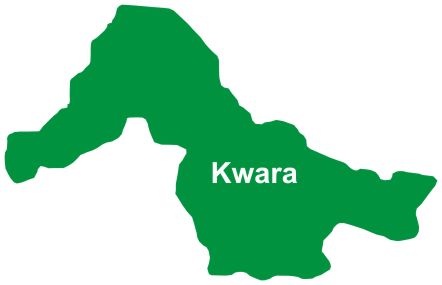
I spent the Christmas holiday with my family in Kwara State as I do every year. However, when I arrived Ilorin last Thursday, I could sense a feeling of foreboding that this was an unusual season. Everywhere I went, the stories of deprivations and lamentations were the same. The challenge was further compounded by an acute fuel scarcity which made many motorists to spend days and nights at fuel stations. Incidentally, four days before arriving the city, two persons, a taxi driver and a commercial motorcycle rider, (otherwise known as okada rider) were crushed to death by a passing train while they were on the queue for fuel. And throughout the Christmas holiday season, several of the roads were blocked by desperate motorists who were seeking the elusive commodity and the situation never improved.
The story is that there is one official recently posted by the Nigeria National Petroleum Corporation (NNPC) as station manager in Kwara State who vowed that under his watch, no fuel station would sell the product at black market rate. Whoever this enforcer of a man is, he succeeded with his promise for which he deserves commendation. The problem, however, is that he created another problem for those who would rather have the product without having to sleep at fuel stations. For such people, and they included hapless taxi drivers and Christmas visitors, they had to commute back and forth to Ogbomosho in Oyo State to buy the product that sold at N150 per litre in fuel stations.
Unfortunately, as year 2015 draws to a close today, there is no certainty that the problem of fuel scarcity will abate in the year to come since there is as yet no coherent policy decision on the downstream sector of the petroleum industry. While some people may be deceiving themselves into believing the product sells for N87 per litre (and from tomorrow, N86.5!), the reality is something else: the price has unwittingly been "deregulated" by those who are adept at profiteering at the expense of our people. And they also continue to exact maximum punishment by ensuring that we suffer before we get the product at whatever prices they choose to sell.
Also while in Ilorin, there was a story about a prominent woman in the city who had travelled to Dubai. While checking out of her hotel last week, she presented her Nigerian Bank debit card to settle the bill, having been assured by her account officer before she travelled that she was covered. As it would turn out, the hotel receptionist informed her that the payment was declined. She called her account officer in Nigeria who, after blabbing, informed her that it was a new policy which took effect from that day. The woman had to pawn the jewelries she was wearing to settle the hotel bills!
For sure, the days, weeks and months ahead are bound to be rough and we have only ourselves to blame for the choices we have made over the years, choices that have now caught up with us. The challenge, however, is that this is the time we need a leadership that would be courageous enough to take some hard decisions that may be painful in the short run but would ultimately help in repositioning our country. Fortunately, President Muhanmadu Buhari has the character and still retains a measure of goodwill should he come to terms with the fact that populism at a time like this will amount to digging while already in a hole.
The problems confronting the nation today require more than ad hoc solutions since their manifestations are everywhere. A report released in June this year by the Nigerian Labour Congress (NLC) Task Force on Employees' Salary Arrears revealed that 23 out of the 36 states of the federation could not meet their obligations to workers. Unfortunately, the situation has since worsened as oil price takes a nose dive with many of the states not only in dire straits but also clueless about what to do in the circumstance. The pertinent question remains: if these states cannot pay the salaries of workers which ordinarily are a basic requirement, how do they address more serious problems? In many of these states, most of the critical sectors like education and health have virtually collapsed. Unfortunately, one can almost say the same of the federal government which also finds it difficult to pay salaries.
However, I sympathise with President Buhari who comes to power, having campaigned on certain assumptions that have now unraveled before his very eyes. According to Central Bank of Nigeria (CBN) figures, the total revenue collection for the federation in year 2012 was $40,561,793,365.83. We can round that up to $40.6 billion. And we are talking about the totality of the revenues from the NNPC, the Federal Inland Revenue Service (FIRS), the Directorate of Petroleum Resources (DPR) etc. A year later in 2013, that sum had dwindled to $37,520,087,145.54, which can be rounded to $37.5 billion. By 2014, the collections had improved marginally as $38,630,800,832.85 (roughly $38.6 billion) was raked in. Now, wait for this! By the end of November, just last month, only $14,887,315,845.29 (about $14.9 billion) had been realised. That means we are talking about less than 40 percent of the earnings for previous years! With such a huge gap, it is easy to understand the predicament of the CBN that has been throwing everything (orthodox and unorthodox policies) at a problem it did not cause and which may not go away very soon. It is compounded by the ease with which some unscruplous Nigerians game the system to the detriment of our national economy.
There is a story in a recent edition of the Wall Street Journal (WSJ) that says so much about our country. While the value of rice imports to China in 2014 was $1.23 billion, the value of rice imports to Republic of Benin was $1.02 billion. Similarly the value of frozen chicken import to the United Kingdom in 2014 was $47.7 million, while the value of the imports of the same commodity imported by Republic of Benin was $42.6 million. On top of the chart, this was the caption written by WSJ: "Tiny Benin imports as much rice as China and nearly as much frozen chicken as the UK. Most of it is smuggled into neighbouring Nigeria." What that says most eloquently is that we are dealing not only with monumental corruption and associated problems like smuggling etc. but also with some serious structural problems in the economy that require short, medium and long term solutions. That we are in a difficult national situation is very evident but the moment also comes with its opportunities.
For years, we have made a song and a dance of "diversifying the economy from oil" without taking much concrete measures in that direction. Now that the situation has been forced on us by the downturn in oil prices, we cannot afford to waste the moment. The good thing is that Nigerians are not lacking in ideas. For instance, I have read Professor Bolaji Aluko's interesting intervention on what we could do with our gas reservoir both for power and domestic consumption and it is also clear that there can be no better time than now for private refineries with the attendant multiplier effects on our national economy. I am sure other opportunities abound in several areas for generating much needed revenues for our country, putting our people to work and putting money in their pockets.
All said, 2016 is a crucial year for the nation and the choices we make (or refuse to make) could have reverberations for many years to come. I therefore urge President Buhari to assemble a strong economic team that will help in coming up with policies aimed at addressing some of the economic ills that now plague the nation.
I wish all my readers happy new year in advance.
Cloud Tag: What's trending
Click on a word/phrase to read more about it.
Muritala Olarewaju Chief Of Staff Senate President Abdulrazaq Sanni Association Of Kwara State Online Media Practitioners Abdullahi Adisa Akodudu Olusegun Adeniyi AbdulRahman Saad Special Agro-industrial Processing Zone George Funsho Adebayo Christopher Ayeni Valsolar Consultoria Dan Iya Igosun Galadiman Ngeri General Hospital Idofin CT Ayeni Abdullahi Samari Ajibola Saliu Ajia Jaiz Bank Zulkifli Ibraheem Tunji Arosanyin Femi Ogunsola Kwara State Coalition Of Business And Professional Associations Muhammad Sirajo Aliyu Amuda Aluko Shagari Esuwoye Medview Airlines Mohammed Halidu Elese Of Igbaja Ibrahim Agboola Gambari Magaji Are Michael Ologundea Shola Odetundun KSIRS HYPPADEC Prince Bola Ajibola Shonga Jimoh Saadudeen Muhammed Orire Esinniobiwa Quareeb Oni Adebayo Kassim Babamale Isiaka Oniwa 08001000100 CKNG Minimum Wage Roheemat Hammed Saba Mamman Daniel Moremi High School Abdulmumini Sanni Jawondo Oba Abdulraheem Oba Sulaiman Asude Abdullahi Dasilva Yussuf Owo Isowo Abubakar Atiku Bello Oyedepo Titus Suberu-Ajibola Saad Belgore Salaudeen Oyewale Labour Party Mahmud Durosinlohun Atiku Fawenu Babajide Ajayi Sulyman Atolagbe Alege NTA Ilorin Tunde Kazeem Dogara Sheu Ndanusa Usman Jaigbade Alao Osinbajo Oba Of Jebba Toyin Abdullahi Amusa Bello Baba Adini Of Kwara State