


Kwara 2015: Gbemi Saraki walking a tight rope
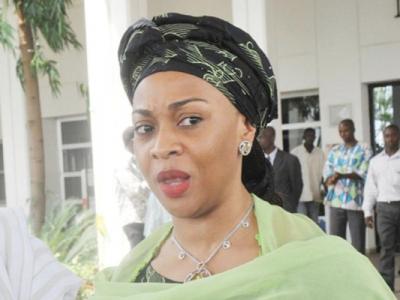
Until recently, politics has largely remained an exclusive preserve of the men folk. At best, women play a second fiddle. Where attempt is made at all to complete with their male counterparts for elective positions, their effort is often met with several impediments-lack of funds, thuggery, religious and cultural inhibitions.
Since the advent of the present democratic dispensation, however, sustained campaign for women participation in politics, especially 35 percent affirmative action, has changed the face of things. Today, not only that women have demonstrated the capacity to deliver in their various positions of responsibility at all levels of government, they have also taken a frontline position in elective offices.
For the first time in the recent times, the administration of President Goodluck Jonathan parades a sizeable number of female ministers in his cabinet. Similarly, virtually all the state houses of assembly as well the National Assembly have a relatively high number of women representatives in their hallowed chambers and even competing for leadership position. At the level of the National Assembly, for instance, Hon. Patricia Etteh, emerged the first elective female Speaker of the House of Representatives, though she eventually fell to the proverbial banana peels. At the inauguration of this 7th National Assembly, Hon Mulikat Adeola, competed with Hon Aminu Tambuwal for the position of the Speaker but lost the battle.
The same scenario is being played out at the state level, as women have refused to play the role of second fiddle. As in other parts of the world, women have successfully broken the traditional barriers based on gender, religion and tribal sentiments. They are now seen as equal partners in governance.
At the last dispensation, bold women like Senator Gbemisola Saraki took a shot at the exalted position of the governor, but the effort was greeted with little success. The race is on again. She still wants to make another attempt to occupy the Kwara State Government House. But the question people are asking is whether or not Nigeria’s democracy has matured to the level of electing a female governor. The only time a woman ever occupied the position of governor was during the tenure of ex-governor Peter Obi of Anambra State who was illegally impeached for alleged gross misconduct and a 64-year-old Virginia Victoria Etiaba was ordered to assume responsibility as the Chief Executive Officer of the state on Friday, November 3, 2006. However, her tenure was short-lived as Obi was later reinstated by the judiciary in 2007.
One of the leading campaigners for emergence of female governor is First Lady, Dame Patience Jonathan. She has been in the forefront of advocacy for 35 percent affirmative action on women participation in politics through her Global Women for Change and Development Initiative (W4CDI). At the capacity building workshop she organised for female governorship aspirants held in Abuja on Wednesday, October 15, the First Lady was said to have assured the aspirants of her undiluted support.
Already, no fewer than seven female aspirants have indicated their interest to vie for the coveted position of governor in their respective states. These include Senator Nkechi Nwogu (Abia), Senator Gbemisola Saraki (Kwara), Dr (Mrs) Esther Uduehi, Ngozi Olejeme (both Delta), Adetokunbo Tobun-Agbesanwa (Lagos) and Senator Helen Esuene (Akwa Ibom).
In Kwara State, all eyes are on Gbemisola, the daughter of the Late (Dr) Abubakar Olusola Saraki. Interestingly, it was the patriarch of the Saraki political dynasty that introduced women into Kwara politics about four decades ago. Gbemisola is on a familiar terrain. In 2011, she contested for the gubernatorial election in Kwara State on the platform of Allied Congress Party of Nigeria (ACPN). At that time, the party was still at its early age. So, she could not make an impressive outing.
She has since then returned to the ruling Peoples Democratic Party. And unarguably, she has the a formidable structure since her biological brother, Senator Abubakar Bukola Saraki and the incumbent Governor of Kwara State, Alhaji Abdulfatah Ahmed, have abandoned PDP for the All Progressives Congress (APC).
On of the factors that worked against her ambition in the last election was the negative campaigns of some Islamic Islamic clerics against women leadership. But it appears now that the opinion has changed since a renowned Islamic cleric and Proprietor of Markaz International, Agege, Lagos, Sheikh Habibullahi Adam Al-Ilory has debunked the claim that women should not aspire to dealership position. Al-Ilory whose sermon clip has gone viral immediately after it was released said Islam preaches equality for all, irrespective of gender, urging any Islamic cleric to bring forth any verse in the Quran or Hadith that states otherwise.
It is now left for the party to create a level playing field for all the aspirants. Even at that, Gbemisola still has another major obstacle to confront. Since the demise of her father, Senator Bukola Saraki has taken over the reign of power political leader in Kwara politics. The incumbent governor is his political son. In the same way, all the three senators and the House of Representatives members are his loyal supporters. All of them have defected to the APC along with their leader.
The stake is even higher now that Oloye Saraki is no longer around to throw his weight behind her ambition as he did during the 2011 general election. As a new emerging leader, Bukola would do everything to win this election and entrench his hold in the state. Some people believe that the soul and the spirit of PDP have since disappeared following the defection of Bukola to his new party.
The riddle now is: Will Gbemisola break the yoke of women bondage in Nigeria politics by emerging the first elected female governor in the country? If experience is considered to be a deciding factor, the daughter of the late strong man of Kwara politics undoubtedly has a wealth experience to do the job having served in various committees during her eight years tenure at the National Assembly.
The answer to the question of how far she can go in her bid to occupy the government is in the womb of time.
Cloud Tag: What's trending
Click on a word/phrase to read more about it.
Share-Tsaragi Yahaya Seriki Gambari Centre For Digital Economy Bamidele Adegoke Olusola Saraki Yahaya Oloriegbe AGILE Programme National Democratic Congress Kabir Shagaya Adijat Adebiyi NAWOJ Abdulmumini AbdulRazaq Press Release Folorunsho Alao Modupe Oluwole Elesie Of Esie Muhammad Yahya General Hospital, Ilorin Lithium Deposit Olatunji Moronfoye Kayode Ogunlowo Transition Implementation Committee Democracy Day Amos Bajeh Onilorin Of Ilorin Emir Of Yashikira Gbugbu Hydroelectric Power Producing Areas Development Commission Aliyu Muhammad Saifudeen Abubakar Bature Sulu-Gambari Ishola Moses Abiodun Wale Oladepo Mohammed Lawal Bagega Students Union Government Moshood Bakare Idowu Laro Amule Jeunkunu-Malete-Bani Ahmad Belgore Olaosebikan Shonga Farm Project Kwara Politics Ophthalmological Society Of Nigeria Lateef Fagbemi Osuwa Kayode Laro Kwara 2019 Mumeen Lah Metro Park Yemi Sanni Riskat Opakunle Musa Abdullahi Afolabi-Oshatimehin Sanitation Exercise Unilorin Ridhwanullah Al-Ilory Christian Association Of Nigeria Fola Consultant Reuben Paraje Bola Ahmed Tinubu Oba Abdulkadir La\'aro Kumbi Titilope Oke-opin Bahago National Party Of Nigeria Vishvas KOZ Tractors Shehu Adaramaja Abdulrazaq Solihudeen Abdulazeez Arowona Rafiu Ajakaye Oyedun Juliana Funke Gbadeyan Gbadura Yomi Samari Onilorin Moses Rahman Popoola Muhammed Mahe Abdulkadir Mohammed Jimoh Faworaja