


Renewed Calls for Reforms in Industrial and Employment Relations
Linda Eroke writes that stakeholders in the labour industry are clamouring for industrial and employment reforms that will reflect the needs of the contemporary labour market
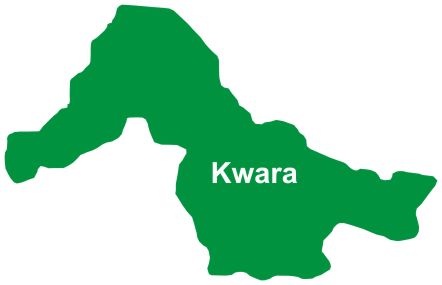
The need to reform the country's industrial and employment relations system was brought to the fore, as stakeholders in the labour industry converged recently on Ilorin, Kwara state capital for the Ninth National Labour Relations Summit. The event was organised by the Michael Imoudu National Institute for Labour Studies (MINILS). The summit with the theme 'Labour Laws, Participatory Democracy and the Development Process in Nigeria: Issues, Challenges and Prospects' seeks to majorly focus on the provisions of the Nigerian labour laws in promoting participatory democracy and ensuring integrated and inclusive national development. The summit also reflected on the merits of having a comprehensive approach to development issues and highlighted the potential of the social partners in the attainment of Vision 2020. It further provided an insight to international labour laws and conventions, as well as best practices in industrial relations and the implications of all this in deepening democracy and social cohesion in the country.
Setting the Tone In his welcome address, Director General of MINILS, Dr. Niyi Olanrewaju, said the summit has clearly emerged the largest and most inclusive gathering of industrial and employment relations interest in the country. He noted that the strongest motivation for organising the programme was the institute's commitment towards creating opportunities for the productive engagement of diverse stakeholders on labour matters. He explained that the theme of the summit was significant as it follows logically on the need to evolve a Nigerian social model that would be useful in terms of defining developmental paths and mobilising different segments the society around agreed causes. "As you all know, laws are critical in defining frameworks and processes within social systems, in the same that they are crucial to institutional outcomes. It is our position that dialogue, consensus building and participation, which are all features of democracy, should be essential elements in terms of the procedures and usages of the social model. "I am aware that the federal ministry of labour and productivity is placing a premium on the revitalisation of the country's conflict resolution system and institutions. I know for a fact that there is ongoing effort to strengthen the Industrial Arbitration Panel (IAP), National Labour and Advisory Council (NLAC) and other structures of which support dialogue, mediation and conciliation. "After a long period of military rule, during which the confidence of many stakeholders in these institutions waned considerably, it might take some time as well as diligent efforts such as those of the NIC and ministry of labour and productivity to get industrial relations actors to fully commit to established constitutional processes," he said.
Renewed Calls for Review In his speech, Executive Governor of Kwara State, Alhaji Abdulfatah Ahmed, called for a review of the country's labour laws by the National Assembly in order to ensure that the laws are in tandem with contemporary times and challenges of the nation's labour market. He observed that majority of the country's laws are military in origin, adding that such laws have since been adopted by the 1999 Constitution. He stressed that industrial actions, collective bargaining, pension administration and the fate of workers in privatised public concerns are major labour issues requiring legislative attention and reform.
According to him, given the elements of participation such as public hearings imbedded in the process of law making and amendment, such a process would promote participatory democracy while at the same time make such laws more contemporary. Speaking further, he said it was equally necessary to review employment laws to protect the interest of workers irrespective of where they are employed. He argued that a situation where workers are summarily dismissed, especially in the private and informal sectors without due process, or where employees are barred from forming/joining labour unions is inimical to freedom of association and the right to fair hearing. This, he stressed, must be stopped through appropriate legislation.
"In any development process, the people, especially the workforce, should be given the source and target of any initiative that seeks to develop society. Indeed, people are the core of participatory democracy in its true sense. Beyond the legitimacy conferred by popular elections, government also claim legitimacy through support from the people and the extent to which it can validly claim that its programmes are products of popular participation, however achieved.
"By implication, government must create spaces for engagement with key stakeholder groups such as labour to gauge public needs. Although such engagement is often forced by threats of or actual industrial action, there is no doubt that organised labour plays a key role in our nation's development. "Given labour's role as an important index of legitimacy and participatory development, therefore, we must ensure that the laws guiding the labour sector in this country reflect contemporary needs and interest of this huge and vital stakeholder group. "As we prepare for another national dialogue, we must bring the issues of collective bargaining especially as it concerns the liberation of wages to the fore, so that we can legislate a position that addresses the concerns of workers and considers the financial capabilities of states," he said.
Willingness to Engage Actors In his address, the Minister of Labour and Productivity, Chief Chukwuemeka Wogu, said the federal government has taken proactive measures to resolve many industrial relations challenges before they degenerate to disruptive levels. According to the labour minister, the willingness to engage the diverse actors and interests within the Nigerian industrial relations system, particularly labour and employers, derives from this administration's attitude of regarding these industrial actors as partners in development.
He hinted that in the next months, government intends to focus on "where and how it can intervene to ensure the finalisation of several other labour law-related initiatives activated in the past, which are now at different stages in the legislative process. The goal, he stated, is to bring the nation's labour statutes and labour administrative system in line with international best practices.
For instance, he noted that the ministry has made similar interventions with respect to the process that brought about the reclassification of the National Industrial Court (NIC) as a superior court of record - the third constitutional alteration of 2010. "As you are already aware, one of the major preoccupations of successive administrations has been how to forge a development model that is appropriate to national aspirations. This explains the varied policy direction adopted by different administrations in the past, often with challenges in respect of alignment. While this situation led to several policy inconsistencies, the more telling effect was the fact that it slowed down and complicated development effort," he said.
However, he explained that the current administration has elected to address the country's development question in a more deliberate, pragmatic and programmatic manner through a process of institution building and reforms. This, he noted, has involved the conceptualisation of governance as a participatory and people-centred process, in addition to being a legacy bequeathing opportunity. "It is these reflexes that have guided the current administration in objectively assessing policies and programmes of previous administrations, and embedding them in its own initiatives where necessary, in a manner that has brought about synergy and completely revolutionalised governance in this country.
"Importantly, the transformation agenda seeks to ensure consistency and integration in the policy initiatives and activities of this administration in various fields. It further aims at engendering an appropriate developmental model, reforming institutions and processes, and systematically pursuing development targets and causes. "The willingness to engage the diverse actors and interests within the Nigerian industrial relations system, particularly labour and employers derives from this administration's attitude of regarding these industrial actors as partners in development. It also follows from a profound understanding of the merits and industrial harmony for national development," Wogu said.
Rule of Law In his paper, the Presiding Judge of the NIC, Lagos Division, Justice Benedict Bakwaph Kanyip, stressed the need for all Nigerians, irrespective of political class, to adhere to the rule of law if the nation must improve the quality of labour justice. Kanyip, who noted that the general approach to issues of labour law was faulty, called on all stakeholders to rethink that approach particularly in the context of the present democratic experience, which calls for rule of law and due process. According to him, "we cannot complain that those who govern do not adhere to the democratic demands of the rule of law and due process when at our own individual levels and in our respective callings we do not even adhere to these values."
Cloud Tag: What's trending
Click on a word/phrase to read more about it.
Share/Tsaragi Wale Oladepo Raimi Iyanda CKNG Yahaya A Paniyaro Moremi High School Akanbi-Oke Odo-Owa Haashim Initiative For Community Advancement Olateju Lukman Kunle Suleiman HAMFAT Clinic And Maternity Olatunji Ibrahim Yahaya Seriki Dan-Kazeem Bamidele Aluko KFA ITEM 7 Salaudeen Oyewale Ibrahim Abiodun Abdulquowiyu Olododo Revenue Court Abdulwaheed Musa Fatimah Abdulkadir Yusuf Ibitokun Sherifat QuickWin Abdullahi Saadudeen Alikinla Alikinla Oyeyemi Olasumbo Florence Olabimpe Olani Oluranti Idowu ENetSuD Kale Bayero Gobir Forgo Battery Usman Rifun Illyasu Abdullahi Baboko Primary School Henry Olaosebikan Ibrahim Oloriegbe Moro Ifelodun Yusuf Arowosaye Saad Omo Iya Monkey Pox Baboko Senior Staff Union Of Colleges Of Education Aremu Bose Deborah Jumoke Monsura Gafar Adegoke Bamidele Government High School (GHS), Adeta Kwara Volleyball Association Amos Justus Sayo Oba Abdulrahim Ibrahim Akaje Abdulganiyu AbdulAzeez Gbemi Saraki Idris Amosa Saidu CACOVID Yusuf Abdulkadir Student Learning Support Helpline Manzuma Abdulrazaq Akorede Olabanji Orilonishe Oyelere Oyinloye Aminat Ahmed Kulende-UITH Plat Technologies Madawaki Of Ilorin Mubarak Oladosu Maimunat Oloriegbe Umaru Saro Nigeria Association Of Women Journalists IESA Yoonus Kola Olatinwo Kale Belgore Olatunde Olukoya