


OPINION: Dual Citizenship And the Law: Is Bukola Saraki A Nigerian Citizen? By Abdulaziz Olatunde Bakare
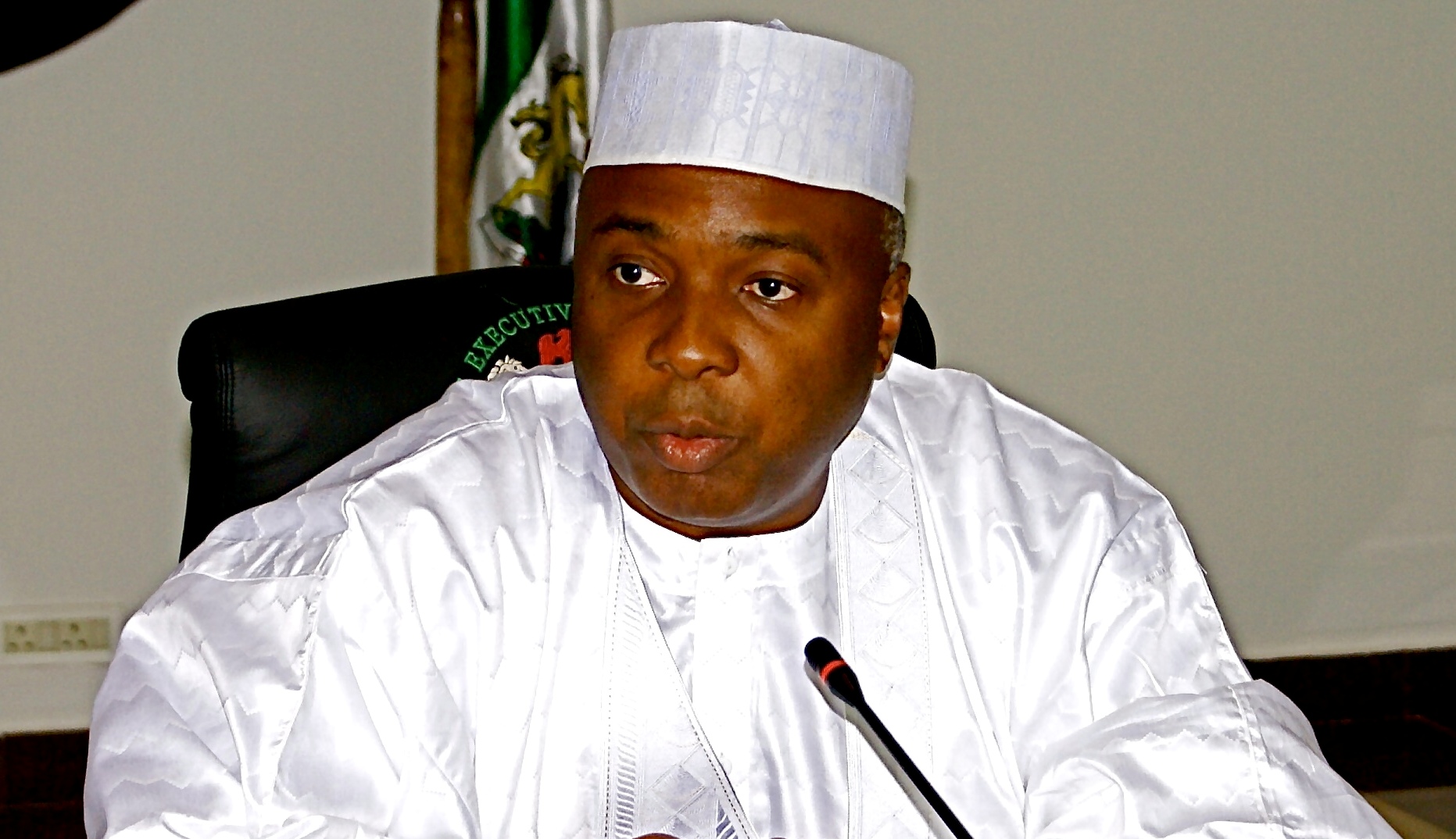
Few days ago, news broke out from a popular online news platform suggesting that Nigeria’s Senate President, Sen. Dr. Bukola Saraki is not a citizen of Nigeria by virtue of his holding dual citizenship of the Federal republic of Nigeria and that of the United Kingdom.
The news, like wild fire, reverberated across the country especially on Social media platforms (Twitter and Facebook) where there is a large concentration of Nigerians as part of its worldwide users. Nigerians of all facets not excluding those in the Diaspora began offering differing opinions and counter opinions as to the legality or otherwise of being a holder of dual citizenship and at the same time holding elective office under the constitution of the Federal republic of Nigeria as amended. This writer is not oblivious of the political wrangling going on especially within the National Assembly that may have triggered this topic but will keep this discussion strictly within what the constitution has provided for and will not descend into the murky waters of Nigerian politics.
The position of the constitution of the Federal Republic of Nigeria and judicial pronouncements on the matter are very clear, instantly recognizable and have been unswerving in that- holding dual citizenship of Nigeria and another country will not serve as a bar to such holder from contesting and/or holding elective post in Nigeria; but with a rider; provided that the individual holding the dual citizenship acquired his/her Nigerian nationality by birth. It is our humble view that given the very clear provisions of the Constitution on the issue and the interpretations of those provisions by competent courts it will be manifestly frivolous and without any merit to claim that a Nigerian by birth without more has lost his right to contest/hold an elective office by reason of his holding a dual citizenship.
The relevant provision in issue is Section 66(1)(a) of the 1999 Constitution of the Federal Republic of Nigeria as amended. To appreciate fully the intendment, implication and effectiveness of the earlier cited section, effort must be made to read the said section in conjunction with other relevant sections of the constitution, most especially, with section 28 of the same constitution. When a legal provision starts with "subject" or related clauses, it means that the section is read subject (in tandem) with the section indicated. For beginners and to get a better understanding, it will be pertinent to reiterate the way and manner one can acquire Nigerian citizenship as available under the relevant laws. Sections 25-27 of the Constitution outlines the various ways one can acquire Nigerian citizenship. Section 25 of the constitution provides that one can acquire Nigerian citizenship by birth and it goes on to enumerate the three circumstances under which citizenship can be acquired by birth; Section 26 provides that one can also acquire Nigerian citizenship by registration whilst the Section 27 provides that one can acquire Nigerian citizenship by naturalisation.
Thus, it can be seen in summary that one can acquire Nigerian citizenship either by birth, by registration or by naturalisation. This different method of acquisition is important in that dissimilar rights and consequences flow from them; depending on how the intending applicant for Nigeria’s citizenship acquired his/her citizenship.
We will now proceed to produce the provisions of Section 66(1)(a) of the constitution. It provides as follows:
“No person shall be qualified for election to the Senate or House of Representatives if; subject to the provision of section 28 of this constitution, he has voluntarily acquired the citizenship of a country other than Nigeria or except in such cases as...” (Italics for emphasis)
It is clear from reading the above section that the force of this section is subject to the provision of Section 28 to the Constitution. Now produced is the Section 28 of the Constitution and it provides as follows:
“Subject to the other provisions of this section, a person shall forfeit forthwith his Nigerian citizenship if, not being a citizen of Nigeria by birth, he acquires, or retains the citizenship or nationality of a country, other than Nigeria, of which he is not a citizen by birth” (Italics and underline mine)
The critical and most influential phrase is the underlined words above-with the implication being that only those who are Nigerians by registration or naturalisation shall forfeit their citizenship if they acquire the citizenship of other countries. The requirement to forfeit Nigerian nationality/citizenship upon acquisition of the nationality/citizenship of another country does not apply to persons who are Nigerians by birth within the definition of Section 25 of the constitution. For purposes of this opinion and by extension, it is clear from the above provisions that sections 66(1); 107 (1); 137 (1); and 182 (1) as they relate to offices of National Assembly, State House of Assembly, President, and Governor respectively are all subject to the provisions of section 28 of the CFRN 1999 (as amended). In other words, Section 28 states clearly that dual citizenship is allowable where one qualifies as a Nigerian by Birth as contained in section 25 (1) (a-c). The only instance in which forfeiture of citizenship is allowed and become applicable under the CFRN 1999 is by holders of: i) citizenship by registration under section 26; and ii) citizenship by naturalization, under section 27.
This position has gained judicial attention over the years. One of the most outstanding judicial authority on this matter is the Court of Appeal decision in the case of Dr. Willie Ogebide v. Mr. Arigbe Osula {2004} 12 NWLR Part 886 pp 127 paras D-G where Adeniji JCA reading the lead judgment held as follows:
“The tribunal however held on page 121 paragraph 2 of the record that a Nigerian citizen by birth even though does not forfeit his Nigerian citizenship by his acquisition as the citizen of another country, he would stand disqualified from being a member of the National Assembly if he holds such citizenship or has subscribed to oath of allegiance to any other country. That I must say with due respect, is not contained in the section under scrutiny. What one can make of that section read with sections 25,26 and 27 of the 199 constitution is that a citizen of this country by birth never loses his citizenship even where he holds dual citizenship of another country and cannot be disqualified from contesting election into the House of Representative for reasons only that he holds such dual citizenship. The lower tribunal therefore misled itself in that regard and the answer to issue No. 4 is that section 66(1) of the 1999 constitution does not prohibit Nigerian citizens by birth from holding the citizenship of another country and from contesting election to being a member of the National Assembly.” (Italics and bold for emphasis)
Corroborating the learned Justice of the Court of Appeal, Hon. Justice Walter Onnoghen JCA (now JSC) in the same case opined in page 138 paras C-E as follows:
“Reading sections 66(1) and 28 of the constitution of the Federal Republic of Nigeria, 1999 (hereinafter referred to as 1999 constitution) it is clear and I hereby hold that the acquisition of dual citizenship by a Nigerian per say is not a ground for disqualification for election to the National Assembly particularly where the Nigerian citizen is a citizen by birth. That is the clear meaning of the provisions in sections 66(1) and 28 of the 1999 constitution when taken together. The only Nigerian citizen disqualified by the said sections is one who is a citizen of Nigeria by either registration or naturalization who subsequently acquires the citizenship of another country in addition to his Nigerian citizenship...”
(Italics and Bold for emphasis)
It is my respectful view that the court’s pronouncement and reasoning is clear and cannot be controverted. It therefore seems settled that in Nigeria, having a dual nationality will not preclude one from contesting or holding elective positions. It is our hope that matters bothering on this issue will now be laid to rest and citizens can therefore unite and move this country forward.
Abdulaziz Olatunde Bakare is a practicing Lawyer
Cloud Tag: What's trending
Click on a word/phrase to read more about it.
Olaiya Victor Mobolaji Segun Adeniyi Muslim Cementary Ado Ibrahim Risikat Lawal Kwara 2019 Folorunsho Alao Kwara Restoration Project Sa\'ad Alanamu CCB Chief Imam Of Offa Hamidat Sulyman-Yusuf HICA ITP Ayodele Kuburat Olaosebikan Dapo Teni Nig Enterprise MMWG Amusement Park Mary Kemi Adeosun Oja-Oba IYA YUSUF Ola Falade Wahab Isa Kwara State Printing And Publishing Corporation Surajudeen Akanbi Sidikat Alaya Bayer AG Kolawole Akande Association Of Kwara State Online Media Practitioners Amina Susa\'a De Ahmed Bello Oyedepo Chikanda Yaman Universal Basic Education Commission Toyosi Thomas Mohammed Danjuma Kwara University Of Education Muhammad Akande Olarewaju Odunade 20 Billion Bond Maigida Marafan Shonga Ayekale Muhammad Ghali Alaaya Kuliyan Geri Solomon Edojah Bilikis Oladimeji Emir Of Yashikira Adama Isa Omar Bolaji Gambari Joseph Alex Offorjama Daud Adeshola Omotoso Musa IPSAS Busari Toyin Isiaka Kolawole Bashirat Mike Omotosho Aishat Mohammed Lawal Isiaka Rafiu Mope Hakeem Idris Sa\'adu Salahu Bukola Ajikobi Kaiama Saka Balikis Kehinde AGM Professional Services Lasiele Alabi Yahaya Jamiu Oyawoye Gabriel Fashanu Makama Of Kaiama Haliru Yahaya First Lady Olayinka Olaogun Lanre Issa Onilu Micheal Imoudu Orisun Igbomina Yahaya Muhammad Mubarak Oladosu Abdulrahman Abdullahi Kayode