


Shari'ah Protects Life, Wealth and Honour, Says Al-Hikmah University Chief Imam
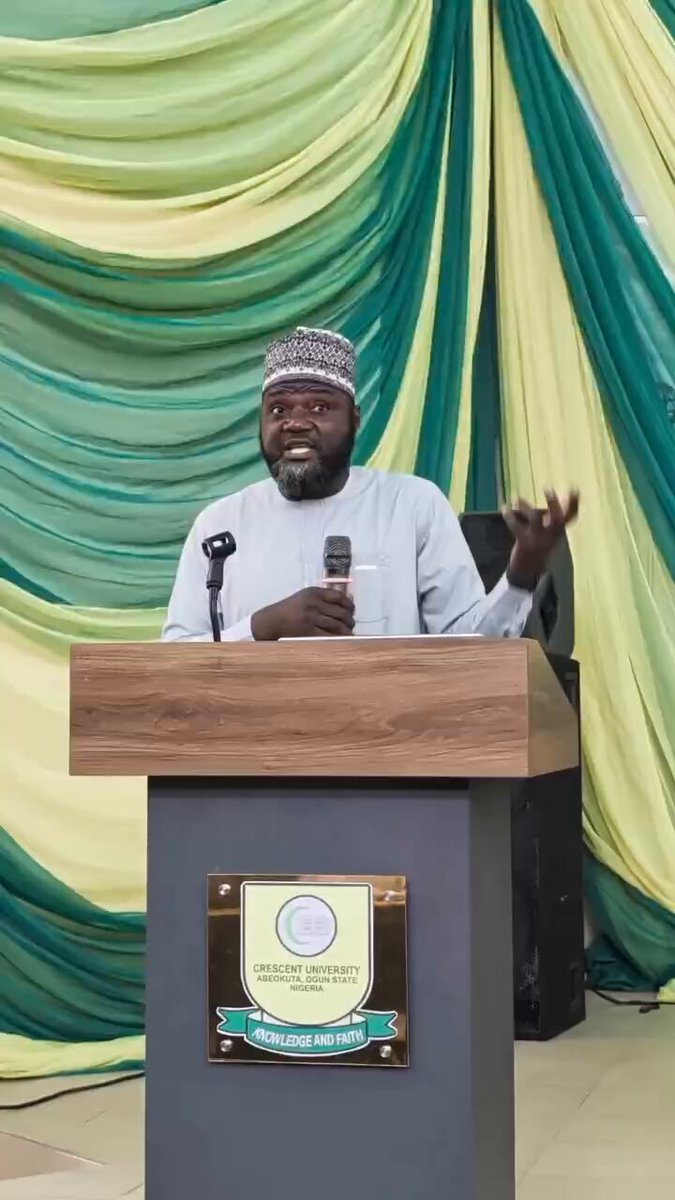
The Chief Imam of Al-Hikmah University, Ilorin, Dr Sanusi Lafiagi, has said the primary objective of Shari'ah is the protection of faith, life, wealth, intellect and honour, arguing that Islamic law exists to safeguard society through justice and accountability.
Lafiagi, who is also a Senior Lecturer in the university's Department of Islamic Studies, stated this in an interview with The PUNCH while explaining the Islamic basis for his position on kidnapping, banditry, terrorism and other violent crimes.
According to him, the cardinal objectives of Shari'ah, known in Islamic jurisprudence as Maqasid al-Shari'ah, require the protection of religion, life, property, intellect and honour, adding that anyone who deliberately violates those objectives through murder, kidnapping, rape and other violent crimes must face justice.
To support his position, Lafiagi cited Qur'an 5:33, saying it provides the basis for dealing with violent criminals. He also referenced Qur'an 5:45, Qur'an 2:194, Qur'an 2:178–179 and Qur'an 42:40 in explaining his views on justice, accountability and punishment for violent crimes.
He maintained that those actively engaged in terrorism, kidnapping and banditry should face the full weight of the law, while distinguishing between genuine repentance and surrender after military defeat.
"The Shari'ah also permits rehabilitation of those who repented and willingly submitted themselves to the authority out of remorse, and not because they were overpowered at the theatre of war," he said, arguing that only the former should qualify for rehabilitation.
Lafiagi criticised the Federal Government's rehabilitation programme for repentant insurgents and bandits, describing it as ineffective because it fails to distinguish between genuinely repentant individuals and hardened criminals.
Building on that argument, Lafiagi also rejected what he described as claims that violent extremist groups are pursuing an Islamic agenda or seeking to "Islamise Nigeria", dismissing such narratives as "deliberate conspiracies, lies and misinformation".
Questioning the ideological basis often attributed to Boko Haram, he noted that the group had repeatedly attacked mosques, Muslim worshippers and marketplaces in predominantly Muslim communities, arguing that such actions were fundamentally inconsistent with Islamic teachings.
"Has anyone with room temperature IQ really asked or understood what these criminals are fighting for?" he asked.
"The approach of government in this regard is faulty and it will not resolve the crisis either in the short or long term," he added.
Lafiagi further advocated the establishment of special courts to handle terrorism, kidnapping and banditry cases, saying Nigeria's conventional courts are overwhelmed and that faster trials would help restore confidence in the justice system without requiring new laws.
He said the country already has the legal framework to prosecute violent crimes but needs a faster judicial process to ensure justice is delivered without unnecessary delays.
On calls by some rights groups against capital punishment, the cleric argued that justice must balance the rights of both defendants and victims. He said transparent judicial processes and the elimination of corruption within the justice system would minimise the risk of wrongful convictions while ensuring accountability for violent crimes.
"While there's no denial of the fact that no system anywhere in the world is perfect, that shouldn't be a basis to oppose the death penalty for violent criminals," he said.
Lafiagi also urged religious leaders and institutions to provide emotional, spiritual and financial support to victims of kidnapping and terrorism, including counselling, charitable assistance and community reintegration programmes.
He warned that continuing rehabilitation programmes without effective prosecution of violent offenders could worsen insecurity, alleging that some individuals might exploit amnesty programmes to gather intelligence for criminal groups.
The cleric called on the government to distinguish between genuinely repentant offenders and those who surrendered only after being overpowered, insisting that victims' rights to justice must remain central to Nigeria's response to insecurity and that lasting peace can only be achieved when justice is both swift and certain.
Cloud Tag: What's trending
Click on a word/phrase to read more about it.
Apaola Sulyman Atolagbe Alege Innocent Okoye Yahaya Dumoye Mujtabah Bature Association Of Kwara State Online Media Practitioners TESCOM 2025 MalHub Sabitiyu Grillo Joana Nnazua Kolo NITDA College Of Health Omoniyi Hamza Usman Iyaloja-General Abdulmumin Yinka Ajia Oluwatoyin Lukman Donatus Ejidike Read With Me Kwarareports.com Oke-Kura Doyin Awoyale Alabi Lawal Abubakar Ndakene Amos Justus Sayo Mahmud Babatunde Baker Salmon Babatunde Salmon REO CAKES Atiku Tunde Oyawoye Saliu Alamoyo Sanitation Exercise IHS Towers Baaziki Sulaiman Kanu Agabi Oluwole Dupe Toyin Saraki Kubra Kazum Hijab Funmilayo Isiaka Oniwa Park Bluenile Associates Ilota KWASIEC AbdulRazaq Abubakar Jiddah Joshua Adeyemi Adimula Sunset Workers Muhammad Akande Olarewaju Odunade Bond Abdulmumini Sanni Jawondo Ahmed Bayero Ramat Oganija Moses Rahman Popoola Afolabi-Oshatimehin Adenike Harriet Ajasse-Ipo Jumoke Monsura Gafar Asiwaju Bola Tinubu Grillo Habeeb Saidu Ayotunde Emmanuel Alao Ajikobi Olokoba Abdullahi Ayinla Taofeeq Olateju Theophilus Oyebiyi Yaman Christopher Ayeni Simon Sayomi Suleman Abubakar SAPZ Project Adama Isa Amule Mary Kemi Adeosun Kumbi Titilope Atiku Abubakar Hauwa Nuru Ahmed Idris Mohammed Iliasu