


Saraki's Pound Of Flesh
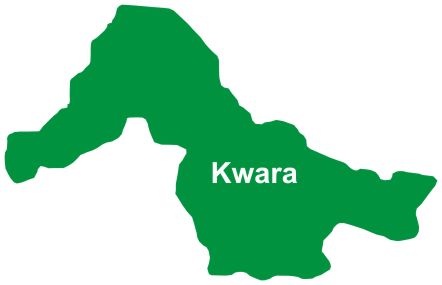
The dethronement of Busari Alasa, Magaji Are of Ilorin and father of the immediate past governor of Kwara State is seen as a move by Bukola Saraki, incumbent governor to settle an existing political score
Yoruba people in Ilorin Emirate suffered another major set-back in their struggle to have their own traditional ruler last week. Busari Alasa, the Magagi Are, who became the only Yoruba traditional ruler in Ilorin following his promotion to a first class position by the last state government, was dethroned and his seat was declared vacant. "Therefore, Magaji Are is now an ordinary citizen in Ilorin," said Victor Oloruntoba, Kwara State commissioner for local government and chieftaincy affairs.
Alasa is the biological father of Mohammed Lawal, former Kwara State governor. He was enthroned on November 10, last year following the demise of Adisa Zubair, the former Magaji Are. Oloruntoba said the appointment of Alasa was not done according to the normal procedure, and that the selection and appointment were not in conformity with the appointment and deposition of chiefs' law which is applicable in Kwara State.
Oloruntoba was economical with the truth. The chieftaincy law, which Lawal followed in promoting Alasa to the first class position was made by the previous state House of Assembly dominated by members of the All Nigeria Peoples Party, ANPP. The current state government and House of Assembly dominated by members of the Peoples Democratic Party, PDP, did not hide their desires to take some pound of flesh from ANPP legacy which include the promotion of traditional rulers and chiefs across the state. The state House of Assembly first set the stage for Alasa's dethronement in June when it repealed the state's Chiefs' Appointment and Deposition (Amendment) Law made in 2002. Last week, the state government dethroned Alasa, saying no existing laws backed his appointment and promotion.
Oloruntoba also ordered the remaining five chiefs in Ilorin Emirate who were promoted to second-class positions by Mohammed Lawal, former governor of the state to return to status quo. Other traditional rulers demoted were Balogun Gambari, Balogun Ajikobi, Balogun Alanamu, Balogun Fulani and Baba Isale.
Hiding under the repealed laws, Oloruntoba also demoted 75 traditional rulers whom Lawal promoted last year to their former grades. The former governor promoted the 75 traditional rulers based on the report that no traditional ruler in Kwara State has been upgraded for an unbroken period of 20 years.
Newswatch sources in Ilorin said Alasa was the prime target when the chieftaincy laws were repealed last June. Prominent members of Ilorin Descendants Progressive Union, IDPU, in the present state government and House of Assembly did not accept the upgrading that brought Alasa at par with Ibrahim Sulu Gambari, the Emir of Ilorin. IDPU was formed to protect the interest of Ilorin indigenes that are of Fulani extraction. The Emir is Fulani.
Kayode Abdul-Wahab, an IDPU member, who is currently the majority leader, Kwara State House of Assembly, reportedly moved the motion for the repeal of the state laws, which brought Alasa to the throne under the former government. The motion rode to victory on the back of anti-Afonja sentiments, which have remained palpable in the House. True descendants of Afonja were said to be less than 1,000 people at Ile Baba Sale, Ilorin. Afonja are the disputed past settlers of Ilorin. Ahmadu Mahmud, an IDPU member, once derided Afonja as having "only two compounds" in Ilorin. He said people of Yoruba origin in Ilorin do not hold any allegiance to the Afonja family. According to Mahmud, the Yoruba people in Ilorin who are not of Afonja family migrated to the city from Ila, Osogbo, Ilesa, Ilobu, Oyo and Egba and so on. "These people found refuge in Ilorin, and settled here, along with Muslims of Hausa, Fulani, Nupe, Kanuri, Gobir and Barba stock. These Yoruba Muslims did not come to settle under the aegis of Afonja," he said.
Influential people of Yoruba origin in Ilorin have remained indifferent on the matter. For instance, Abdulkarim Adisa, former works and housing minister, wants a conference on the matter. He explained that "most of the people in Ilorin are settlers who are from one place or the other." "We are 99.9 percent Muslims in Ilorin and the title "Emir" confirms our religion," he said.
Alasa is not the first Yoruba traditional ruler to be dethroned in Ilorin Emirate. Alabi Oyerinde, the Ohoro of Shao and Ahmadu Adebara, the Oba of Jebba were demoted in 1984 when Salaudeen Olatinwo, a group captain, took over from Cornelius Adebayo, now minister of communications. The two traditional rulers were upgraded by Adamu Attah, Second Republic civilian governor of the state. Olatinwo revoked their recognition and grading. No explanation was given for the exercise, but most people in Asa and Moro local councils where the Oyerinde and Adebara hail believed emirate council used Olatinwo to settle scores.
Since the demotion of their traditional rulers, the people of Moro and Asa have intensified their struggle to free themselves from the authority of the Emirate Council. The joint political-cultural union known as Oke-Moro Oke-Asa Development Union had earlier written to General Abdulsalami Abubakar, former head of state, urging him to save them "from eternal enslavement and serfdom."
They gave many reasons why they were seeking autonomy. One of them was that the emirate did not recognise their own traditional rulers. The Emir of Ilorin is the paramount ruler of five of the 15 local councils of the state. He enforces his decisions on the people of the LGAs through district heads appointed by him.
The emirate recognised the district heads as the people's traditional rulers. Wole Oke, the Jagunmolu of Shao, a town in Moro LGA, told Newswatch that the emirate saw their traditional rulers as "nonentities." Emirate sources told Newswatch that government pays a district head a monthly salary of N2, 000 while the emirate council pays him N8, 000 as monthly allowance. The people's traditional rulers are not paid anything because they are not recognised by either the emirate council or the state government. On the other hand, graded traditional rulers in other local councils of the state earn between N20, 000 and N45, 000 monthly.
If government eventually accedes to Moro and Asa's demands for self-determination, they would be the last Yoruba-populated local councils in the state to leave the emirate council. Up to 1968, the emirate was a vast area, which spanned from Eruku in Ekiti LGA to Jebba in Moro LGA. The emirate covered all the Yoruba-speaking local councils of the state, namely, Oke-Ero, Ekiti, Irepodun, Ifelodun, Offa, Oyun, Asa and Moro. The Emir of Ilorin had district heads enforcing his decisions in all these councils. All traditional rulers in these places were not recognised by the emirate. They were seen then as mere village heads.
When Kwara State was created in 1968 there was a total review of the emirate council. It was broken into smaller autonomous administrative units. Ilorin emirate was reduced to the present five local councils. David Bamigboye, then a colonel and first governor of the state, gave Yoruba in the present Oke-Ero, Ekiti, Irepodun, Ifelodun, Offa and Oyun local councils cultural and political independence by creating Igbomina/Ekiti and Oyun divisions. "Their traditional rulers were elevated to various classes between fifth and second class status. They were also made members of the state council of chiefs, sitting alongside with their erstwhile master, the Emir of Ilorin," said Abdulkarim Ayinde, a community leader from Malete in Moro Local Council.
With the dethronement of Alasa last week, people of Yoruba origin in Ilorin, Moro and Asa local councils have suffered a major set-back in their self-determination struggle. But the battle may have just begun.
Cloud Tag: What's trending
Click on a word/phrase to read more about it.
Hassanat Bello Funmilayo Oniwa Muritala Awodun Elerin Of Adanla Irese Abdulraufu Mustapha Sobi Hill Alfa Modibbo Belgore Bankole Omishore Oasis Muslim Care Foundation Roheemat Hammed Raliat AbdulRazaq Igbaja KWSIEC Mutawali Sarah Alade Siddiq Adebayo Idowu Salawu Marafan Shonga Unilorin Oloyede Aisha Gobir Shehu Jimoh 07039448763 Abdulganiyu AbdulAzeez Tescom.kwarastate.gov.ng Shola Odetundun Laboratory-to-Product Ridhwanullah Al-Ilory Abubakar Baba Akeem Lawal College Of Education Ahmed Bolaji Nagode Dan-Kazeem AbdulFatai Adeniyi Dan-Kazeem Otoge Tunde Idiagbon Road Osuwa Rafiu Ajakaye Yakubu Mohammed Abdullahi Isiaq Khadeejah Daud Adeshola Osinbajo Oyedepo John Kehinde Salako Clara Nwachukwu Abdulrasheed Na\'Allah Fawenu Sa\'ad Alanamu Shuaib Boni Aliyu Bolaji Abdullahi Apata Ajele Secondary School Ibrahim Abdulkadir Abikan Toyin Falola Abdulfatai Salman Baakini April 11 Funmi Salau Gbemi Saraki Ilorin Metro Park Abdulhakeem Amao Bisi Kristien Igbomina Abiodun Oyedepo Ado Bayero Afin Descendants Union Of Odo-Owa Kwara Central Omotoso Musa Sunset Workers Ganmo Electricity Sub-Station Habeeb Saidu Taofeek Ibraheem Adebara Razak Atunwa Tope Daramola Mashood Abdulrafiu Agboola Arca Santa Sheriff Olanrewaju Ndakene Sa\'adu Salau