


Borgu, Where Nigerians, Beninois Savour Culture
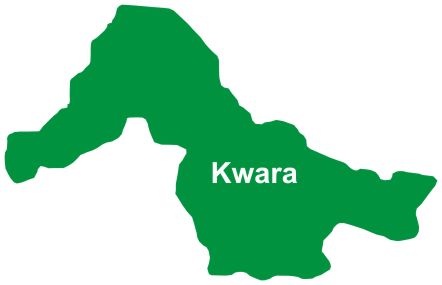
BY most accounts, Gaani cultural festival has fostered relations among the residents of some border communities in Borgu, Kwara State, and the citizens of the Republic of Benin.
Borgu extends from the northeastern and eastern bank of River Niger to the rain forest in the heart of the South-West geopolitical zone of Nigeria.
Historians recall that following the 1898 Anglo-French pact, Borgu land was partitioned into British and French Borgu, which fell within the domains of Nigeria and the Republic of Benin respectively.
They note that the inhabitants of the neighbourhood are variously referred to as Bariba and Borgawa by their Yoruba and Hausa neighbours respectively.
The historians observe that the residents of the area are not a homogeneous group, adding that they are, nonetheless, brought together by their ruling class who shares the same ancestry.
These factors notwithstanding, Gaani fiesta is celebrated annually among the Bartonum of the old Borgu Empire in Baruten and Kaima Local Government Areas of Kwara, Borgu in Niger; and Nikki, a community administered by Borgou Department of the Republic of Benin.
Gaani festival attracts people from Kishi and Igboho in Oyo State, New Bussa, Yashikira, Okuta, Gwanara and Ilesha-Baruba in Niger State; and Nikki, Paraku, Kandi, Kounde and Segbana in the Republic of Benin.
Anthropologists note that Gaani, a popular festival among the people of some border communities in Nigeria, is usually celebrated during Eid-el-Fitr and Eid-el-Kabir Muslim festivals.
They, however, observe that the uniqueness of the festival lies in its ability to promote fraternal relations between some Nigerians and their kinsmen in the Republic of Benin.
According to them, wherever any edition of the festival is taking place, citizens of the two countries in the border region will cross the border to celebrate it.
Alhaji Sabi Idris, the Emir of Gwanara in Baruten Local Government Area of Kwara, says that the festival remains a unifying factor among the people of the border communities.
He says that although the colonial powers partitioned Africa, making parts of the old Borgu Empire to fall within the Republic of Benin, the festival remains a potent platform for strengthening unity among the Bartonum.
According to Idris, Gaani festival begins in Nikki town, the headquarters of the old Borgu Empire, every year.
He says that other emirates under the empire, majority of which are in Nigeria, will subsequently announce their festival days based on their hierarchical positions in the empire.
Mr Garba Mohammed, a Development Officer in the Baruten Local Government Council, says that various events are usually lined up from Fridays to Sundays in any edition of the festival.
He says that the first day – the eve of Gaani festival – is usually set aside for the display of various types of drum-beating which are peculiar to the people’s culture at the emir’s palace.
“On this day, the elderly will converge on the palace and praise singers will perform; prince and princesses will also come home from their various places to meet and interact till dawn.
“The real festival day is Saturday when the emir will `visit’ the ancestors early in the morning, offer prayers and some sacrifices for the peace and development of the communities.
“Activities resume in the festival arena later in the afternoon and the monarch will deliver the message of the year to the people, while cultural activities will begin.
“The festival features horse riding skills, different cultural dances and acrobatic displays, among others.
“The third day is for the departure of guests and in some cases, some distinguished personalities are honoured with traditional titles,’’ he says.
Also speaking, Alhaji Umar Usman, the Emir of Yashikira, notes that the festival has enlivened the relations existing between the Bartonum in Nigeria and those in the Republic of Benin.
“If you look at those who are in the eastern part of the Republic of Benin and the people from Kishi, Igboho; Kaiama, New Bussa, Yashikira, Okuta, Gwanara and Ilesha-Baruba in Nigeria, they belonged to the Nikki ancestry before the colonial period.
“We are all brothers and sisters from the same family; it has been our custom wherever we are, from the east to the west, to gather at Nikki and celebrate Gaani festival.
“The festival began as a way for Bartonum people to express happiness about the birth of Prophet Mohammed; and also, in our mythology, that period falls within the period when we (the Bartonum) migrated from the east to our current location,’’ he says.
The emir, however, urges the government to support the festival, insisting that it will serve as a good platform for promoting peace and unity in the country.
Sharing similar sentiments, Sen. Sha’aba Lafiagi, lawmaker representing Kwara North Senatorial District, solicits adequate media coverage for the festival.
“This becomes imperative because of the involvement of Nigerians and citizens of the Republic of Benin in the celebration.
“The festival sends a clear message to the world on how trans-border relations could be enhanced via cultural festivals,” he said.
Cloud Tag: What's trending
Click on a word/phrase to read more about it.
Abubakar Bature Sulu-Gambari CACOVID Abubakar Kawu Baraje S.O. Opowoye Aminat Omodara Obuh Oke-Oyi Muhammad Fawaz Abubakar Ebun-Olu Adegboruwa Mahfouz Adedimeji Musbau A. Akanji KWACOBPA Kwara Politics Jebba Dairo Kunle Paul Okoolowo Oke-opin Mohammed Tunde-Jimoh Ajeigbe Olayinka Jelili Yusuf Emir Of Shonga Charles Ibitoye Yusuf Ibitokun Sherifat Dar-Al-Handasah Consultants Ltd Mohammed Yahaya Barki Pacify Labs Adesina Simon Sodiya Paul Olawoore Kwabes Diagnostic Centre Omu Aran CCT Sabitiyu Grillo Bolakale Ayo Rueben Parejo Olajumoke Monsura Gafar Gafaru Olayiwola Olorisade Otoge Offa Poly Mohammed Kamaludeen Shuaib Olarongbe Kudirat Arinola Lawal Usman Yunusa Sodiya Yusuf Amuda Gobir Sulaiman Gado Unilorin FM Musa Abdullahi IFK Gabriel Fashanu Yashikira Omotoso Musa ER-KANG Mining Ganmo Electricity Sub-Station ENetSuD Isaac Gbenle Twitter Hamza Usman Kunle Okeowo Aro Yahaya Vasolar Garba Idris Ajia Folaranmi Aro Mumeen Lah Salake Amina Susa\'a De Ahmed Iyabo Adewuyi Third Estate UNILORIN Alumni Association Sunday Otokiti Saadu Alanamu Basit Olatunji Pategi Road Transport Employers Association Of Nigeria Peter Obi Manzuma Hausa