


Woro Chief Hails Kwara Govt, Says 80% of Displaced Residents Return Home
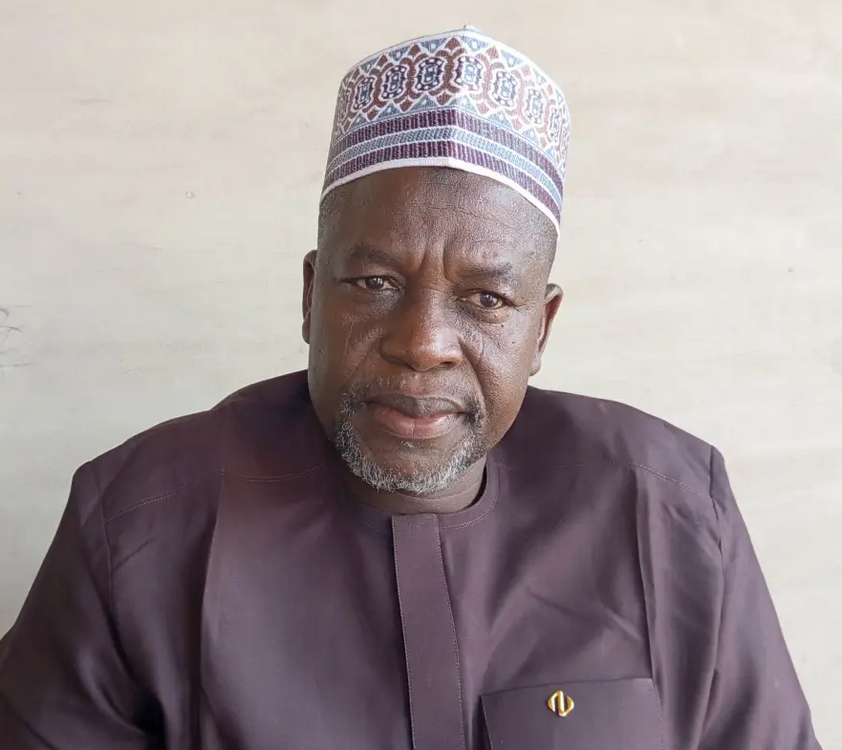
More than 80 per cent of residents displaced by the February 3 terrorist attack on Woro community in Kaiama Local Government Area of Kwara State have returned home, the village head, Alhaji Umar Bio Salihu, has confirmed.
Salihu, however, stated that he is yet to relocate permanently to the village because his palace, which was destroyed during the attack, has not been rebuilt.
Speaking with selected Defence journalists in Kaiama, the local government headquarters, the traditional ruler attributed the gradual return of residents to improved security and interventions by the Kwara State Government.
"Immediately after the attack, people fled the community completely. They ran for their lives. I was also advised to relocate because I was one of the major targets of the attackers. Fortunately, I have a house in Kaiama, and that is where I have remained since then," he said.
According to him, the attackers razed his palace, six residential houses and 49 shops during the assault.
"My palace, together with about six houses and 49 shops, was completely burnt down. Since I have no accommodation in the village, I only visit occasionally until the palace is rebuilt," he added.
Salihu commended Governor AbdulRahman AbdulRazaq for the prompt response to the crisis, revealing that the governor approved funds for the reconstruction of his palace, a sum he said he had already received.
"My palace will soon be rebuilt. The government has released funds to begin the project. I hope to commence the construction immediately after the Sallah celebrations. Within the next three or four weeks, I should be able to return permanently to the community," he said.
The traditional ruler stated that the governor also constituted a seven-member committee to coordinate relief efforts and included him in the panel to ensure effective representation of the affected community.
He recalled that the governor intervened swiftly after the attack by providing relief materials, ordering the fumigation of the village and providing new boreholes after existing water sources were destroyed.
"Immediately after the incident, the governor came to our aid. He ordered the fumigation of the entire village and provided new boreholes because all sources of potable water had been destroyed by the terrorists," he said.
Describing the brutality of the attack, Salihu said some victims were locked inside a room, doused with petrol and burnt alive.
"The terrorists locked some residents inside a room, poured petrol on them and set it ablaze, burning them to ashes. Some of the victims were so badly burnt that there were virtually no remains to bury. The resulting stench spread across the village, prompting the government to carry out fumigation in the community," he said.
He noted that enhanced security measures have helped restore confidence among residents.
"After the attack, the government strengthened security in and around the village. To this day, there is a strong presence of military personnel, mobile police officers and forest guards. As security improved, we encouraged our people to return.
"Those who had fled to New Bussa, Wawa and neighbouring communities gradually began coming back. Today, Alhamdulillah, more than 80 per cent of the people have returned."
Salihu stated that support from organisations such as UNICEF, the Red Cross and the National Emergency Management Agency (NEMA), alongside government assistance, further encouraged displaced residents to return.
"If you visit Woro on a market day, especially on Sunday, you will see clear evidence that calm has returned to the village. People are returning and economic activities are gradually picking up again," he said.
While expressing optimism that more residents would return in the coming months, he acknowledged that trauma and fear continue to prevent some families from going back.
"We may not achieve 100 per cent return immediately because some people are still traumatised. However, with the improved security situation and continued assistance from the state government, I believe everyone will eventually return," he said.
Salihu further disclosed that the government has begun rebuilding some of the shops destroyed during the attack.
"A total of 49 shops were burnt. Reconstruction will be done in phases, beginning with the first 10 shops. This will help affected traders resume their businesses and rebuild their livelihoods," he said.
The traditional ruler also called on the Federal Government to address security challenges around the vast forest areas bordering affected communities, describing the nearby national park as a haven for criminal elements.
He lamented that the forest reserve, which once served as an environmental and economic asset, has become a major security threat.
"Most communities located within the buffer zone of the national park are suffering because of their proximity to the forest. The park is extremely vast, covering hundreds of thousands of hectares, and has increasingly become a hideout for criminal groups.
"The forest is extremely vast and has become a hideout for criminal groups; it has lost its original value as a wildlife sanctuary. In the long term, government should establish a permanent military formation, such as a barracks or even an Air Force base, within the area, similar to what was done in Sambisa.
"That would help secure the area and stop criminals from exploiting the forest as a safe haven," he said.
Cloud Tag: What's trending
Click on a word/phrase to read more about it.
Hassan A. Saliu Saeedat Aliyu Iyabo Dupe Adekeye Ahmed Shuaib Buranga MATTA Girls Foundation Bello Oyebanji Onikijipa Bamidele Aluko Gaa Olobi Taiwo Joseph Kayode Issa Michael Nzwekwe Forgo Battery Company Limited Ella Supreme Tissue Paper Valsolar Yahaya Seriki Gambari JSSCE Freshvine Nigeria Limited Ghali Muhammed Abdulganiyu Oladosu Abioye Bello Council Of The Wise Titus Ashaolu Bisi Oyeleke Abdulmumin Yinka Ajia Shuaib Olarongbe Haliru Yahaya Ahmad Olayiwola Kamaldeen Omar Bolaji Gambari Abatemi Usman Tunde Idiagbon Road Baakini Isaac Aderemi Kolawole Saka Asiat Ayinke Jimba Babatunde 11th Galadima Medview Airlines Fatai Adeniyi Garba Iyabo Adewuyi Neuropsychiatric Hospital Ashiru Olomu Sango-UITH Road Abdulganiy Abimbola Abdussalam Oke-Odo Ilorin International Airport State Bureau Of Internal Revenue New Model Police Station Garba Idris Ajia Popo-Igbonna Ayodele Kuburat Olaosebikan Kabir Shagaya Saadatu Modibbo-Kawu Oke-opin Olatunde Oyeyiola Yoonus Kola Olatinwo National Union Of Road Transport Workers Michael Imoudu National Institute For Labour Studies Ibrahim Abdullahi Taofik Abdulkareem Babaita Niyi Ogundiran Orisun Igbomina Dar-Al-Handasah Consultants Kehinde Boyede Aliyu Sabi V.O. Abioye Lai Mohammed Ayekale Baba-Isale High Court Sarkin Malamai Dasuki Belgore Garba Ayodele Wahab Ilorin Emirate Stakeholders Forum Rabiu Kwankwaso Aliyu Olatunji Ajanaku Joseph Offorjama