


Female Footballers in Ilorin Face Criticism for Playing in Hijabs and Leggings
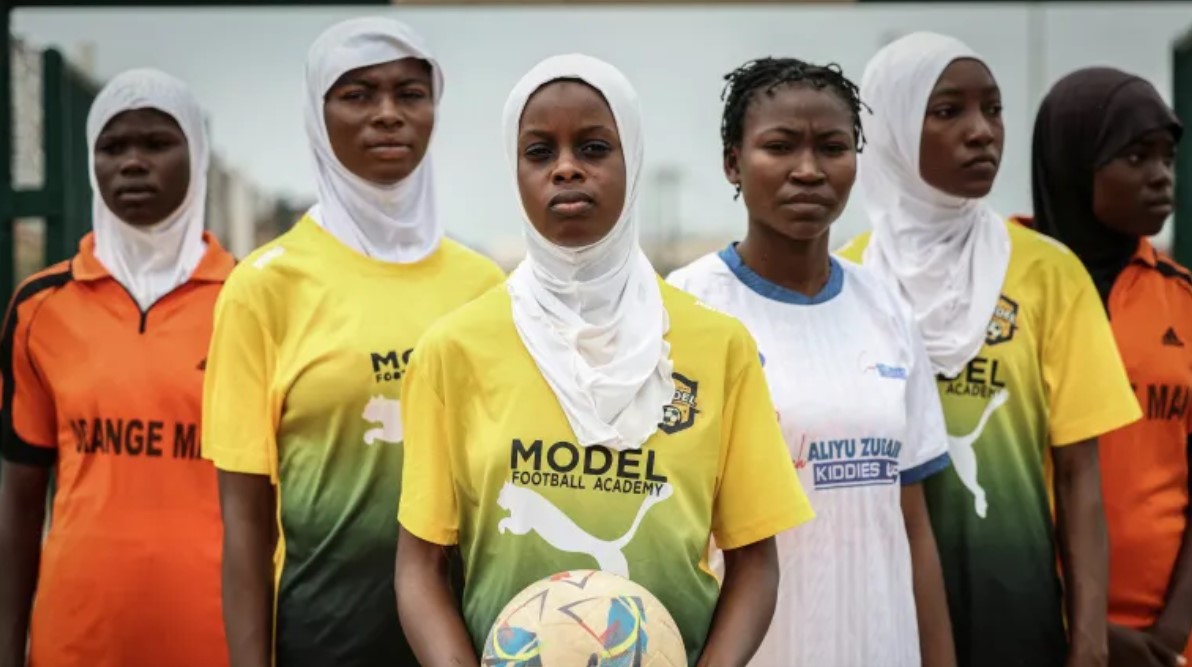
In Kwara, a Muslim-majority state in north-central Nigeria where religious traditions strongly influence daily life, some young women are actively defying cultural expectations through football.
These young athletes have discovered the camaraderie, competitive spirit, and emotional journey of the sport, even as they face disapproval from those who question its appropriateness for modestly dressed women.
When 17-year-old Maryam Muhammed heads to practice at the Model Queens Football Academy in Ilorin, she endures intense heat, which is made more challenging by her essential hijab and leggings, alongside community criticism.
"They tell me I will not achieve anything. But I believe I will achieve something big," she says, reflecting a defiant determination despite regularly encountering taunts on her way to training. For Maryam, maintaining modest dress while playing is non-negotiable, even though it is sometimes uncomfortable.
"Sometimes it feels like I want to open the hijab, but I must not expose my hair," she explained. "I have to put it on as a good Muslim."
FIFA initially banned hijabs in 2007 on safety grounds, resulting in Iran's women's team being excluded from a 2012 Olympic qualifier. The restriction was eased in 2012 and fully lifted in 2014. Morocco's Nouhaila Benzina made history as the first hijab-wearing player at a senior women's World Cup in 2023.
Kehinde Muhammed, Maryam's mother, has weathered criticism for supporting her daughter's passion. "So many people discouraged me," she admitted. "But I respect my children's decisions. I support her and keep praying for her."
She creates custom hijabs matching team jerseys, emphasising: "I counsel her that this is the normal way you are supposed to be dressed as a Muslim."
Model Queens coach Muyhideen Abdulwahab works to change community perceptions. "We go out to meet parents, to tell them there are laws in place for modest dressing," he said. "Despite that, some still say no."
Nineteen-year-old team member Bashirat Omotosho balances her love for football with family responsibilities. She often misses training to help her mother sell puff puff, a fried dough snack, at their roadside stall to support the family.
"Training is often in the morning, but I have to be here," she explained while serving customers, watching her teammates sometimes jog past during practice. "I cannot leave my mum - this is how I earn money."
Titilayo Omotosho, Bashirat's mother, initially opposed her daughter's athletic ambitions.
"Why would a lady choose football?" she questioned.
Omotosho's stance softened after her husband's approval and seeing successful Muslim players like Nigeria star Asisat Oshoala. "Seeing other Muslim girls succeed, like Asisat, encouraged us to let her play," she said, referencing the record six-time African Women's Footballer of the Year. Oshoala, who plays without a hijab, comes from Lagos in southwest Nigeria, where Islamic practices are less conservative.
According to local football administrator Ambali Abdulrazak, despite growing interest, female participation remains limited in Ilorin.
The Nigeria Women's Football League (NWFL) ranks among Africa's strongest, dominated by southern clubs from Lagos and Port Harcourt, where infrastructure and social support are more established. Northern and central regions face cultural and religious barriers, though grassroots initiatives are expanding.
Nationwide, women's football is gaining popularity, driven by the national team's success, increased sponsorships, and development programmes. Since 2020, NWFL viewership has increased by 40 percent, with match attendance rising 35 percent in 2024, according to Nigerian media company iTelemedia, which monitors audience trends across local leagues.
During a recent training session, Muhammed and her teammates practised on a sandy school pitch as the sun set, their voices mingling with the muezzin's call to prayer from a nearby mosque.
On August 29, Muhammed captained the Model Queens in a youth tournament final, which they lost. She high-fived teammates and celebrated as they received runners-up medals, but later cried alone in her room over the defeat.
Her family's support and faith sustain her determination. "I really love this sport. I have a passion for it," she said. "Since my parents support me, there is nothing stopping me. Football is my dream."
Cloud Tag: What's trending
Click on a word/phrase to read more about it.
ITP Micheal Imoudu Nnazua Road Transport Employers Association Of Nigeria Allocation 11th Galadima Ilesha-Baruba Opobiyi Saudat Abdulbaqi Bureau Of Lands SWAN Madawaki Roheemat Hammed Aminat Ahmed Ibraheem Abdullateef Abdulmajeed Wahab Kwara Central Kunbi Titiloye Ado Bayero VADA Muhammad Akande Olarewaju Odunade Afolasade Opeyemi Kemi Afetu Of Alabe Harafat E. Mukadam NAWOJ Bamidele Adegoke Oladimeji Fawenu NIRSAL Alabi Olayemi Abdulrazak Monkey Pox Olaitan Buraimoh Offa Poly Emir Of Kano Amusa Bello Siddiq Adebayo Idowu Salawu NTA Ilorin Ethical College Ibrahim Mashood Sabitiyu Grillo Majlis For Sadakah, Zakat And Waqf Age AbdulKareem Tope Daramola Abdulraufu Mustapha University Road Code Of Conduct Ayedun Abdulquawiy Olododo Ladi Hassan Abdulwahab Olarewaju Issa Tunji Arosanyin United Nigeria Congress Party Gbemisola Saraki Aisha Buhari Muyideen Ajani Bello Oloyede SWAN Ibrahim Abdullahi Raheem Adaramaja Ijagbo Health Centre Bukola Saraki Oke-Ero Lateef Fagbemi Sheikh Ridhwanullah Alabere Shettima Of Ilorin Minister Kwara Restoration Project Olam Food Ingredients Valsolar-Kwara Company Limited Oloje Kwara State Television Dumagi Gobir Organization Foundation Yusuf Olaolu Ali Aremu Bose Deborah Tosho Yaqub Sidikat Uthman Ajibola