


Flood Crisis: Implications for Agric and Food Security in Nigeria
The flood incidences that plagued our country several weeks ago resulting in a national disaster have been difficult to forget. For many who saw their means of livelihood washed away as they tried to keep their very lives afloat, the memories will be around for a while. Millions remain displaced and residing temporarily in camps. But with collective, swift and effective action, we can reverse some of the long-lasting impacts of this catastrophe.
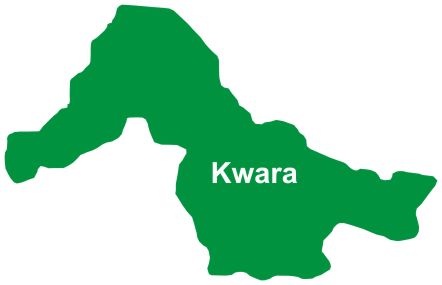
Earlier this year, the Nigerian Meteorological Agency released a report warning about torrential rainfall and consequent flooding. What was unknown then was that over 5,000 farmlands would be washed away. For farms around the teeming River Niger or linked to its tributaries, the effects were most grave. In Kwara State, it was reported that over 3,200 hectares of rice plantation have been washed away. According to the Delta State commissioner for Agriculture and Natural Resources, Misan Kubeyinje, the hardest-hit were the fish, pig and crop (such as cassava and rice) farmers. Beyond the erosion of soils and farmlands, the destruction of infrastructure important for the maintenance and distribution of agricultural produce has also had important consequences.
These effects have led many experts to believe that a food crisis - characterised by the escalation of poverty, food scarcity and the rise in food prices - is imminent if prompt action is not taken. Others have said that following the large-scale reduction in the supply of home-grown agricultural produce, a famine is lurking.
However, Akinwumi Adesina, minister of Agriculture and Rural Development, allayed fears of a resultant food crisis, promising quick intervention on the part of the government. To this end, the government swung into action with the allocation of N17.6 billion for the flood-reparation endeavour. States were divided into four categories depending on the extent of damage and estimated level of need. For Category A states, which included Oyo, Kogi, Benue, Plateau, Adamawa, Delta, Bayelsa and Anambra, N500 million per state was allocated. Lagos, Edo, Imo, Cross River, Taraba, Kaduna, Kano, Bauchi, Niger, Jigawa, and Nassarawa, which fell under Category B, received N400 million each, as did the Category C states of Abia, Rivers, Ebonyi, Ondo, Ogun, Gombe, Kwara and Katsina. Lastly, the Category D states - Sokoto, Borno, Akwa Ibom, Osun, Enugu, Ekiti, Yobe, Kebbi, and Zamfara - were given N250 million each.
In addition, a committee - the National Committee on Flood Relief and Rehabilitation - was formed to support the government's relief and rehabilitation efforts and raise additional funds towards this project.
With thousands of rice, cassava, and other crop farms washed away, the progress made in those key sectors over the past months in the move towards self-sufficiency has been sorely undermined. As part of the Flood Recovery Food Production Plan, farmers were to receive emergency relief, food and shelter and benefit from a food production intervention to enable them restart their lives and resume their farming practices. Speaking to the future of agricultural development, the agric minister remarked that going forward, government policies must protect farmers from the impact of climate change and ultimately prevent a disaster of this magnitude from reoccurring.
But some members of the society are not impressed, stating that the government response could have been more rigid, by declaring a prolonged state of emergency to facilitate the rescue and rehabilitation of displaced persons and their property. Others, such as the members of the Delta State House of Assembly, have described their state allocation as paltry and insufficient for the overwhelming challenges of rehabilitation. And some others have noted that with the N81 billion budget allocation for agriculture for 2013, the success of full-scale rehabilitation will be severely limited. Furthermore, complaints have already been lodged concerning the creation of multiple panels and committees to handle funds resulting in unnecessary administrative costs.
Criticism concerning on-ground implementation has also surfaced. There have been allegations of corruption among public officials who have diverted a substantial part of the funds to their personal pockets. In Bayelsa, there were also reports of alleged theft of relief materials by state politicians. On the camps, reactions have been mixed. While some have reported receipt of food and other relief materials including farming implements (as in Taraba), others have complained that they have not seen the impact of these allocated millions as they do not receive food regularly or get adequate food portions (with as many as 50 people sharing a bag of rice). For others, the more difficult challenges are the health challenges of diarrhoea and malaria - due to the high prevalence of mosquitoes on the camps. And while a number of people in some states have been able to leave the camps and start their lives elsewhere, others remain, itching to resume farming or other businesses.
In response to the present concerns and challenges, the government should come up with a short-, medium- and long-term plan for rehabilitation. In the short term, every single naira allocated to the states and camps must be accounted for. Unscrupulous public officials should be immediately dismissed to serve as a deterrent to others who continue, with impunity, to divert state resources at the expense of the population. Farmers should be given adequate financial assistance to help them pick up the pieces of their lives and rebuild their enterprise. The lines of communication between displaced farmers and their state governments should be kept open. Since many farmlands have been destroyed, farm settlements must be put in place to enable famers find an avenue to resume farming. But the emphasis should not be solely on commercial farmers as subsistence farmers who were growing just enough to sustain their families before the floods are also very vulnerable. Efforts should be made to incorporate them into settlements and help them move to more commercial farming. Destroyed infrastructure, including roads, should be repaired to facilitate the smooth functioning of the value chain. The management of Kainji and Shiroro Dams need to be improved as more drainage systems are built.
In the medium-term, food reserves need to built in order to combat the vagaries of weather and permanently avert a future crisis. Ultimately, this will also help the government to, as the proverb goes, save for the rainy day, preventing the unnecessary spending of billions of naira in the event of another disaster. As the agricultural transformation agenda kicks off and jobs begin to be created in the agricultural industry, displaced but skilled and semi-skilled youths and farmers should be given employment priority. This will help them not only gain employment but improve their chances of resettlement, whether in their former states of residence or in new agricultural zones. Insurance schemes for farmers should also be set up.
In the long term, agencies like the NIMET should be given priority and agricultural research in relation to climate and environmental change must inform agricultural policy. This will allow farming and business practices to be more sustainable in the long run. At the end of the day, the concerns of the farmers and the most vulnerable groups and settlements must be brought to the fore. The skills of Nigeria's able-bodied citizens must be exploited in order to eradicate poverty and greatly improve livelihoods. With the renewed interest in agriculture and the active steps the government is taking to transform the sector and usher in development, care must be taken to ensure that these efforts are not undermined. With discipline, careful administration and monitoring, and adequate planning, prosperity for displaced populations can still be won and a national disaster (born out of hardship, dissatisfaction, and rising crime) can be averted.
Cloud Tag: What's trending
Click on a word/phrase to read more about it.
Saheed Popoola Omoniyi M. Ayinla Ilorin Durbar Rachael Obisesan Shettima Of Ilorin Ridwan Agboola Garba Ayodele Wahab Tanke Flyover Bridge Hakeem Lawal Jimoh Lambe Abdulkareem Abdulrazaq Aiyelabegan COVID-19 Palliatives Lai Mohammed Babata Societe Generale Bank Of Nigeria Ekiti Mahe Abdulkadir Olaiya Victor Mobolaji Ladi Hassan Solomon Edoja Fatimoh Lawal Naira Redesign Mujtabah Bature Belgore Yusuf Babatunde Abdulwahab Ifelodun Sherif Shagaya AGILE Programme Mustapha Akanbi ENetSuD Taibat Ayinke Ahmed David Oyerinola Adedunmoye Guber Aspirant Popo-Igbonna Kwha.gov.ng Shonga Abdulhakeem Amao Kpotum Mohammed Baba Sulyman Abdulkareem Gbenga Olawepo Ibrahim Abdullahi Saduki Lafiagi Biliaminu Aliu Road Transport Employers Association Of Nigeria Pius Abioje Oro Grammar School Isaac Aderemi Kolawole Oyedepo Standard Organization Of Nigeria Saba Mamman Daniel Yusuf Abdulraheem Ilorin General Hospital Michael Imoudu National Institute For Labour Studies Budo-Egba Madawaki Of Ilorin Rex Olawoye Mansurat Amuda-Kannike EFCC Saka Adeyemo Elelu Lanre Badmus Ibrahim Mohammed Olam Food Ingredients Yahaya A Paniyaro SAPZ Project Ilorin Emirate Stakeholders Forum Dan Masanin Saidu Yaro Musa Muyideen Ajani Bello General Tunde Idiagbon International Airport Diagnostic Centre Bayo Ajia Gbugbu International Market Folaranmi Aro Habeeb Abdullahi Al-Ilory Laolu Saraki Ibrahim Gambari