


Esie: A national museum in need of a face-lift
SUCCESS NWOGU writes that though Esie National Museum is touted as the oldest in the country, the challenges facing it are reminiscent of the larger Nigerian problem
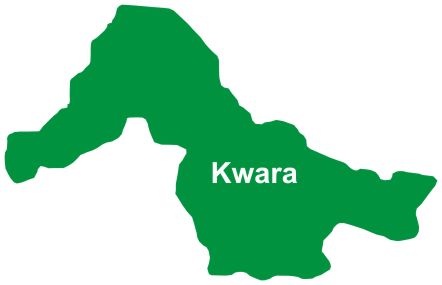
The National Museum, Esie, in Kwara State, is the oldest in Nigeria, according to the Director-General, National Commission for Museum and Monuments, Mallam Yusuf Usman. It is also reputed to have the highest collection of soapstone images in Africa.
Though the Minister of Culture and National Orientation, Chief Edem Duke, claims that since 1945, the museum has been moving from one developmental stage to another, investigations reveal that despite its long period of establishment, the museum is still in need of a face-lift or housed in a better environment.
For instance, the road leading to the museum has collapsed, while the current site is surrounded by thick forest. Despite the odds, however, a gallery and exhibition was held there a fortnight ago.
The curator, Mr. Emeka Ibechiozor, decries the museum's present location, which he notes is far from town and consequently poses problem to both the staff and arts enthusiasts.
There is also the need for children's playgrounds, operational vehicles and more funding to boost the activities of the museum, Ibechiozor says.
According to its Education Officer, Ms. Victoria Folurunso, Esie Museum is community-based, and was established in 1945 by the colonial government to house about 1,500 soap stone images that were introduced to the public in 1933 by Inspector for Oro Area of the Church Missionary Society, Mr. H.G. Ramshaw.
Folorunso explains that the images are called soapstone because if water torches any of them, it will foam and become slippery.
She said there are two viewpoints of the historical background of the museum, oral and archaeological sources.
Historically, the museum is sited at the spot where the sculptures were discovered in 1933. The site was formerly a groove, and is about 1.4km South West of Esie Township. Esie Town is located about 2km
South of Oro conglomerate and about 50km South East of Ilorin, the Kwara State capital.
Archaeologists say the images were carved by unknown persons. They give three reasons to back up this claim. First, they say, is the sitting posture assumed by many of the sculptures, which belies the local claim that they were humans turned into images by an angry god.
Archaeologists argue that if they were truly human beings turned into images, they would not be in the same position, as there should have been variations in their postures.
Again, the noticeable carvers' knives in the inner parts of the images attest to the fact that they are works of arts, pure and simple.
The museum also features ethnographic collections, carved with wood, and they include the Epa mask, Sonponna, Ere Ibeji, Sango's mortar and an Ifa bowl.
Epa mask is one of the most popular masks found among the Ekiti and the Igbomina people. The festival is marked every August for agricultural output and human fertility. Though most Epa masks are carved in women replica, there are a few that depict male warriors.
Sonponna is the Yoruba god of small pox and its image at the museum has white dots all over, representing how small pox infection looks on its victim. The image is common among the Yoruba speaking people.
Ere Ibeji is regarded as peculiar, in the sense that when it appears in a pair, the belief is that the twin children being represented have died. When it is single, it is believed that only one died. In essence, the Ere Ibeji is meant to immortalise departed twins.
Sango mortar is designed with a bold plate on it and, as Folorunso explains, it is mostly found among the Yoruba speaking people of Nigeria and is used by the god of thunder, Sango for warfare and prayers.
Usman, while explaining the importance of the soapstone sculptures says since their discovery, series of excavation works had been carried out by archaeologists.
Duke adds that the soapstone is unique in quality and quantity, adding that they were made in the Iron Age era based on archaeological evidence.
According to Ibechiozor, the over 1,500 stone images are representations of men and women presided over by the stone king (Oba Era). The objects range in height from 14cm to 120cm and weigh between 0.55 kg and 104 kgs; while the representations are engaged in different activities, with some playing musical instrument, while many are armed with arrows, machetes, and other unidentified objects.
Ibechiozor says though some commoners are represented, most of the objects depict well-to-do personalities as attested to by their rich attires, heavy beads and well designed head gears.
He notes that the majority of the images have facial marks and striations, while some have plain heads.
Ibechiozor says, "The diversities in their perspective and cultural traits attest to a highly developed and complex civilisation which must have emanated from contacts with other centres of civilisation in
Sub-Saharan Africa. The representations are also of heterogeneous ethnic groups, which must have lived in this area at one time or the other.
The museum features both archeological and traditional collections, which portray the different cultures prevalent in the country. These, Ibechiozor argues, will teach every generation the development experienced by the people in the old times.
According to him, the museum is also a learning institution. "Many activities go on in this museum. We encourage educational visits. We organise school visits through art clubs and exchange programmes. On the cultural or documentary aspect, we document the materials and update the records. Also, on the conservation aspect, we keep the materials from deterioration and we research on some of the materials. "We have more visitors during school period. Students however, come individually during vacation," Ibechiozor says.
The soapstone images are about 1,600, and Ibechiozor says the museum sources its antiquities through bilateral relationships between Nigeria and some countries where they can retrieve stolen art works.
The museum is affiliated to the West Africa Museum Project, International Council of Museum and other organisations. Ibechiozor adds that the museum also receives donations from individuals, countries or organisations and also through exhibitions.
On the challenges being faced by the museum, Ibechiozor says, "The location is far from the town, so mobility is a problem for us. We need children's playgrounds. We also have staff shortage. We do not have an operational vehicle and we request the Federal Government to make more funds available to us so that we can meet our needs."
He says the recently inaugurated gallery is about cultural evolution, which is meant to rid the museum of its erstwhile monotony with soapstone images.
"That is what the new gallery is all about. It is the gallery of national unity. The soapstone image gallery is still intact, but this new one makes some representations of other artworks from other parts of the country," Ibechiozor says.
Cloud Tag: What's trending
Click on a word/phrase to read more about it.
Omupo Societe Generale Bank Of Nigeria Mohammed Tunde-Jimoh Idris Amosa Saidu Hausa Yusuf Abdulkadir Femtech Talaka Parapo Minister Adebayo Salami Unilorin Saadatu Modibbo-Kawu Abdulkadir Bolakale Sakariyah Alliance For Democracy Gbemi Saraki Wahab Issa Salau Kabiru Abdullahi Kunbi Titiloye Shoprite Ibrahim Taiwo Road Local Government Democracy Day Ubandoma Saka Isau Sidikat Akaje Abegunde Goke Nagode Neuropsychiatric Hospital Logun Funmilayo Isiaka Oniwa Ghali Alaaya Jimoh Akani IF-K Saba Mamman Daniel Yusuf A. Usman Anilelerin Abdulrauf Yusuf Ahmed Obuh TVC Female National Debate Ajibike Katibi Mohammed Alabi Lawal Ayobami Akanbi Kwara Central Yoruba AbdulRaheem Ahmad Shayi Mope Dasuki Belgore Ishola Moses Abiodun Kwara State Television (KWTV) Oluranti Idowu Lanre Aremu Kunle Suleiman Moshood Kashimawo Abiola Sobi Hill John Obuh Mufutau Gbadamosi Esuwoye KwaraLearn Crystal Corner Shops Abdulmumini Sanni Jawondo KWTV Centre For Digital Economy Bluenile Associates Abdulraheem Yusuf Kemi Adeosun Bankole Omisore Ilorin Innovation Hub Metro Park Orisa Bridge Tafida Of Kaiama Jimoh Bashir Tsaragi-Share Third Estate Adesoye College Usman Yunusa Abdulrazaq Akorede Mohammed Yisa Kabir Shagaya