


OPINION: CCT vs Saraki and the politics of contempt
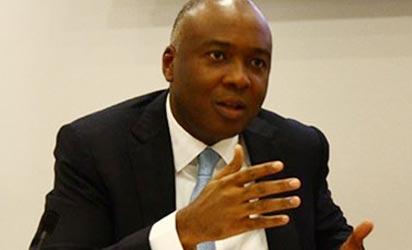
Saraki, who is the Senate President, is facing 13 counts of false assets declaration before the CCT.
The wide media coverage the case has received has focused public attention on legal questions usually covered in the courtroom or the classroom rather than by the newsroom.
The general consensus, as championed by renowned human rights lawyer Femi Falana SAN, seems to be that the decision represents a significant setback for the effective and fair administration of justice in the country, and President Muhammadu Buhari administration's approach to the 'campaign against corruption.'
Falana and other senior lawyers with whom I agree, have contended that the ACJ Act has (by virtue of sections 306 and 396) abolished stay of proceedings and interlocutory appeals by merging all preliminary objections with the substantive case in any criminal case instituted in a federal court in the country; that the revolutionary intervention of the law was occasioned by the unending trial of politically exposed persons in corruption cases; that as a creation of the law, the Supreme Court is bound by the law; and that the Supreme Court should take advantage of the substantive appeal in the Saraki's case to review its position given the potential impact on the administration of justice in the country.
The purpose of the ACJ Act can best be determined from section 1: "The purpose of this Act is to ensure that the system of administration of criminal justice in Nigeria promotes efficient management of criminal justice institutions, speedy dispensation of justice, protection of the society from crime..." Likewise, section 2 provides that all courts "shall ensure compliance with the provisions of this Act for the realisation of its purposes." The use of "all courts" here clearly includes the Supreme Court.
The combined effect of sections 306 and 396 is to carry out the purpose of the Act.
However, J.B. Daudu, former president of the Nigerian Bar Association (NBA), and counsel to Saraki has threatened contempt proceedings against Falana and other senior lawyers for allegedly 'scandalising the court'. Mr Daudu is basically saying that criticising the Supreme Court's decision is contemptuous, scandalous and subversive.
This suggestion, coming from a former president of the NBA and Chairman of the Legal Practitioners Disciplinary Committee, is deeply disturbing for the legal profession, as it is one of the few objectively useful roles of lawyers to exact intellectual accountability from the Supreme Court and to probe and comment on its decisions.
Mr Daudu's view implies that once the Supreme Court has delivered a decision, all are bound not merely to accept it as constituting an authoritative statement of the law of the land, but also immediately to accord it intellectual obeisance, and to undertake not to dissent publicly from that decision no matter how implausible or even improper it may seem.
Yet, lawyers, as recent history has shown, have an important role to play in exposing corruption, in beaming the light of publicity into the dark corners of society, in showing up the inadequacies of the law, and so on.
There is a clear case of public interest in the due administration of justice, and no one would plausibly question that the proper administration of justice requires a transparent and accountable justice system.
Contempt of court is not aimed at upholding the dignity of a court or a judge, but at enabling the administration of justice to operate without undue obstruction or interference. It's therefore difficult to see how by Falana and other senior lawyers simply making a case for an effective implementation of the ACJ Act, they would be obstructing the administration of justice by.
Lord Atkin's famous opinion in Ambard v. Attorney-General for Trinidad and Tobago [1936] AC 322, is apposite: "But whether the authority and position of an individual judge, or the due administration of justice, is concerned, No wrong is committed by any member of the public who exercises the ordinary right of criticising, in good faith, in private or public, the public act done in the seat of justice. The path of criticism is a public way: the wrong headed are permitted to err therein...Justice is not a cloistered virtue: she must be allowed to suffer the scrutiny and respect, even though outspoken, the comments of ordinary men."
Lord Atkin’s statement has been echoed in many cases.
Indeed, if a lawyer, a member of the public, or even a politician genuinely believes that the Supreme Court has strayed from the path of constitutional and legal rectitude, then not only is it the right of that person publicly to say so, but it becomes their solemn duty so to do, particularly if one is a lawyer pledged to uphold the law.
Contrary to what we have been told, what Falana and other senior lawyers have done is not a breach of some standard of professional ethics: it is the highest discharge of one's professional duty. CCT v Saraki is a matter of undisputed public concern and interest, and comments by Falana and other senior lawyers amount to honest criticism on a matter of public importance. Nowhere have they imputed improper motive to the Supreme Court and have not in any way acted maliciously.
Nigerian lawyers, particularly senior lawyers, shouldn't have to adapt themselves enthusiastically to whatever the Supreme Court might come to say, even if that which is said today is precisely the opposite of what was said yesterday.
And Supreme Court's decisions shouldn't be considered only in the most flattering of terms, or accepted as uncritically as if they had been handed down graven on tablets of stone at Mount Sinai.
It's normal for lawyers and others to ask questions whether the Supreme Court's decisions follow a legal pattern: that is, do the Court's decisions conform to legal precedent, ordinary norms of legal reasoning, and established constitutional and legal principles.
Such frank debate about the Supreme Court's decisions not only acts as a check on our courts, but also contributes to informed and vocal public scrutiny, which in turn can promote accessibility and effectiveness of the judiciary.
Even judges have been known to comment upon the decisions by their colleagues. For example, in delivering his dissenting judgment in Canadian case of R. v. Wray [1971] S.C.R. 272, 304, Spence J. suggested that the decision reached by the majority would bring the administration of justice into disrepute. The majority judgment of Ritchie J. in another Canadian case, Lavell [1974] S.C.R. 1349, (1974) 38 D.L.R. (3d) 481 was criticised for being "incomprehensible and, therefore, utterly unpersuasive."
Therefore, lawyers shouldn't be reluctant to offer public criticism of the judiciary, as informed, sustained criticism rooted firmly in Nigerian reality, can contribute to judicial accountability.
As famous British Judge Lord Denning MR once eloquently put it in R v Commissioner of Police (1968) 2 OB 150: "Let me say at once that we will never use this jurisdiction and power of contempt as a means to uphold our own dignity. That must rest on surer foundations. Nor will we use it to suppress those who speak against us. We do not fear criticism, nor do we resent it. For there is something far more important at stake. It is no less than freedom of speech itself. It is the right of every man, in Parliament or out of it, in the Press or over the broadcast, to make fair comment, even outspoken comment, on matters of public interest. Those who comment can deal faithfully with all that is done in a court of justice. They can say that we are mistaken, and our decisions erroneous, whether they are subject to appeal or not. Silence is not an option when things are ill done."
It is to be hoped that senior lawyers would learn one or two things from Lord Denning's wisdom, and that Mr Daudu, on this basis, will withdraw his threat of contempt proceedings against Falana and other senior lawyers.
Olaniyan is legal adviser at Amnesty International's International Secretariat, London, and author of 'Corruption and Human Rights Law in Africa.'
Cloud Tag: What's trending
Click on a word/phrase to read more about it.
Fatai Olodo Kwara 2019 07039448763 Freshvine Nigeria Limited Ishola Moses Abiodun Yemi Osinbajo Edret Sabi Abel Abraham Ojo Kamaldeen Gambari Wahab Egbewole Balogin Alanamu Umar Danladi Shero Arik Imam Gambari Saad Belgore Maigidasanma Adedeji Onimago Sidikat Akaje Amosa Seni Saraki Kwara Metro Park Mahmud Ayinla Giwa Ilorin General Hospital Peter Amogbonjaye George Innih Oluwarotimi Boluwatife Adenike Read With Me Ashiru Kwara Polytechnic Musa Yeketi Monthly Sanitation General Tunde Idiagbon International Airport Ilorin Waheed Ibrahim Mohammed Saidu Curfew Quareeb Islamic Association Zara Umar Kunle Akogun Kale Ayo Obayomi Azeez Ishaq Salman Bilikisu Oniyangi Mustapha Olanipekun Kazeem Gbolagade Hussein Olokooba Isiaka Yusuf Logun Ibrahim Taiwo Issa Oloruntogun Mubarak Oladosu Bukola Ajikobi Galland Marcias Alapansapa Mahfouz Adedimeji Oniwasi Agbaye Baba Issa Awoye Medview Airlines Mogaji Aare Bankole Omishore Funke Adedoyin Fatima Abolore Jimoh NAWOJ Olaiya Lawal Abiodun Musa Aibinu Olayinka Jelili Yusuf Kolawole Akande Sa\'adu Gambari Salman Jawondo Olupako Of Share Ademola Kiyesola Zainab Abass Dar-Al-Handasah Consultants Ibrahim Orire Emir Of Shonga Vishvas KOZ Tractors Zulu Gambari Standard Organization Of Nigeria