


Opinion: Parable Of The Shower Head. By Pius Adesanmi
My agony stemmed from my knowledge of the intellectual laziness and mental indolence of the Nigerian political class. If I was going to deliver a lecture in a Transcorp Hilton hall crowded by governors, ministers, senators, etc, what were the chances that that sort of crowd would understand anything or even listen to me beyond the first few sentences? Would they not be waiting impatiently for the book launch proper to flaunt how many copies of the book that they would buy for how much? Should I reduce the intellectual intensity of the engagement to take care of a class of people whose disdain for intellectual matters has consolidated a national apathy for books and erudition? Are these moneyed people not allergic to dogon turenchi? I concluded, rather ungenerously, that only Professor Hagher, the author, Chief Emeka Anyaoku, Chair of the event, and yours truly, the speaker, would be there for my own part of the event – the intellectual part of things. If Chief Anyaoku liked the lecture, I concluded, it would be a privilege of a lifetime and any intellectually impecunious government official in the room could go and jump in the river Niger for all I cared.
This inflight mental stricture over which level of grammar to blow ensured that I got to my hotel room in Abuja completely exhausted. I travel so often for lectures that jetlag is no longer an issue for me. My tiredness, I thought irritably, had to be a consequence of worrying about the lecture I was billed to deliver the following evening. A long hot shower was the way to go! As I got ready to enjoy a shower, I took a mental note of the posh and gloss that the hotel had to offer and looked forward to a luxuriating experience under the water. In that environment, one could be forgiven for momentarily forgetting that one was in Nigeria, the earthly address that Satan rents to provide temporary accommodation for the occupants of hell whenever he needs to service the furnaces in hell.
Then came the reminder of where I was. Nigeria will never allow you to bear a false witness of efficiency against her. Nigeria will never allow you to accuse her wrongly of getting at least one thing right all the time. In all that luxury and mimicry of First World standards, I turned on the shower and hot water gushed out of only about four or five holes in the shower head. Remember that a shower head has hundreds of holes and it is the combined gushing, pulsating power of all the holes that provides the rounded shower experience. I called Reception and complained. Profuse apologies laced with sir sir sir and a promise to send the engineer (plumber, but they said engineer) up to my room right away.
The uniformed ‘engineer’ arrived less than ten minutes after my complaint. Ope o, I thought, not only was the Receptionist exceptionally professional, the service I requested was also in my room in record time. I made a mental note to report that positive side (one insignificant case but it was progress all the same) of Nigerian service delivery whenever I wrote an op-ed about that trip. Good evening sir, I hear that your shower is not working, he said, flashing a professional courtesy smile. Na so I see am o, my broda, di ting no dey work well, I offered in pidgin, reciprocating the smile.
His professional smile disappeared, replaced by a NAFDAC-certified Nigerian boisterous laughter: evidence that he now considered me a broda, a propa shon of the shoil, one of us, arawa ni, arawa ni bobo yen, arawa ni. In the spaces of sociality where Nigeria’s notoriously obnoxious and snobbish moneyed class circulate, such as posh restaurants and five-star hotels, they treat the staff much the same way they treat their drivers and domestic staff at home: like shit. Switching to pidgin often sends a message to such staff that you are not one of those useless ogas and their useless wives or concubines. It can ensure that an offended waitress will not spit in your food or urinate in your water before bringing it to your room or table to punish you for your snobbery.
Ah, oga, you sabi blow pidgin like dis? Make I go repair the di shower one time for you, he said, dancing his way into the bathroom. I made a few phone calls to Canada while waiting for him. Moments later, his strident calls of oga oga oga from the bathroom interrupted my phone calls and I rushed to join him there. His face was a blissful marriage of confusion and consternation. The shower was running, all of the four or five functional holes of the shower head hissed, coughed, and spat out water in furious staccato bursts. Oga, shebi you say dis ting no dey work? See am now. No be im dey work like dis? See, bucket even dey dis side in case you wan run di water for inside bucket sef. I understood what was going on. It was one of those situations where an utterance devours the response one would have offered. Oro di hun. Oro p’esi je o oro di hun. I apologised to him and attributed my not noticing that the shower was running perfectly to tiredness and he obliged me with more encouraging banter before leaving my room and disappearing into the hallway.
After one and half weeks in the hotel, I finally moved early this week to my official quarters on the campus of the University of Ghana at Legon. I’m here in Accra for one year as a Carnegie Diaspora Visiting Professor in African Studies. As I opened the door and breezed into the living room of my apartment for the first time, it told the story of First World standards. Cozy, posh, brand new appliances, from gas cooker to split airconditioner to toilet to bathtub to shower to king-size bed. I felt the usual pang of frustration that Nigerians feel whenever they are treated to a good dosage of Ghanaian infrastructural superiority and efficiency.
I took a shower a day after I moved into my apartment and was relieved that only four of five holes in the brand new shower head were working. Boy, was I happy! After nearly two weeks in this country, something to finally complain about! Something that ain’t working! Something to bring Ghana to the embarrassing level of Nigeria. Eta nu! I was going to milk this situation to the maximum. I was going to flog this horse and flog its carcase when it dies! I placed a call to maintenance and complained very bitterly. Listening to me, you’d think the world was coming to an end because my shower wasn’t working properly. Apologies, apologies, apologies. We’ll send someone to come and look at it tomorrow, Prof.
The technician woke me up the following morning. I showed him the bathroom. He turned on the shower and four or five shower holes obeyed his command. Prof, this is unacceptable. We are so sorry. I brought a replacement shower head. I’ll fix it for you. About an hour later, a replacement shower head was on duty, spitting out water from every hole on its surface. A dozen strings of apologies followed and the technician was on his way.
Two countries, two technicians, one problem: only four or five holes in a shower head are working. Their stratospherically different instinctive reactions, upon visual apprehension of this singular problem, tells in one powerful narrative brush the story of how either country arrived where she is today. It tells the story of the power of civic instruction and awareness. It tells the story of the only type of psychology that could power a country out of the backwaters of underdevelopment and set her on the course to joining the rest of civilized humanity in the 21st century.
It was the demeanour of the Ghanaian technician that I found so painful –painful is to be understood in the context of the statement that the said demeanour makes about my own country. His embarrassment was patent, his dissatisfaction written all over his face. You’d think that the fate of his country, Ghana, rested on him rectifying the situation and making sure it never happens again. Above all, there is that psychology of his that even if a single shower hole is blocked and ninety-nine others are working in a shower head, it ain’t right.
The Nigerian technician comes from a different world. One sordid and shitty world of rationalizing mediocrity, created by 160 million people and the useless political leaders who rule over them. All 160 million of us are responsible for this atrocious and unpatriotic psychology. Sometimes, it is difficult to tell who is more unpatriotic: Goodluck Jonathan and the bunch of corrupt clowns he leads in the political class or the people who are their victims. For the average Nigerian, in his daily treatment of Nigeria, ranks among one of the most unpatriotic citizens of any nation on earth.
Every time you accept less than perfect, justify it, impose it on people around you, you are killing Nigeria softly and unpatriotically. A taxi driver musters the courage to resist bribing a police officer, you, his passengers, turn against him. Why not settle them and stop wasting our time? How much dem dey ask sef wey you no wan roger them? Useless driver like you. Ordinary to roger dem 20 naira, you siddon here dey waste our time. If police shoot you now, dem go say na your mama co-wife cause am. Eventually, you force the taxi driver to bribe the officers. You are killing Nigeria softly with that unpatriotic psychology.
Don’t tell me. I know what y’all would have said were you in that hotel room with me and the technician and I had continued to insist on every hole in the shower head working. You would have descended on me like a ton of bricks: Oga, wetin be your own sef? You fall my hand well well o. How you go say dis ting no dey work? You think say na jand you dey? Na so una go come home dey do gra gra like say una no dey shit. Every time you agree that a shower head is working well because only five of its holes are blocked, you are killing Nigeria softly. Every time you see only about five or six pot holes in a 7-kilometre stretch of road and you continue to scream, ah, dat road good o, dat Governor try well well, you’re killing Nigeria softly for if there is even one pothole on it, the road ain’t good and you should scream for it to be fixed as if your life depended on it.
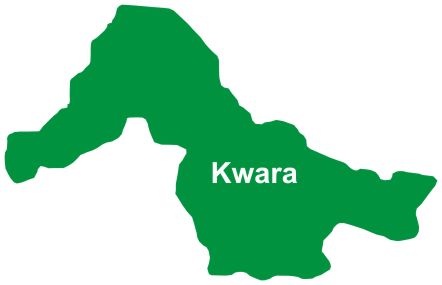
Take your average resident of Ilorin in Kwara state. He beats his chest over the spectacle offered by Ahmadu Bello Avenue. That is one of the poshest and glossiest streets in the Kwara state capital, the address of Kwara Hotels, Government House, and most ministries. At night, it is always very brightly lit. Yet, for every ten poles of street light, there are one or two bulbs missing or dead. That gives you about one or two black patches for every block of that stretch of beautiful government district road. Yet, the Ilorin resident beats his chest everyday: ah, ina wa ni be yen o. There is light there. The Governor is really trying o. The day we get this average Ilorin resident to understand and feel genuinely dissatisfied that one street light bulb ain’t working on Ahmadu Bello Avenue is the day we shall begin to win the battle for Nigeria.
I am saying in essence that the battle against corruption is not as urgent as the war to rewire the wrongly wired psychology of the Nigerian. Nigeria’s deadliest enemy is the psychology of the Nigerian, not corruption. Take corruption out of the picture, let us assume that a miracle happens and our rulers suddenly stopped stealing, from Aso Rock down to the local government headquarters, would that be a guarantee of progress? I think not. So long as the psychology of rationalization and excuses persists, we cannot make progress. Where public services are supposed to function 100%, if citizens are given 20% once in two weeks and they prevail on other citizens to be thankful to government for providing even that 20%; where they treat anyone who insists on 100% service as an outcast and an alaseju; where they collectively make it clear that we should all manage am like dat, zero corruption is no guarantee that such a people would ever make progress. Reno Omokri, the silly fellow in charge of Facebook and Twitter in Aso Rock, would even jump up and tweet silly photos of one or two roads tarred and exhort the people to gratitude.
This explains the 21st century embarrassment that is Nigeria. I’m afraid I also failed Nigeria very badly by giving up that evening in that hotel room in Abuja. I felt I didn’t even know where or how to start teaching the guy that he was wrong in his assessment of the shower situation. I didn’t bother to educate that ‘engineer’ that even if na only one shower hole block and ninety nine dey work, na im be say di whole shower head no dey work gabadaya be dat. I ought to have instructed that mind and won it for the Nigeria that we are fighting for. That was a teachable moment I ought to have seized to go to work on that Nigerian national psychology of elevating mediocrity to the rank of the last thing God created, saw that it was good, and rested on the seventh day.
Cloud Tag: What's trending
Click on a word/phrase to read more about it.
Baboko Kayode Bankole Alfa Belgore Code Of Conduct C2c@kwarastate.gov.ng AbdulKareem Yusuf Danhawa Lasiele Alabi Yahaya Bature Bello Balogun-Ojomu Alao Ayotunde Ibrahim Gambari Abiodun Oyedepo Abdulwasiu Bolaji Adeyi Kale Ayo Kola Bukoye Joshua Adeyemi Adimula Ogidi-Oloje Ijagbo Christian Association Of Nigeria Kwara 2019 Mohammed Yahaya Barki Kwara State Coalition Of Business And Professional Associations Bilikisu Oniyangi Muhammad Sirajo Aliyu Sheikh Ariyibi Iyaloja-General Federal Neuro-Psychiatric Hospital Ganmo Electricity Sub-Station V.O. Abioye Abdullahi Dasilva Yussuf Saheed Alakoso Oluranti Idowu Abdulrazak Shehu Akorede John Olajide Adedipe Wale Oladepo Fatimat Saliu AbdulRazaq Jiddah Bareke Islamiya Abdulraheem Ahmed Shuaib Buranga Tanke Flyover Bridge YAKOOYO Yeketi International Aviation College IPSAS Code Of Conduct Tribunal Okedare Saad Omo Iya Zulkifli Ibraheem Temi Kolawole Aminat Omodara Sobi Hill Ilorin Durbar 2023 Elections Ilorin Central Mosque Osuwa Lanre Badmas Talaka Parapo Kayode Ogunlowo Kwara State Governor Abdulmutalib Shittu Law School Scholarship National Broadcasting Commission Ishaq Oloyede Innocent Okoye Manzuma Amos Justus Sayo Abdullahi Saadudeen Alikinla Saeedat Aliyu Rachael Obisesan Olaiya Lawal Bolakale Kawu Ilorin Metro Park MalHub Yakubu Mohammed Abdullahi Federal Polytechnic Offa Code Of Conduct Bureau