


Poor Funding Will Hamper State Police, says Ahmed
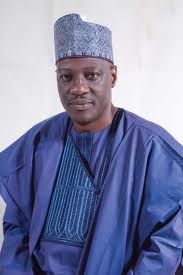
Kwara State Governor Abdulfatah Ahmed recently spoke with journalists in Ilorin, the state capital on the controversy surrounding the state land policy and state police. ABIODUN FAGBEMI was there. Excerpts:
Are you one of those who support state police?
State police is a strong issue among governors and there are various positions on it. Before taking a decision on creating another level of policing, there is need to consider the nation's population of over 150 million people vis-a-vis the present level of policing, level of crime, political situation and the general challenges of insecurity.
I am looking at the present inability of the Federal Government to adequately fund police. If we admit that state police is desirable, how do we fund it? States are under severe pressure from not being able to meet with various expenditure needs. So, if we are to create a new expenditure line, despite the need, it will not be financially feasible. What we require is a platform, on which we can see how to create a properly funded Police to meet security challenges at various levels. There is a huge gap between what the police used to be and what it is today and the Police should be completely restructured and transformed. The process requires a change of attitude and new technology to drive it, proper funding on a stable basis. The man we are relying on to put his life down to protect us, must also be adequately supported. We've not provided the required funding to protect the people, so when we get to that level, we can begin to look at the need to create other levels of policing.
Why do you think the Urbanisation Law is becoming a controversial and generating or what it something you anticipated?
The issue is intertwined. Government gets resources for running its affairs from federal allocation, which is augmented by internally generated revenue (IGR). The augmentation allows us to consider available options to shore up revenue. The first option is to ensure a proper collection process of IGR while the second is to explore new areas for IGR. We have also gone ahead to see how to improve on collection of taxes.
Ilorin is largely a civil service environment but it is aiming to grow as a commercial centre unlike what prevailed some years ago. Consequently, there is pressure on infrastructure and amenities like water, energy, roads, etc. We are trying to enable the city for new entrants and current residents for commercial activities and a strong level of religious tolerance supports this.
It is out of the need to drive revenue that we looked into the issue of land and for which the Urbanisation Law was signed in 2009. The law gives the government power to use land in parts of some councils for public use. Unfortunately, this has been misconstrued in some quarters, leading to insinuations and a poor interpretation of the law. For example, the government was accused of collecting all the lands in Kwara including the Ilorin praying ground, Emirs palace, and elsewhere. This is not correct. The government is only taking portions of land in particular areas in order to put it into optimal use for the generation of revenue.
There have been areas of concern, which members of the Ilorin Emirate Descendant's Progressive Union (IEDPU) highlighted. Fortunately, we met and looked at what the law is saying, and the group said that they were happy with the law to the extent that it gives leverage to certain areas of the town. It was a rewarding parley for the IEDPU and for government and at the end we decided that since the law is meant for the people and not people for the law, if there are areas of concern, we should channel them to the House of Assembly, charged with the responsibilities of making laws.
By and large, the law will be reviewed to check concerns of those who raised issues about it and it will be reviewed to suit those interests alongside the desire of the government to drive revenue. They were happy with the approach and we learnt that we must continue to consolidate and consult with our people to get their pulse on government activities. So when we are going to make laws, we will let the people make input so that we will know how it will affect them.
How would you describe your relationship with your predecessor Senator Bukula in the face of speculations suggesting a rift?
We have a very robust relationship; we share the same goal to ensure that we give the best to Kwara. Such speculations to the contrary are the political gimmicks of detractors, who are unhappy that we are happy. They are sad that we had the responsibility of running a government, which for eight years progressively took Kwara from where it was to the condition we took it over in 2011. Although I was part of policy formulation and implementation in the last administration, I cannot fail to recognise that the last administration put the process together.
Recently council workers have been receiving their salaries every other month and there are threats by the workers to go on strike. What are you doing about this?
There was a drop in the federal allocation in March and April, but we began to feel the impact in May. Apart from the drop, the allocation has also been delayed. At the Governors Forum, we asked the Minister of Finance to work on the issue of delaying the federal allocation meeting. The meeting used to be held by mid month to give ample time to the CBN, which is in charge of allocating the funds to states and councils through the Ministry of Finance. But lately, the meetings are held much later, and the later the meetings, then the later the allocation of funds. And when it gets to the state, the state has to follow its own process of ensuring distribution and allocation. That is the first leg in the delay. The second leg is in the shortfall. Shortfalls were recorded in May, June and July. This has not been helpful in meeting both the recurrent and capital expenditure of not only the councils but also the state government. But at the state level, we have shown a strong sense of financial management, which had allowed us to put our resources together and look at other funding windows.
The councils have limited funding windows. Of course, they too have been charged with the responsibility of looking inward but most importantly, they ought to control their expenditure. The council has been saddled with a huge recurrent cost and that was what prompted us to demand a biometrics exercise for the council to determine the number of workers there so that they can manage their overhead and personnel costs. When you have the proper number of work force, it would be easy to recruit subsequently the number you want or otherwise. For us we have been looking at how we can be supportive of the councils by ensuring that the crude oil subsidy part of their money is not used for recurrent expenditure except if it becomes absolutely necessary. We want to ensure that they do embark on capital projects with them.
The councils had been having challenges and we have been trying to see how to create windows to support them. The only thing that connects us with the councils is the joint project account and till date, it is close to N800 million. This had been channeled into rural road construction to support the N2.5 billion that the government is expending on the same project.
Knowing their resources cannot support them in road construction, we decided to invest about N2.5 billion in rural roads and we used that to augment what they have. The agreement on joint projects is whoever initiates the project drops 60 per cent to be supported by 40 per cent as counterpart funding.
What they have to do, with their current challenges, is to look at their recurrent and capital expenditure, except recurrent overhead and personnel. That is where the problems are. We have decided to help them look at their books in terms of their expenditure lines to allow them see how they can reduce some of the expenditure lines to accommodate capital projects. And where we see there is a gap, we augment them. No council has constructed any road till date. The only roads they can showcase are the roads existing or undergoing construction. They are the same rural roads the state government is doing. So the councils should be happy with what we are doing because we are helping them to execute some capital projects, which ordinarily they would not have been able to do.
What do you make of the verdict secured by the Peoples Democratic Party (PDP) from the Election Petition Tribunal, which ordered a re-run in the council polls in Offa?
It is a judicial matter. What is happening in Offa is a normal thing. PDP stakeholders in Offa saw the need to challenge the result of the election in an appropriate court of law, which looked at the issues and nullified the election. We are expecting that there could be an appeal or we look at the constitutional provision to move on from there. For us in the PDP, it is a welcome development because we have always said that Kwara is a very strong PDP state, committed to the values and ideals of the party as exemplified by projects and we have been able to create an environment to ensure there is growth, peace and development. The incursion of ACN into Kwara is an aberration and this was proved by the just annulled election. We will continue to consolidate on the gains and leave no stone unturned to let people enjoy the dividends of democracy.
Cloud Tag: What's trending
Click on a word/phrase to read more about it.
Saliu Alamoyo 11th Galadima Kwara Coalition Of Business And Professional Associations Code Of Conduct Saeedat Aliyu Oyawoye GANZY Bayo Onimago Funmilayo Isiaka Oniwa Universal Basic Education Commission Jimoh Olusola Imam Mukhtar Shagaya Baruten Yahaya Abdulkareem Babaita Suleiman Rotimi Iliasu Olaosebikan Ahmad Lawan Siddiq Adebayo Idowu Salawu Saheed Popoola NNPP Mufutau Olatinwo Ogbondoroko Imodoye Writer’s Enclave Bayer AG Oba Mogaji Abdulkadir Isiaka Rafiu Mope Oba Sulaiman Asude Bashirat Bola Bello ARMTI Lateef Alagbonsi Kwara Apc Sulyman Atolagbe Alege Valsolar College Of Arabic And Islamic Legal Studies Nurudeen Mohammed Elerin Of Adanla Yusuf Aiyedun Moses Adekanye Muhammed Akanbi Dauda Adesola Okanlawon Taiwo Azeez Salawu Kolade Solagberu Mohammed Tunde-Jimoh Yusuf Abdulraheem NYSC Rasheed Jimoh Erin-ile Isiaka Danmeromu Tafida Of Kaiama Ilorin Water Reticulation Simon Sayomi Iyiola Oyedepo Oke-Ogun Hamidu Olowo Ali Ahmad JAMB 07039448763 Kwara United Kubra Kazum Baakini Ilesha Gwanara Road Agbarere Ahmed Bayero Abdulrosheed Okiki Egbewole Fulani Olatomiwa Williams NIPR Abdulganiy Abimbola Abdussalam Tunji Folami ITP Olatunji Ayeni Hassan Taiye Salam Muhammad Mustapha Suleiman Crystal Corner Shops Yusuf Lawal