


INTERVIEW: Why PDP Lost in Kwara - Akogun Oyedepo
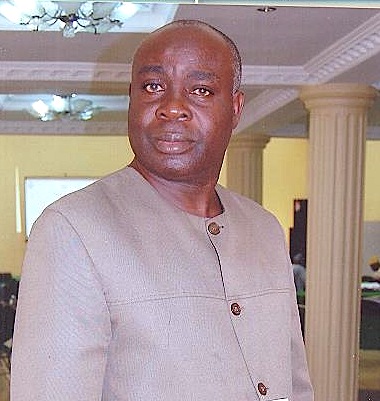
Akogun Iyiola Oyedepo is the Kwara state chairman of the opposition Peoples Democratic Party (PDP). In this interview, he spoke on governance in his state, the party’s abysmal outing in the last elections, and sundry issues that are germane to the country and the state in particular.Akogun Iyiola Oyedepo is the Kwara state chairman of the opposition Peoples Democratic Party (PDP). In this interview, he spoke on governance in his state, the party’s abysmal outing in the last elections, and sundry issues that are germane to the country and the state in particular.
What is your take on the reduction of salaries by the President, Vice-President and some political leaders in the country?
I want to say that legally, those people cutting their own salaries don’t even have the power to do so. There is a body called the Revenue Mobilization Allocation and Fiscal Commission (RMAFC). That body has the responsibility to either add more to the salary or reduce the salary. That is RMAFC’s responsibility. Even there is what we call Salaries and Wages Commission. You know in Nigeria, we want action.
We respect symbols, shadows, sometime, more than the substance. I will soon present my new book titled, “Letters to the Emir” which chronicles the history of Kwara, the role of the emirate, and governance of the state. A chapter in this book is on cost of governance. If you see the cost of governance in Kwara State for the past 16 years, then you would know that this thing is more than the salary of the Chief Executive.
For example, I have detailed the number of time that a Chief Executive used to travel out of the state throughout his tenure and this man would travel with charter flight. I have gone to the extent of even going to the source to know how much a charter flight would cost. I have multiplied it over a period of eight years.
It has given us about N2 billion to maintain our governor on air. So, what is salary to that one? Even in this book, you would see things like the number of vehicles that Chief Executive will go out with every time he goes out. Our chief executive here would be in a convoy with bullet proof cars at the middle and there would be four jeeps.
He would be sandwiched among these four jeeps. In fact, I have calculated that to maintain our governor on the road at times, we can be talking of millions of naira. That has nothing to do with salary. So, number one, I don’t believe they are the one to reduce their salaries. Maybe the President has done it to serve as an example.
But I would have thought that he would go to the National Assembly with a bill suggesting the reduction, not only in salary but in the number of political appointees that he, as President and even the governors can appoint. In this document, luckily, I was once a commissioner in this state in 1992. We had only 10 commissioners, two Special Advisers (SAs). Today, in this book, we have about 114 SAs- SA on this, SA on that, where we had only 12 before.
We now have more than 120 people inside the state which geographically is still the same as in 1992. And the economy is not improving. So, this thing goes beyond reducing salary. He has to go further and do what is quite necessary.
At a time when people are afraid of talking, you have decided to write a book on governance. What is the source of your confidence?
Number one, I believe in the veracity of what I put down. You would not see me putting anything down if I don’t believe I am telling the truth. So, my confidence is on the truth I speak most of the time. Number two, I believe that I should not allow timidity to disallow me to perform what I consider to be the role that I ought to perform as a politician who believes that society can be organized in a better way. Number three, I don’t also believe that anybody can kill me before the day of my death as destined by God.
If they are able to kill me, God has permitted. If God has permitted it, then he doesn’t need me again. He has so many people in this world that can do the work that I am doing today. So, when he decides that I should leave, he would provide an alternative to carry on with his own assignment; that is my belief about this thing.
I also believe that government should be held accountable at all levels. I don’t believe that they are our masters. We have elected them to serve, not just to come and boss us. So, at every time, we should hold them accountable. They are not the owners of the money that they are using. They are not even the owner of the time that they are spending.
So, if you are not the owner of the money, you are not the owner of the office, you are not the owner of the cars you are riding, you are not the owner of whatever, then he who gives you must hold you accountable.
Government is not just like an incorporated company that is owned by the Directors. Government is an institution owned by the people. The difference is just that people cannot all go there. They have to elect some people to go there. And if we elected you to be there, you have to come and render account.
I think it is our misconception about governance that develops in our governors the need to become our masters and our bosses. And I think gradually, we should get rid of this in our everyday’s life.
To what extent do you think writing books would go a long way in changing the situation, especially with your assertion that we seem to enjoy oppression here in Kwara State?
You see once I have written a book like this, my work is half done. The second aspect is to let it be available and cheap so that it would not be too costly for those people that may want to read it but would not have money.
They would all have access to it. Also, we are writing for about 2.5million people in Kwara State for example, maybe only 100,000; 50,000 or less would at the end of the day read it. Out of that 100,000, maybe a few of them would be able to embark on what would change this society. We don’t have to wait until everybody would have to read before a society can change for better.
A few people are just needed; a few people who understand this book and then carry the message to many people to be able to change the society. And we need not fear whether they would read or not, let us write first because the first thing is to raise the level of consciousness among the people. If people in Oyo or Ekiti could stand up against oppression, what type of people do we have in Kwara State that they must enjoy oppression?
So, we need to write and educate them. One thing I even admire is that we only think people don’t read. Anytime I am privileged to write something in the paper, I know the number of messages I receive every day. So, one person that would read can spread the message. And we are targeting the youth who are the most powerful agents of change in any society.
What is your take on the sack and appointment of new service chiefs?
I am not always excited about sacking this, sacking that because it is normal. In fact, we have been expecting such. I don’t know what is newsy in that because if he doesn’t do so, maybe it would be too newsy to me. Now that he has sacked them, let’s see the effect.
There were so many of them that had been sacked in the past even under former President Goodluck Jonathan. But the problem of insecurity still remains. So, it is not sacking that matters, it is whatever that would make us secure in Nigeria.
Having lost the last elections in Kwara state, a lot of people believe that it seems the PDP, which you lead, has resigned to fate, as it is not playing the opposition. How would you react to this?
If you know my antecedent, I still remain the chairman of this party. You should expect a very vibrant opposition. You should just expect that naturally if I still remain the head. The issue of saying the party is dead is not there.
The only thing about a party during a time like this is that you don’t have to be doing campaign all around Kwara. What we need now is to at least attack the policies of government or even commend them where they are right. Immediately after the election, people thought we would go and rest. It was after the election that I had to go to Harmony FM to reenergize our weekly appearances. But we had to suspend it because of Ramadan fast.
You must have conducted a post-mortem on why you lost in the last elections. Have you released the outcome of such post-mortem?
I called a meeting of the critical stakeholders of the party, where I delivered about six or seven page address. And in that address, I have documented why we lost. Immediately after the election, I also set up a strategy committee that reviewed the election. They came out with reasons why we lost the elections.
Briefly, let me just tell you why we lost. Number one, the PDP was not one in this state when we were fighting for that election. We were not one. There was disunity. People were so disunited that we cannot win an election. It is not possible. Number two, we lost because we have over-ambitious members. When we say ‘change’, they would say ‘yes’. When we say we want freedom, they would say ‘yes’. Freedom was our slogan. It is still our slogan.
But freedom to many of our members is that if I am not able to be the governor, there is nothing like freedom. Freedom means governor. That was the reason why you saw 13 people vying for one office when we were facing a sitting government. What should be the result of that exercise?
It should be a foregone conclusion. Number three, we didn’t have among the contestants people with deep pockets that can finance this election.
In fact, we fielded about 34 or 35 people, the legislators and those in the executive. I can tell you that there was none of them who is rich enough to finance an election, including our gubernatorial candidate. So, we were waiting endlessly for money to come from outside. When the money came, which was inadequate, it came too late.
Cloud Tag: What's trending
Click on a word/phrase to read more about it.
Sa\'adatu Modibbo-Kawu Onilupeju Of Ilupeju Oba-Solagberu Oba Mogaji Abdulkadir Abegunde Goke Ajasse-Ipo Yunus Oniboki Jaiz Bank Sabo-Oke Yakub Lai Gobir Ali Ahmad Sanitation Exercise Hydroelectric Power Producing Areas Development Commission Obayomi Azeez Ibrahim Oloriegbe Jimoh Bashir Ayobami Akanbi Baboko Primary School COVID Oniwa Adaramaja Monsurat Omotosho Yahya Mohammed Communication Network Support Services Mahmud Ayinla Giwa Olabimpe Olani Wahab Kunle Shittu Gbenga Awoyale Taofeeq Olateju Aliyu Salihu Ubandawaki Sun Qing Rong Ayedun Olanrewju Okanlawon Musa Isiaka AbdulRazaq Twitter Age AbdulKareem Ibrahim Issa Jetti Adamu Attah Idiagbon Aso-ofi Afusat Nike Ibrahim Saliu Ajibola Ajia Ibrahim Abduquadri Abikan Dan-Kazeem Abdulkadir Akanbi-Oke Offa Aliyu Muhammad Saifudeen Kwara 2023 Olokoba Abdullahi Ayinla Sheikh Ariyibi Waziri Yakubu Gobir Victor Gbenga Yusuf Government Girls’ Day Secondary School Pakata Abdulkarim Adisa REO CAKES Lai Mohammed Babaloja-General Wahab Agbaje Muhammad Ghali Alaaya Abraysports FC Sa\'ad Alanamu Alao Ayotunde ASKOMP Ayinke Saka Summit University ER-KANG Split Diamond Interchange Vasolar Consortium Aminu Adisa Logun Voices Of Tomorrow Demola Banu Apaokagi Bola Tinubu Vasolar-Kwara Company Ltd Baba Idris Salary