


OPINION: As Supreme Court decides on Saraki vs CCT on jurisdiction. By Abdulwahab Abdulah
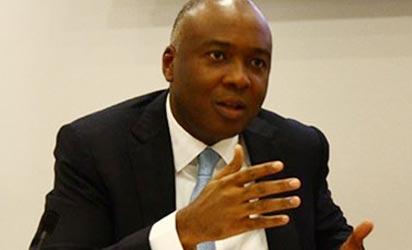
AS the Supreme Court of Nigeria, tomorrow, decides the appeal filed by the Senate president, Dr Bukola Saraki, over his trial at the Code of Conduct Tribunal (CCT), three knotty issues are primed for adjudication. In recent days the apex court had sprang surprises, which invariably lead to anticipations from Nigerians as to what would be the outcome of the arguments canvassed by both parties on the legality or otherwise of the trial of the Senate president by the Code of Conduct Tribunal (CCT) .
As it is, the panel of seven Justices of the court is expected to interprete paragraph 15 (1) of the fifth schedule of the 1999 constitution of the Federal Republic of Nigeria, regarding the composition of the tribunal as well as determine the issue of whether the CCT is a court of criminal jurisdiction.
Directive of the Attorney General
Outside these, the court is also to determine whether a lawyer from the Attorney General of the Federation’s , AGF, office can file charges at the tribunal without a directive of the Attorney General as contained in section 174 (1) of the 1999 constitution, as amended. Paragraph 15 (1) of the fifth schedule to the constitution as amended provides that: “There shall be established a tribunal to be known as Code of Conduct Tribunal which shall consist of a Chairman and two other persons.”
The Abuja division of the appeal court had on October 30 delivered a judgement which is the subject of appeal now. The court had a split judgement of two to one where in the majority judgement delivered by Justices Moore Adumein and Mohammed Mustapha dismissed Saraki’s appeal. In its majority judgement, the appeal court held that these two provisions merely provide for the establishment of the tribunal and it’s composition.
“There is no provision on both the constitution of the Federal Republic of Nigeria, 1999 (as amended) and the Code of Conduct Bureau and Tribunal Act, 2004, specifying the minimum number of members of the Tribunal who must be present before the tribunal can validly undertake and or conduct it’s judicial business, proceedings or sittings.
Lacuna in constitution, Act
Therefore, there is a lacuna in the constitution and the Act. In a situation like this, the interpretation Act becomes a very useful piece of legislative ingenuity to fill the gap or lacuna.”
Section 28 of the interpretation Act states: ”Notwithstanding anything contained in any Act or any other enactment, the quorum of any tribunal, commission of inquiry (including any appeal tribunal established for the purpose of hearing any appeal arising therefrom) shall not be less than two (including the chairman): provided that the chairman and the member shall be present at every sitting of the tribunal, commission of inquiry throughout the duration of the trial or hearing.”
According to the justices, Section 28 is applicable to this case, meaning, the tribunal made up of chairman and one member is properly constituted as decided by the appellate court. However, Justice Joseph Ekanem JCA, in a dissenting judgement opposed the lead judgement. He held that the CCT is not a court of criminal record and said:” Speaking for myself, it is my view that the Code of Conduct Tribunal (CCT) is not a court strictly so speaking and so it cannot be described as a Court of criminal jurisdiction….
He added: “It is my view its not a superior court of record as envisaged in section 6 (3) and (5)(a)-(i) of the constitution of Nigeria 1999 (as amended). It is not includes in sub-section 5 (a)-(i) as one of the superior courts of records in Nigeria.”
There have been divided opinions on the issues raised by the appellant before the Supreme Court. While some legal minds opined that the Interpretation Act cannot supercede the provisions of the constitution, especially as stated in paragraph 15 (1) of the fifth schedule used the word “shall”, which makes it mandatory for the tribunal to be composed of three members as stated in the constitution, others argued that that does not preclude the Tribunal from hearing the matter referred to it..
In a situation where only two members are sitting (Chairman and other member), and there is a dissenting judgement between them, the question is: which judgement would prevail? In an article withVanguard Law and Human Rights, a Whyte in his analysis of the provisions has said that the jurisdiction of the Code of Conduct Tribunal is confined and limited to the Conduct clearly outlined in paragraphs 1 – 13 of the Fifth Schedule.
Provisions of the Code
He noted: “The conduct proscribed has been stated in considerable detail and appears to be exhaustive. These are the only powers it can legally and lawfully exercise. “It is pertinent to observe that the law which enables the CCT to try persons who have contravened the provisions of the Code have carefully avoided the use of the expression criminal to describe the conduct so punished. It does not contemplate any other conduct,
Epressio unius est exclusio alterius. Rather it provides in paragraph 18(3) that the sanctions in paragraph 18 (2) may be imposed, without prejudice to the penalties in any law where the conduct is also a criminal offence.”
Limited jurisdiction of CCT: On the the limited jurisdiction of the CCT, Justice Karibi-Whyte said, “It’s jurisdiction is limited to the subject matter listed therein and as prescribed by the National Assembly. The Code of Conduct Tribunal has not been vested with exercise of criminal jurisdiction even by implication of the scope allowed in the sanction it can impose.”
Judicial authority
On the question of whether the Code of Conduct Tribunal can continue proceedings when its jurisdiction is being challenged, the retired Justice said: “My prompt reaction and answer is No. It cannot. It is well settled principle and citations of judicial authority as precedents in support is unnecessary that determination of the issue of jurisdiction when raised is fundamental to the determination of the issue before the Court. Where a Court does not have jurisdiction, there is nothing before it to adjudicate. see National Bank v. Shoyoye (1977) 5SC.18.”
He stated further: “The Code of Conduct Tribunal is in the instant case without doubt not properly constituted as to its composition. Paragraph 15 (1) of the First Schedule has prescribed the proper composition as the Chairman and two members. The Code of Conduct Tribunal cannot proceed with the Chairman and one member. This is in breach of the mandatory provision which must be complied with.”
He noted that where an inferior Court, as in this case, a Tribunal or any Court proceeds without jurisdiction, all its actions become null and void and of no effect.
On criminal jurisdiction, the retired Justice said: “It is an accepted fundamental principle of our criminal jurisprudence, the exercise of our criminal jurisdiction that no person can be tried and convicted of a criminal offence unless that offence is defined and the penalty therefore is prescribed in a written law.
He said, the Code of Conduct Tribunal is a creation of the National Assembly with prescribed powers and limited jurisdiction clearly expressed in the enabling law, which must conforms with the provisions of Section 6(5)(j) of the Constitution 1999.
Unlimited jurisdiction
“It does not enjoy the unlimited jurisdiction vested by the Constitution of the Federal Republic of Nigeria, 1999 in the Courts named in Section 6(5)(a)(h). The CCT is a Court created by the National Assembly to exercise jurisdiction at first instance or on appeal with respect with which the National Assembly may make laws. He concluded that the CCT is not vested with the power to exercise criminal jurisdiction.
A Lagos-based lawyer, Mr Olukayode Majekodunmi, who supported Justice Karibi-Whyte’s argument as well as the minority judgement of Court of Appeal case said: “Section 20 (2) of the Code of Conduct Bureau and Tribunal Act, in respect of the number of persons making up the tribunal says, “consist of and not “quorum.” He added that the matter should not be treated or examined based on personalities involved in the case but the true position of the law.
Dr. Olisa Agbakoba, SAN, in his contribution in a National Newspaper said: “there are two kinds of courts in Nigeria, the inferior and the superior.” He referred to Section 6 of the constitution which listed the superior court and emphasized the fact that the Code of Conduct Bureau and the National Industrial court are not so listed.”
The human rights lawyer submitted that since CCB is not expressly listed as a superior court, it can’t assume a position of a superior court and as an inferior court, which is amenable to the judicial review jurisdiction of a superior court of record.
Expressing a contrary view, a Lagos based senior lawyer, Mr Jiti Ogunye, on the powers, practice and procedure of the Code of Conduct Tribunal, CCT, in Paragraph 18, stated thus: “any of the provisions of this Code shall impose upon that officer any of the punishments specified under sub-paragraph (2) of this paragraph and such other punishment as may be prescribed by the National Assembly;
Seizure and forfeiture
(2) The punishment which the Code of Conduct Tribunal may impose shall include any of the following -(a) vacation of office or seat in any legislative house, as the case may be; (b) disqualification from membership of a legislative house and from the holding of any public office for a period not exceeding ten years; and(c) seizure and forfeiture to the State of any property acquired in abuse or corruption of office;
(3) The sanctions mentioned in sub-paragraph (2) hereof shall be without prejudice to the penalties that may be imposed by any law where the conduct is also a criminal offence; (4) Where the Code of Conduct Tribunal gives a decision as to whether or not a person is guilty of a contravention of any of the provisions of this Code, an appeal shall lie as of right from such decision or from any punishment imposed on such person to the Court of Appeal at the instance of any party to the proceedings;
(5) Any right of appeal to the Court of Appeal from the decisions of the Code of Conduct Tribunal conferred by sub-paragraph (4) hereof shall be exercised in accordance with the provisions of an Act of the National Assembly and rules of court for the time being in force regulating the powers, practice and procedure of the Court of Appeal;
(6) Nothing in this paragraph shall prejudice the prosecution of a public officer punished under this paragraph or preclude such officer from being prosecuted or punished for an offence in a court of law; and (7) The provisions of this Constitution relating to prerogative of mercy shall not apply to any punishment imposed in accordance with the provisions of this paragraph.”
From the above provisions of the 5th Schedule, it is crystal clear that the CCT is a sui generis Court or Tribunal. It is a special court of its own kind.
Ogunye argued that the Chairman and members of the CCT are appointed by the President, based on the recommendation of the NJC.
Superior tribunal
He said: “If they are not judicial officers that can rank with judicial officers presiding over a court of first instance ( Federal High Court or State High Court), why will they be recommended by the NJC for appointment? “The CCT is a “superior court of record” or “ a superior tribunal of record”. Section 6(5)(j) of the 1999 Constitution says so. Those who argue to the contrary relies on Section 6(5)(a-i ), which provides a list of superior court of record in Nigeria to reach this erroneous conclusion.”
He submitted that if the whole provisions in Section 6 of the Constitution are read together, as they should be read in consonance with the liberal rule of interpreting the provisions of the Constitution, in order to avoid “stultifying narrowness”, this view will become evident. See Section 6 ( 1,2,3,5) of the 1999 Constitution. He added.
Wherever the pendulum swings, the decision of the apex court will have a far reaching effect on the public opinion of where the problem lies. This will help in further enriching the interpretation of the 1999 constitution.
Cloud Tag: What's trending
Click on a word/phrase to read more about it.
QuickWin Abatemi Usman Olatomiwa Williams Trader Moni Femi Gbajabiamila Azeez Bello Abdullahi Biffo Kehinde Baale Hydroelectric Power Producing Areas Development Commission Umar Gunu Sulyman Abdulkareem Garment Factory AbdulRazaq AbduMajeed Alaro CCB Olatunde Michaels Radio SBS SDP Mufutau Gbadamosi Esuwoye Chief Imam Of Lafiagi Agbarere Sunday Otokiti Kulende Olokoba Sulyman Aisha Ahman-Pategi Lafiagi University Road Sobi FM Ministry Of Women Affairs And Social Development Awili Pedro Unicontinental Construction Company Veterinary Teaching Hospital Ahmed Yaman Prince Bola Ajibola Oko-Olowo Taofeek Ibraheem Sadiq Umar GGDSS Pakata Saadu Gbogbo Iwe Aisha Buhari Kassim Babamale Orisa Bridge Abdulrazaq Solihudeen Patience Jonathan Suleman Abubakar Yahaya Abdulkareem Suwa-Arabs Adeola Abraham ER-KANG Saliu Ajia Isiaka Rafiu Mope Ajibola Saliu Ajia Muyideen Ajani Bello Folorunsho Alao Monthly Sanitation Exercise MAI Akande Kulende-UITH Marafan Shonga National Union Of Road Transport Workers Kwara State Television Bamidele Adegoke Oladimeji Lanre Aremu Valsolar Consultoria AbdulRazaq Abubakar Jiddah C2c@kwarastate.gov.ng Aliyu Salihu Ebola International Aviation College Ilorin Innovation Hub Yahaya Oloriegbe Hijaab Abdullahi AbdulMajeed Yahaya Abdulkareem Babaita Ibrahim Agboola Gambari Aremu Odolaye Bashir Adigun Amos Sayo