


Medical Crisis: Why Kwarans Are Traveling To Lagos For Basic Diagnostic Scans
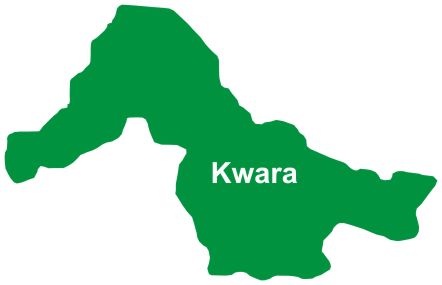
Over the past six years, the current administration in Kwara State has frequently touted its massive investments in the health sector. Speeches, press statements, and social media campaigns by government handlers are often filled with figures running into billions of naira purportedly spent on medical infrastructure. However, a critical gap has emerged that contradicts this narrative: as of January 2026, there is reportedly not a single functional Magnetic Resonance Imaging (MRI) machine in any public or private hospital across the state.
This revelation, which gained traction after a grieving citizen shared her experience on social media following the death of her uncle, has sparked a fresh debate on the state's governance priorities. Critics argue that while the administration of Governor AbdulRahman AbdulRazaq claims to have revitalized over 80 Primary Healthcare Centres and invested in secondary facilities, the absence of high-end diagnostic tools like MRI remains a "heartbreaking contradiction."
Why MRI Matters An MRI machine is not a luxury; it is a fundamental tool for modern medicine, essential for detecting:
Strokes and brain injuries
Spinal conditions and cancers
Internal organ damage
In emergency situations, the lack of this facility in Kwara forces patients to travel to Lagos or other distant cities. For many, these "tortuous journeys" are not just expensive but physically impossible to survive in a critical state.
A Question of Priority The absence of such equipment is particularly glaring given that the state has passed several large-scale budgets recently, including the N584.6 billion budget for 2025 and the recently presented N644 billion bill for 2026. Observers note that the Harmony Advanced Diagnostic Centre (HADC) in Ilorin, which once housed functional advanced equipment under previous administrations, has reportedly been allowed to deteriorate.
For a state that has received significant federal allocations and grants, the lack of a single MRI machine raises serious questions about whether healthcare spending is being directed toward life-saving equipment or "white-elephant" projects. As the 2027 election cycle approaches, the state of the healthcare system and the tangible impact of these billion-naira investments is expected to remain a central issue for Kwarans.
One must ask: what happens in emergency situations where time is the difference between life and death? What happens to the elderly, the poor, or accident victims who cannot afford the cost or risk of long-distance travel?
For a state with millions of residents, a state that has received hundreds of billions of naira in federal allocations, grants and internally generated revenue over the last six years, the absence of a single MRI machine in any of its health centres raises questions about governance priorities. This reality is indefensible.
Certainly, this is not about lack of funding; it is about lack of priority. To put it plainly, an MRI machine does not cost billions of naira. Depending on the specifications, even a brand-new, high-end MRI system costs only a fraction of what the state government has spent on white-elephant projects or on financing the expensive lifestyle of Governor Abdulrahman that is characterised by frequent hiring of private jets and endless foreign junkets.
It is, therefore, not surprising that he's currently in Dubai where he has been flexing for the past few days while communities in his state continue to grapple with kidnappings and insecurity.
Furthermore, the cost of procuring an MRI machine is far less than the amount this administration has spent on renovating the governor's official office and lodge, facilities he has refused to use for the past six years.
When a government can commit tens of billions to finance an expensive lifestyle of a governor and on projects of questionable public value but cannot equip its hospitals with life-saving diagnostic tools, it sends a troubling message about misplaced priorities, administrative irresponsibility, and how cheaply it values the lives of ordinary citizens.
Ironically, the present reality contrasts sharply with the immediate past. The Harmony Advanced Diagnostic Centre (HADC), Ilorin, which was established by the previous administration of Dr. Bukola Saraki, once had a functional MRI machine that served not just Kwarans but patients from different parts of the country.
That facility was a point of pride and proof that advanced healthcare was possible in the state. Today, HADC has become a shadow of what it once was. The MRI is gone, the centre has deteriorated, and its relevance has faded.
The question begging for answers: what happened to the MRI machine at the HADC? Why was it not maintained, replaced, or upgraded? And why has the current administration allowed such a critical health asset (HADC) to rot away? Is this neglect rooted in policy failure or political bitterness toward projects initiated by previous administrations? Healthcare infrastructure should never be a casualty of partisan rivalry. Lives do not belong to any political party.
While government-owned hospitals struggle without essential diagnostic equipment, the state government continues to spend billions of our resources on white elephant projects whose value or impact to the average Kwaran remains questionable. Governor Abdulrahman has spent nearly N30billion or even more on renovation of Kwara Hotel, yet there is hardly any visible structural changes to the facility.
Billions more have gone into the construction of the KWIRS new building, International Conference Centre, Tallest Flag Pole in West Africa, as well as the Ilorin Visual Arts Centre and the Garment Factory, both of which have remained shut for months after their completion. These are classic examples of white elephant projects: capital-intensive, politically attractive, but socially unproductive.
It's even ridiculous and baffling to think that Governor Abdulrahman converted a Cargo airport built by the visionary administration of Dr. Bukola Sakari into a Garment Factory that's now abandoned and left to rot. Today, some governors across the South-West are investing heavily in cargo airports to position their states as logistics and export hubs. Regrettably, Kwara has moved in the opposite direction, dismantling strategic infrastructure instead of leveraging it for economic growth.
How can a serious government keep lavishing billions of taxpayers' funds on projects that deliver little or no economic value and impact for the state and its people? The irony is painful. Funds that could have been used to procure MRI machine(s), equip general hospitals across the state, upgrade the state-owned diagnostic centre, train specialists, and save countless lives have instead been sunk into projects that neither generate jobs at scale nor improve the wellbeing of ordinary Kwarans.
To the lady who went to social media to lament the loss of her uncle, blaming delays linked to the unavailability of MRI services in the state, on behalf of our State, I say sorry for your loss. Your pain echoes that of many families who suffer in silence, unseen and unheard, because the healthcare system failed them when it mattered most.
This is not about politics; it is about people. It is about whether governance is truly people-centred or merely project-centred. A government that genuinely prioritises the health and welfare of its citizens would not allow an entire state to exist without access to such a fundamental diagnostic service.
It should be known to the government that true investment in healthcare goes beyond erecting new wards, renovating hospital buildings, or repainting old structures for media optics. Healthcare investment is measured by functionality, not facade.
It is about equipping hospitals with life-saving diagnostic tools, ensuring the availability of modern medical technology, training and retaining of skilled health professionals, maintaining existing equipment, and building systems that respond effectively in emergencies.
A freshly painted hospital without essential equipment is nothing more than a decorated shell. When patients must still travel hundreds of kilometres for basic diagnostic services, it becomes clear that what has been prioritised is appearance, not impact; propaganda, not people. Lives are saved not by buildings, but by what happens inside them.
Cloud Tag: What's trending
Click on a word/phrase to read more about it.
Arandun Vasolar-Kwara Company Ltd Kayode Laro Grillo ITP Baba Idris Shero Reuben Paraje Yusuf Ibitokun Sherifat 2017 Budget Popo-Igbonna Idris Amosa Saidu Ilofa Ejidongari Adebara Tunji Ajanaku Ilorin South Constituency Emmanuel Bello Fulani Igbomina Ibrahim Akaje Jeunkunu-Malete-Bani Ohoro Of Shao Muideen Olaniyi Alalade Mohammed Halidu Ahmed Idris Mohammed Countryside Emerging Leaders Fellowship Salman Alada Sarah Jubril Association Of Kwara State Online Media Practitioners The Herald Sola Saraki Educational Foundation Ibrahim Abdullahi Hassanat Bello Seun Bolaji Bayo Ojo Sunday Fagbemi Bayer Nigeria Limited Raji AbdulRasaq Tunji Oyawoye Saheed Alakoso Lateef Fagbemi Suwa-Arabs Iyeru Grammar School Abubakar B.M Funmilayo Braithwaite Adisa Logun Shuaibu Yaman Abdullahi Alaro Fatimoh Lawal Muslimah Entrepreneurship Forum Abdulrahman Iliasu Sa\'ad Alanamu Toyin Falola Kazeem Oladepo Alabi Lawal Teachers Specific Allowance Adedipe Ahmad Belgore Ahmed Mohammed Rifun Sulu Babaita Isiaka Obuh Erubu Oba Zubair Sabitiyu Grillo Gani Saadu Folorunsho Erubu Kassim Babamale Abdulazeez Arowona Tafida Of Kaiama Ijagbo 11th Galadima Ibrahim Mashood Shuaibu Yaman Temi Kolawole Hamidat Sulyman-Yusuf Rachael Obisesan CELF